
Key Takeaway
Hypohydration at 3-5% body mass loss impairs cognitive performance in athletes, with mood disturbance and fatigue as consistent co-findings.
Summary
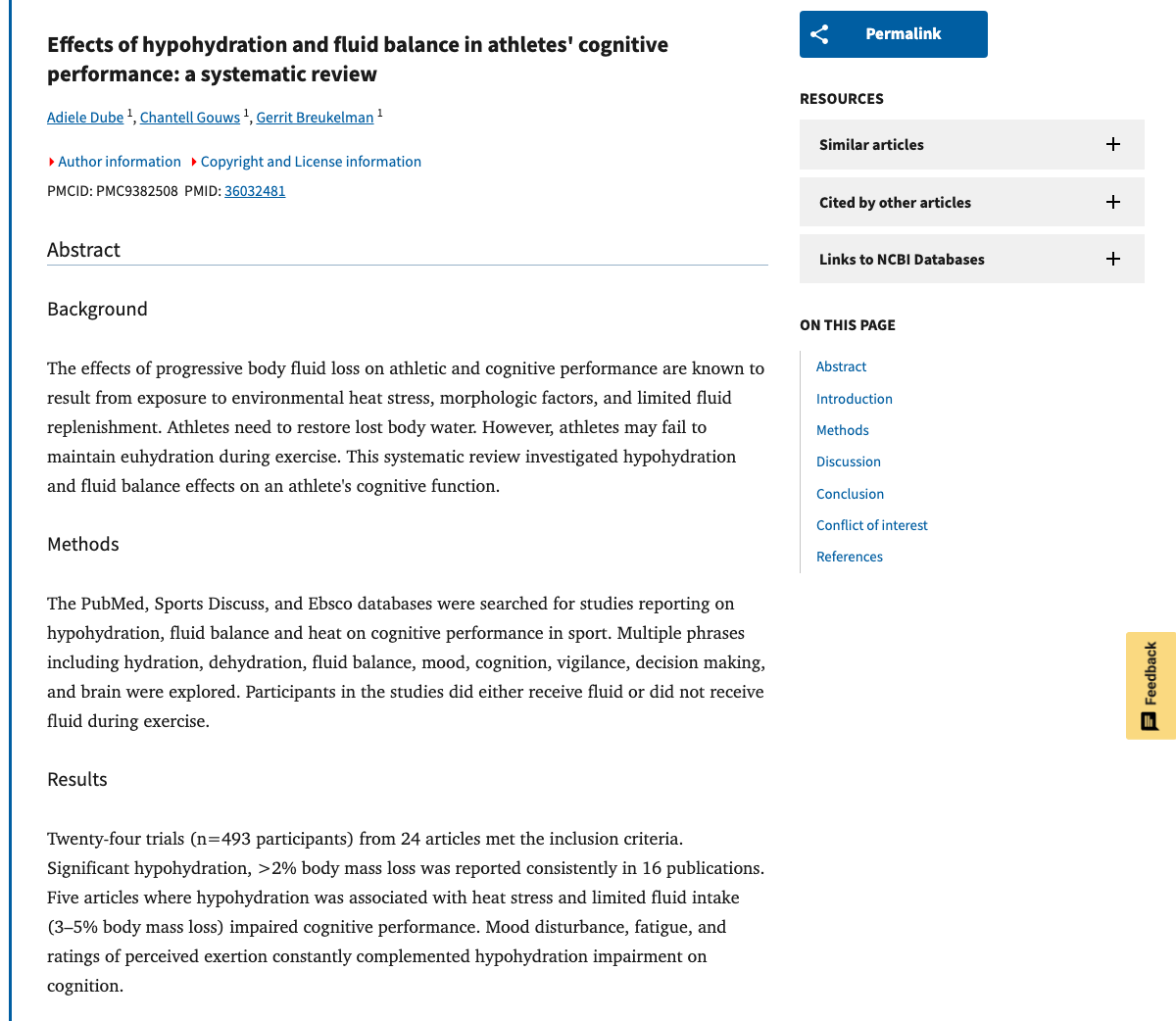
This systematic review examined the relationship between hypohydration, fluid balance, and cognitive performance specifically in athletic populations. The authors searched multiple databases for studies investigating how dehydration affects mental function in athletes across various sports and exercise conditions.
The review found that hypohydration at levels of 3-5% body mass loss consistently impaired cognitive performance in athletes. Affected cognitive domains included reaction time, short-term memory, and perceptual discrimination. Mood disturbance (increased confusion, tension, and anger) and perceived fatigue were consistent co-findings alongside cognitive decrements.
The authors highlighted that maintaining fluid balance through strategic hydration, including electrolyte-containing beverages, is important not only for physical performance but also for maintaining the cognitive sharpness required in competitive sport. Athletes in weight-class sports and those training in hot environments are at particular risk for cognitive impairment from dehydration.
Methods
Systematic review following PRISMA guidelines. Databases searched included PubMed, Scopus, and SPORTDiscus for studies examining hypohydration effects on cognitive performance in athletes. Included studies used validated cognitive assessments and quantified hydration status via body mass change or urine-specific gravity. Quality appraisal was conducted using standardized tools.
Key Results
- Hypohydration at 3-5% body mass loss consistently impaired cognitive performance
- Reaction time, short-term memory, and perceptual discrimination were affected
- Mood disturbance (confusion, tension, anger) co-occurred with cognitive impairment
- Increased perceived fatigue was a consistent finding alongside dehydration
- Fluid balance strategies including electrolyte beverages mitigated cognitive decrements
Limitations
- Heterogeneity in study designs, sports, and cognitive tests limited quantitative synthesis
- Most studies used exercise-induced dehydration, making it difficult to isolate dehydration from fatigue
- Limited studies on female athletes and non-elite populations
- Variation in how hydration status was defined and measured across studies
- Small sample sizes in many included studies