Key Takeaway
Systematic review of 24 studies finds low-dose lithium shows promise for neuroprotection, suicide prevention, and mood stabilization, though evidence remains limited and heterogeneous.
Summary
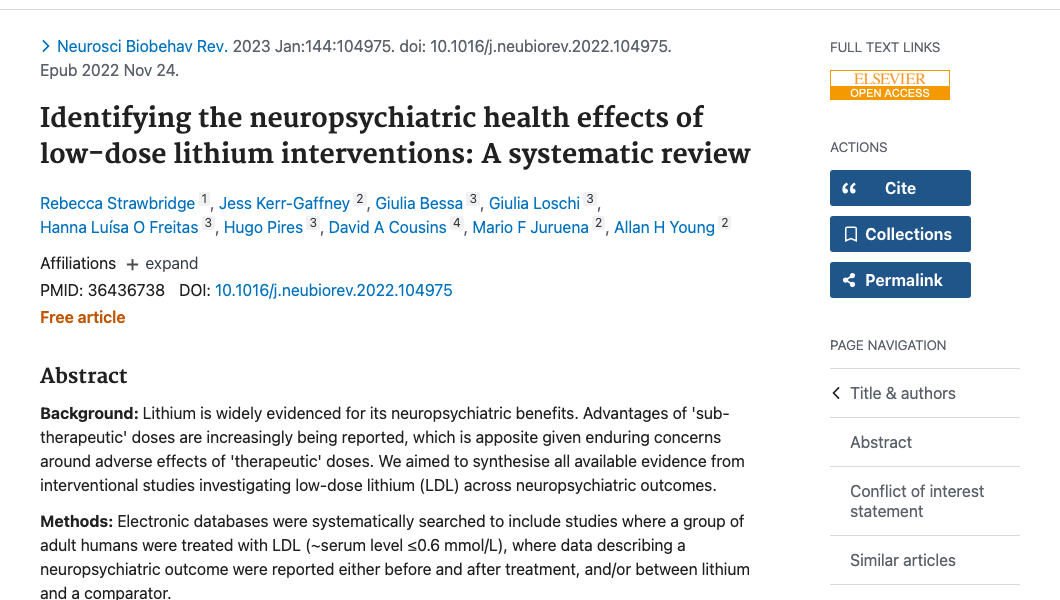
This systematic review examined 24 studies investigating the neuropsychiatric effects of low-dose lithium interventions, defined as doses below standard therapeutic levels used in bipolar disorder treatment. The review covered a range of study designs including ecological studies of lithium in drinking water, randomized controlled trials, and observational research.
The authors found evidence suggesting low-dose lithium may have beneficial effects across several neuropsychiatric domains, including neuroprotection (particularly in Alzheimer disease and cognitive decline), reduction in suicide and self-harm rates, and mood stabilization. Ecological studies consistently linked higher lithium levels in drinking water with lower suicide rates and reduced dementia incidence.
However, the review highlights significant limitations: the evidence base is heterogeneous, many studies used ecological designs that cannot establish causation, and there is a lack of standardized dosing protocols for low-dose lithium. The authors call for more rigorous randomized controlled trials to establish optimal dosing, safety profiles, and efficacy for specific neuropsychiatric conditions at sub-therapeutic doses.