Key Takeaway
Comprehensive review finds low-dose lithium supplementation has potential benefits extending beyond psychiatry, including cardiovascular protection, bone health, metabolic improvements, neuroprotection, and anti-inflammatory effects.
Summary
This review article provides a comprehensive overview of the biological effects of low-dose lithium supplementation across multiple organ systems, moving beyond lithium traditional use in psychiatric treatment. The authors synthesize evidence from preclinical and clinical studies to outline a broad range of potential health benefits at doses well below those used for bipolar disorder management.
The review covers evidence for low-dose lithium effects on cardiovascular health (improving myocardial and vascular function), bone metabolism (promoting bone formation and reducing fracture risk), glucose regulation and metabolic health, neuroprotection (via GSK-3 beta inhibition, BDNF upregulation, and autophagy enhancement), and anti-inflammatory and antioxidant activity. Each domain is supported by mechanistic pathways, primarily through lithium inhibition of glycogen synthase kinase-3 (GSK-3) and inositol monophosphatase.
The authors argue that low-dose lithium represents an underutilized intervention with a favorable safety profile compared to therapeutic-dose lithium. They emphasize that nutritional lithium deficiency may be more common than recognized, and that supplementation in the low-dose range (e.g., 5-20 mg/day of elemental lithium) could confer meaningful health benefits across aging-related conditions.
Figures
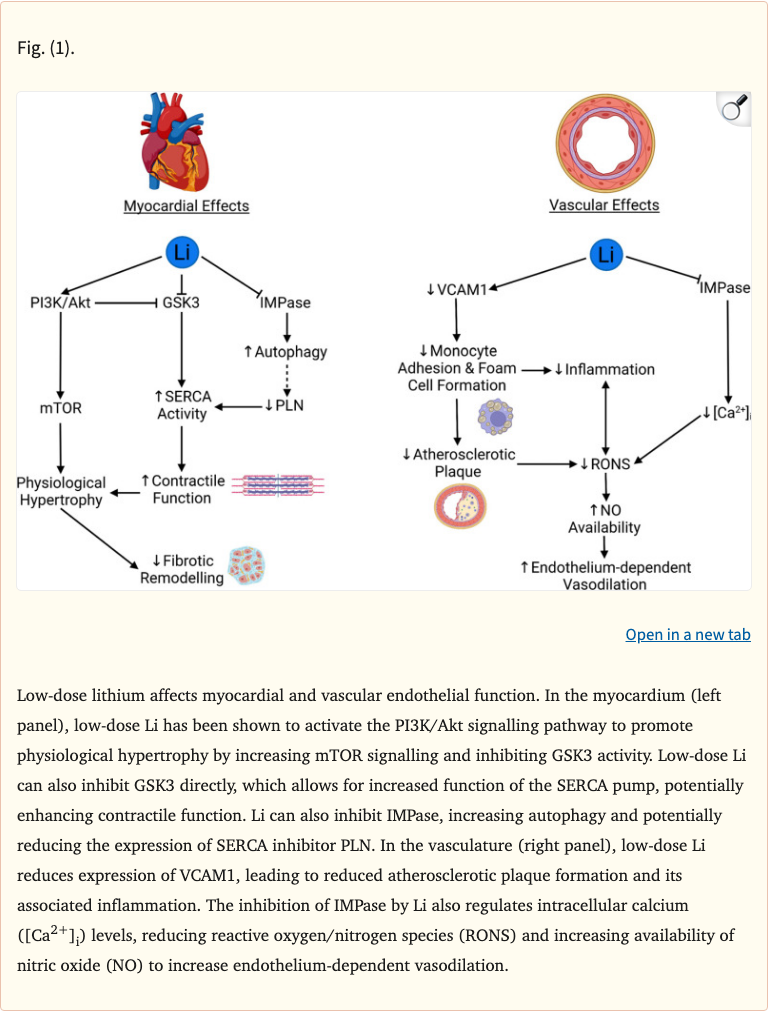 Figure 1
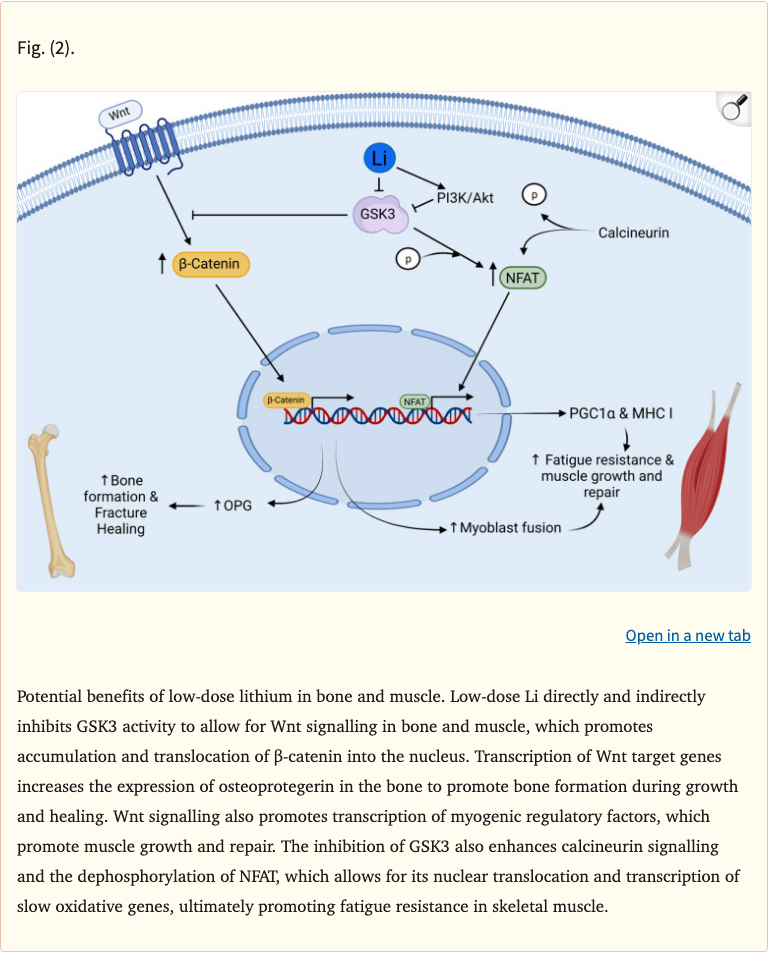 Figure 2
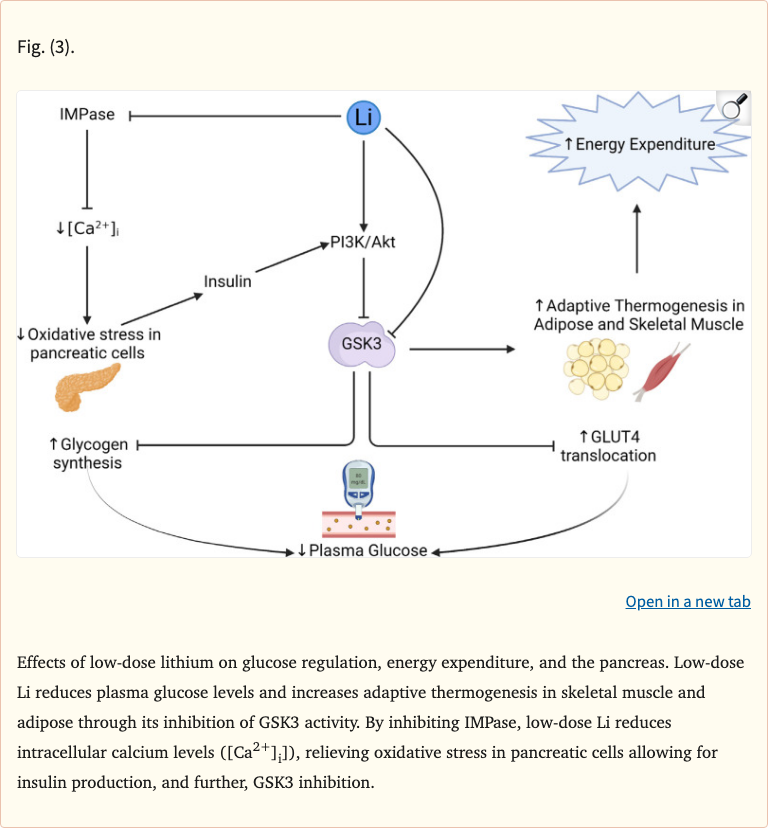 Figure 3
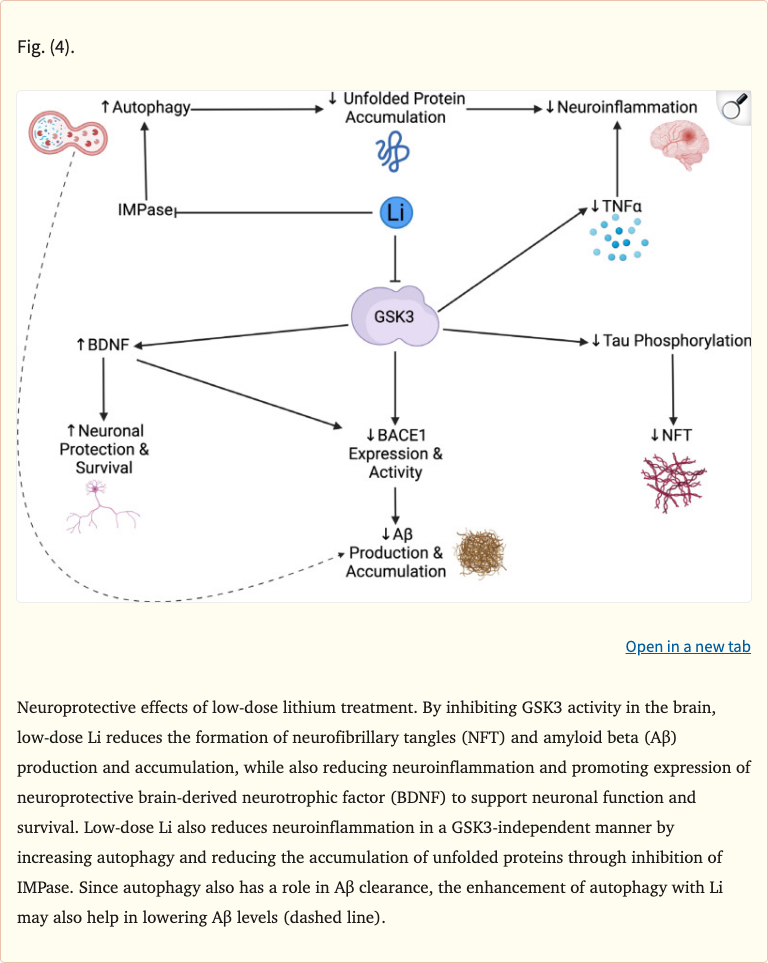 Figure 4
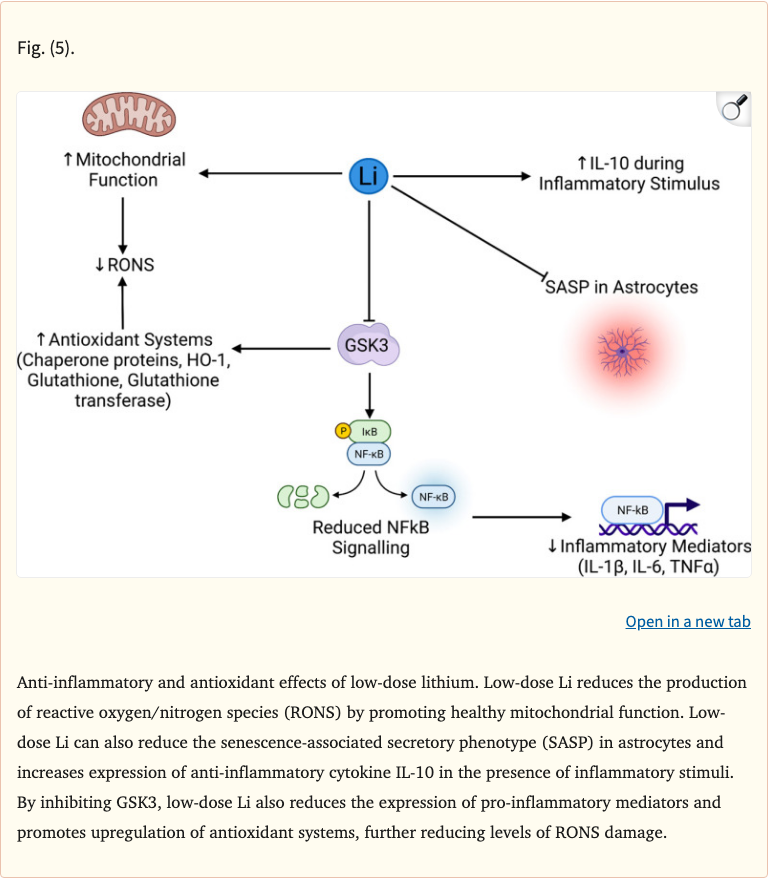 Figure 5