
Key Takeaway
Meta-analysis of 17 RCTs (835 participants) found PBM combined with exercise significantly reduced tendinopathy pain and improved function compared to sham plus exercise.
Summary
This systematic review and meta-analysis by Tripodi et al. evaluated the effectiveness of red and near-infrared photobiomodulation (PBM) for treating tendinopathy disorders. The authors searched six databases through August 2020 and included 17 randomized controlled trials with a total of 835 participants.
The meta-analysis compared PBM as both a standalone treatment and an adjunctive therapy alongside exercise. When used alone, PBM showed comparable pain reduction to other interventions but smaller functional improvements. However, when combined with exercise, PBM produced significantly greater pain reduction (MD 1.06) and improved function (MD 5.65) compared to sham plus exercise.
Most included studies had low risk of bias, though the overall quality of evidence ranged from very low to moderate per GRADE assessment. The authors concluded that PBM has utility as both a standalone and adjunctive therapy for tendinopathy, with the strongest evidence supporting its combination with exercise programs.
Methods
- Systematic search of 6 databases (PubMed, CINAHL, Cochrane, etc.) through August 2020
- Included 17 RCTs with 835 participants
- Compared PBM to sham or alternative interventions
- Extracted pain (VAS) and functional outcome data
- GRADE assessment for quality of evidence
- Risk of bias evaluation for each study
Key Results
- PBM alone: comparable pain reduction to other interventions
- PBM alone: smaller functional improvement vs other interventions
- PBM + exercise vs sham + exercise: greater pain reduction (MD 1.06)
- PBM + exercise vs sham + exercise: improved function (MD 5.65)
- PBM + exercise vs other interventions + exercise: no significant pain differences
- Most studies showed low risk of bias
Figures
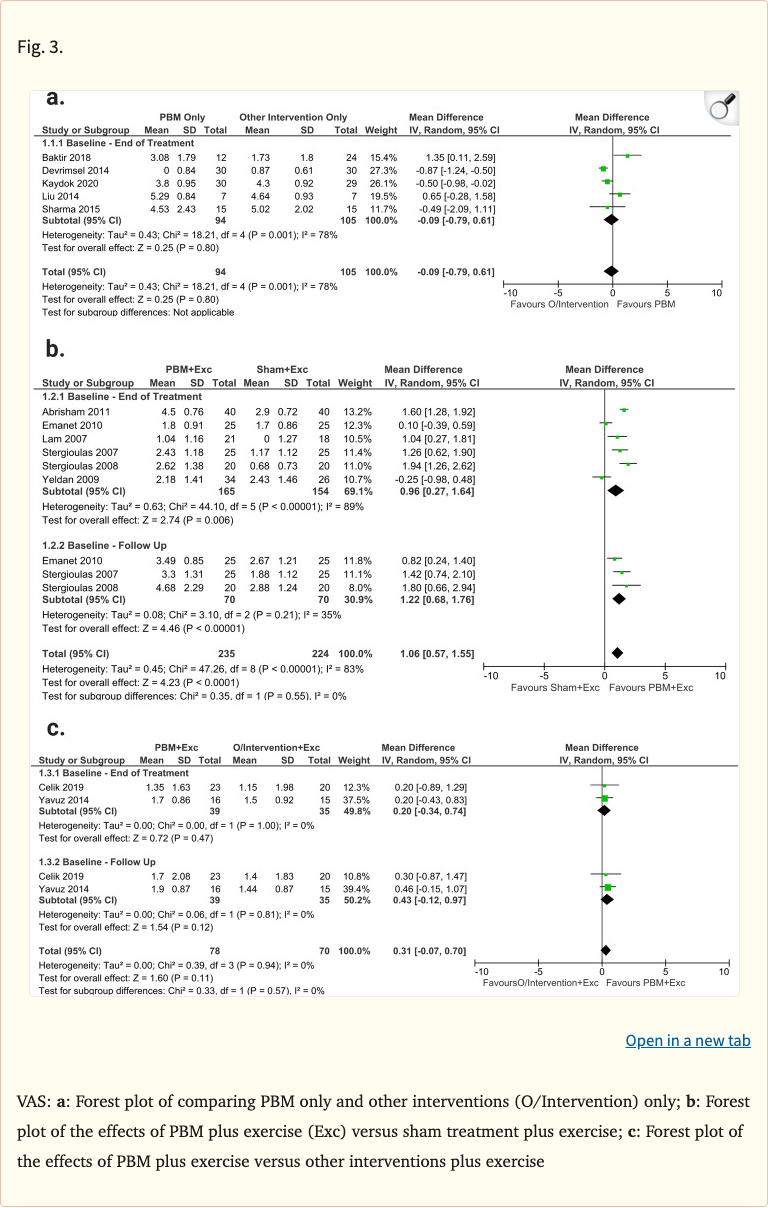 Figure 1
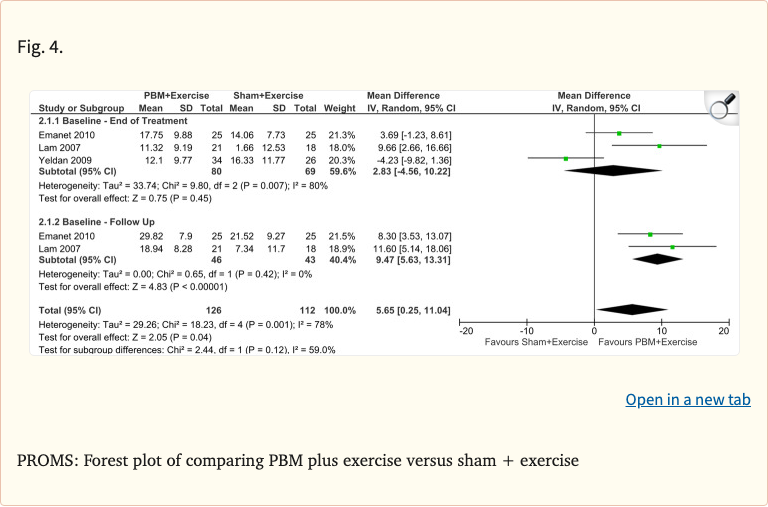 Figure 2
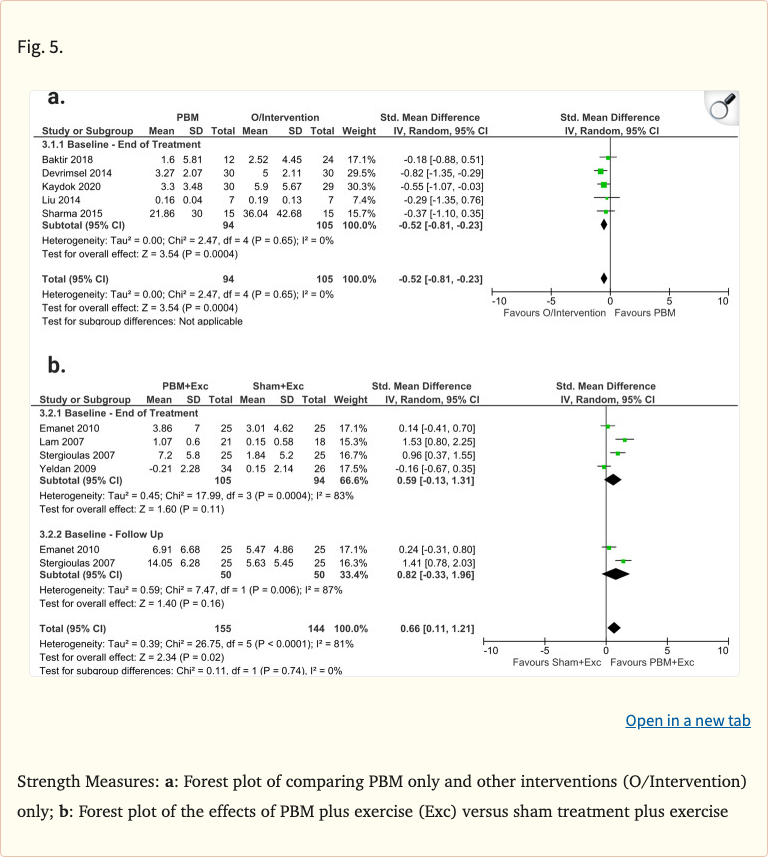 Figure 3
Limitations
- Evidence quality ranged from very low to moderate (GRADE)
- Heterogeneity in PBM parameters across studies
- Various tendinopathy types and locations studied
- Limited long-term follow-up data