
Key Takeaway
Vagus nerve stimulation shows therapeutic promise for functional gastrointestinal disorders including gastroparesis and IBS, primarily through modulation of gut motility and anti-inflammatory pathways.
Summary
This systematic review assessed the current evidence on vagus nerve stimulation (VNS) as a treatment for various gastrointestinal disorders. The authors evaluated both invasive and non-invasive VNS approaches across conditions including gastroparesis, irritable bowel syndrome (IBS), inflammatory bowel disease (IBD), and postoperative ileus.
The review found that VNS can improve gastric motility and reduce inflammation through activation of the cholinergic anti-inflammatory pathway. Non-invasive transcutaneous auricular VNS (taVNS) showed particular promise for functional GI disorders, with several studies reporting improvements in symptoms such as nausea, bloating, and abdominal pain.
While the mechanistic rationale is strong, the vagus nerve being a major regulator of the gut-brain axis, the authors emphasize that most existing studies are small and heterogeneous. They call for larger, well-designed RCTs to establish optimal stimulation parameters and clarify which GI conditions benefit most from VNS therapy.
Figures
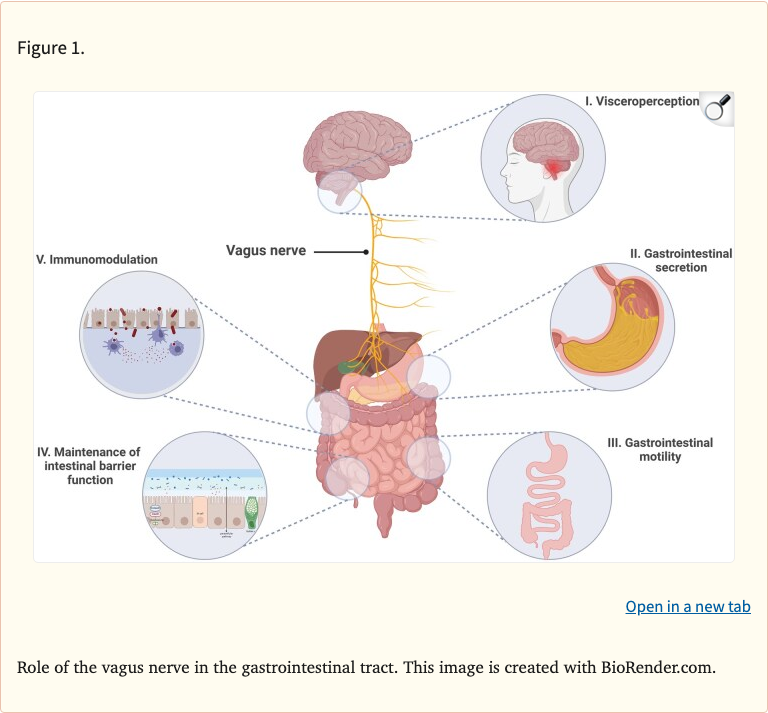 Figure 1
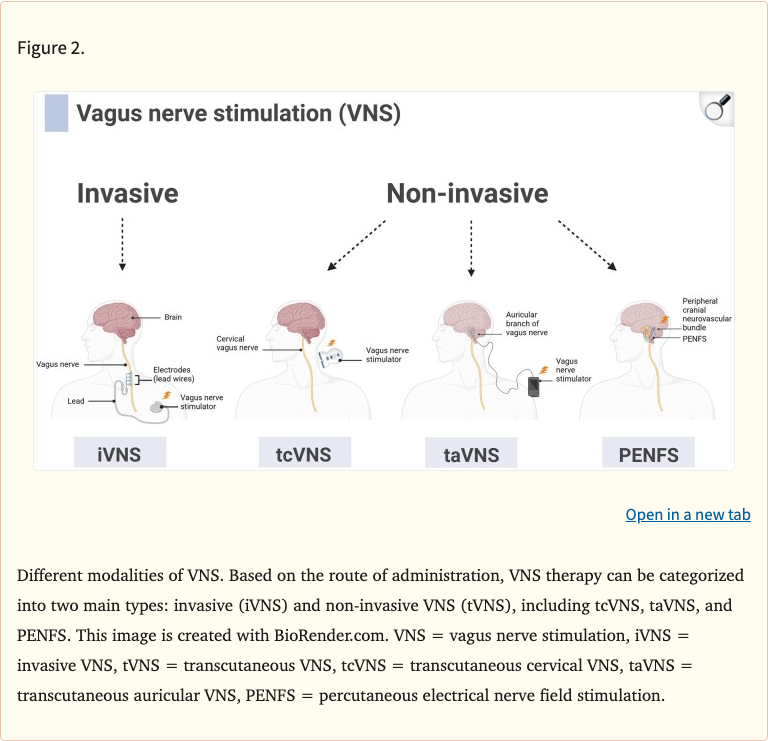 Figure 2
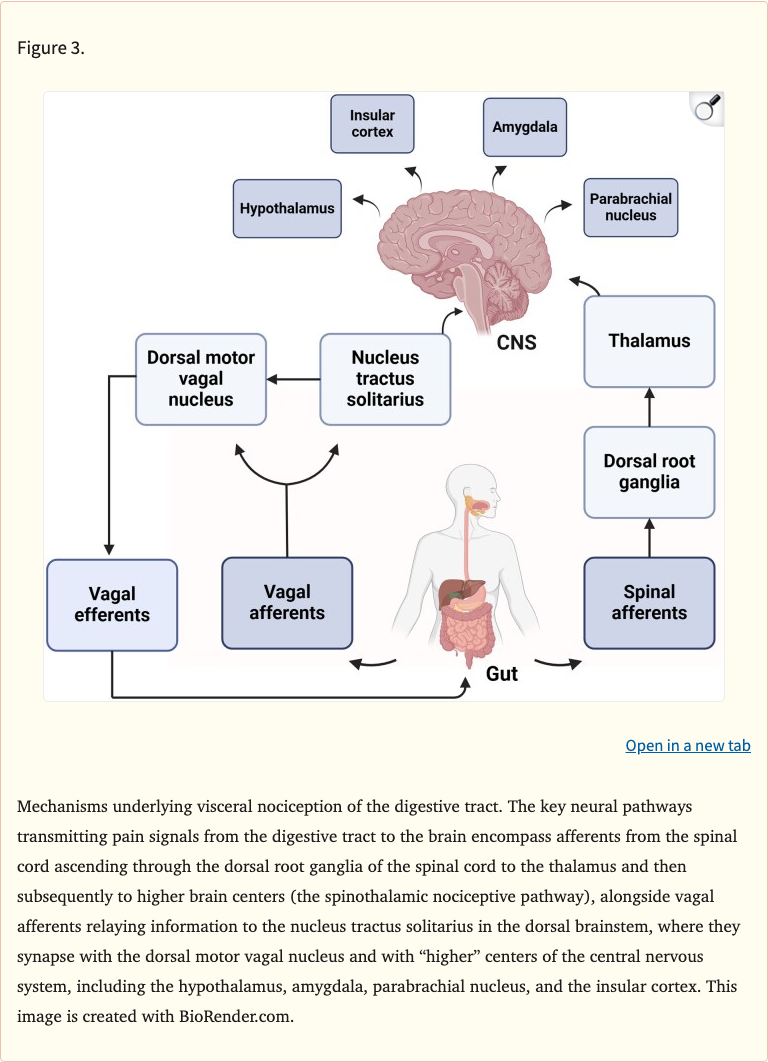 Figure 3
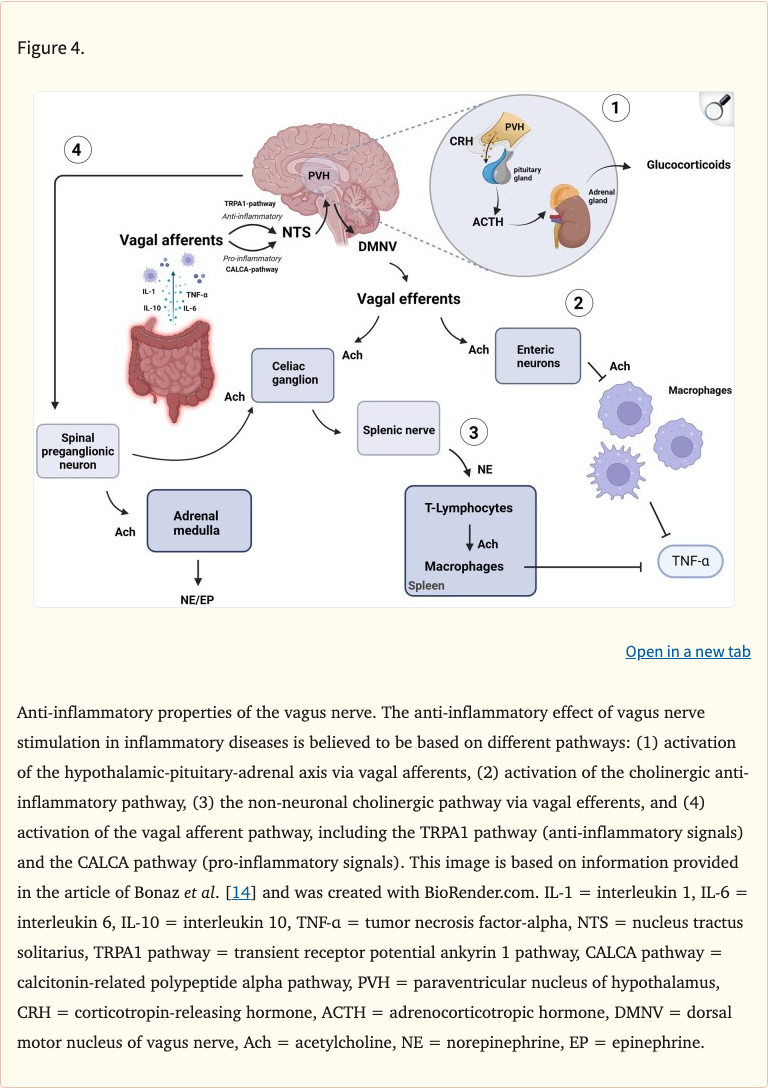 Figure 4