
Key Takeaway
Vagus nerve stimulation demonstrates significant anti-inflammatory effects in autoimmune diseases including rheumatoid arthritis and Crohn disease, primarily through activation of the cholinergic anti-inflammatory pathway.
Summary
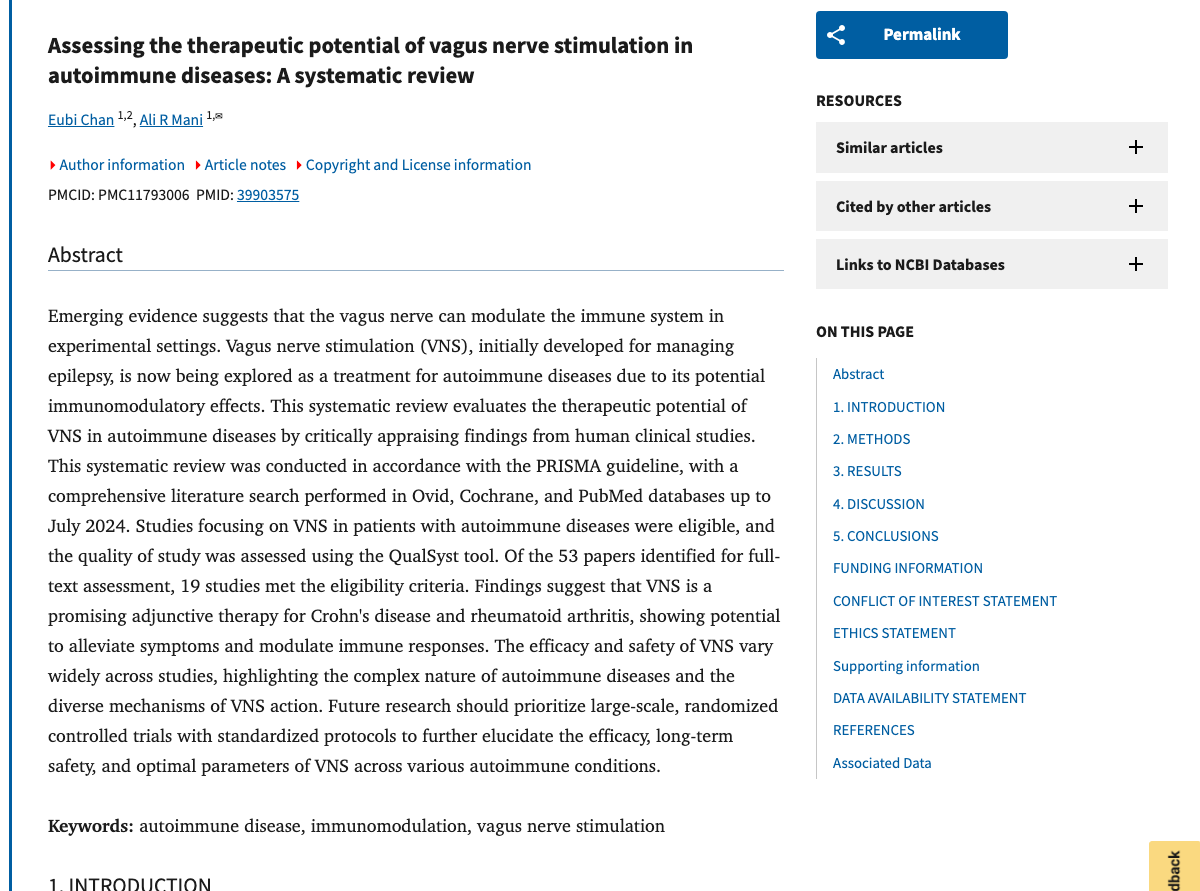
This systematic review evaluated the therapeutic potential of vagus nerve stimulation (VNS) across a range of autoimmune diseases. The authors examined both preclinical and clinical studies involving invasive VNS and non-invasive transcutaneous approaches in conditions such as rheumatoid arthritis, Crohn disease, systemic lupus erythematosus, and multiple sclerosis.
The evidence shows that VNS activates the cholinergic anti-inflammatory pathway, reducing pro-inflammatory cytokines (TNF-alpha, IL-6, IL-1beta) and attenuating disease activity. Clinical trials in rheumatoid arthritis and Crohn disease have shown measurable reductions in disease severity scores and inflammatory biomarkers, with some patients achieving remission.
The review concludes that VNS represents a promising bioelectronic medicine approach for autoimmune conditions, particularly for patients who are refractory to conventional immunosuppressive therapies. However, the authors note that evidence remains limited by small sample sizes and short follow-up periods, and they call for larger multicenter trials to confirm long-term efficacy and safety.