Key Takeaway
First-in-human study showing that implantable vagus nerve stimulation significantly reduces rheumatoid arthritis symptoms by inhibiting inflammatory cytokine production.
Summary
This landmark study demonstrated that electrical stimulation of the vagus nerve could treat rheumatoid arthritis by activating the "inflammatory reflex" - a neural circuit that regulates immune responses.
Patients with treatment-resistant RA received implantable VNS devices. After stimulation, TNF and other inflammatory cytokines were significantly reduced, and disease activity improved substantially. Some patients who had failed multiple medications showed dramatic improvement.
This study provided proof-of-concept that bioelectronic medicine - using electrical signals to treat disease - could work in humans, opening a new frontier in treating inflammatory conditions.
Methods
- 17 patients with rheumatoid arthritis
- Implantable VNS device on left cervical vagus
- Up to 4 minutes of daily stimulation
- Measured cytokines and disease activity (DAS28)
- 84-day follow-up period
Key Results
- Significant reduction in TNF production
- Disease activity scores improved in majority of patients
- Some patients achieved low disease activity or remission
- Benefits persisted with continued stimulation
- Well-tolerated with expected VNS side effects
Figures
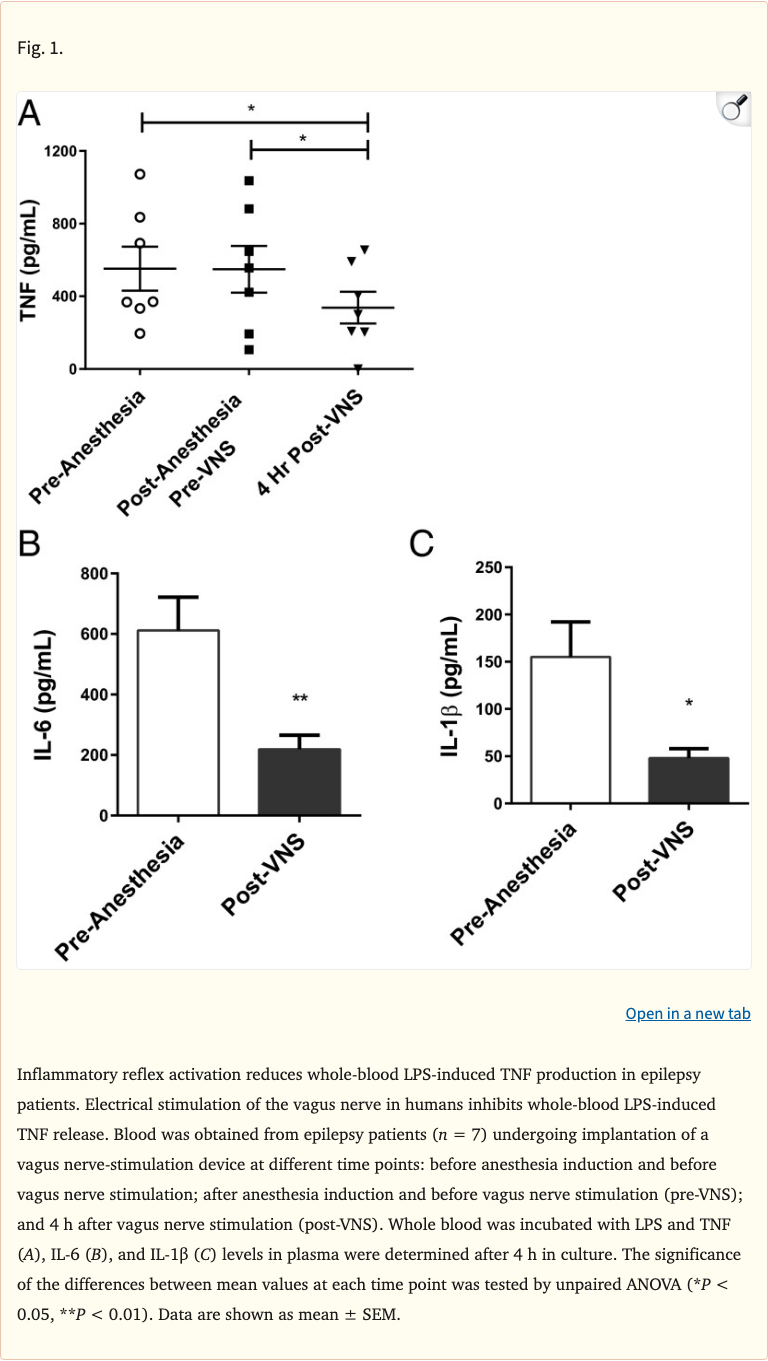 Figure 1
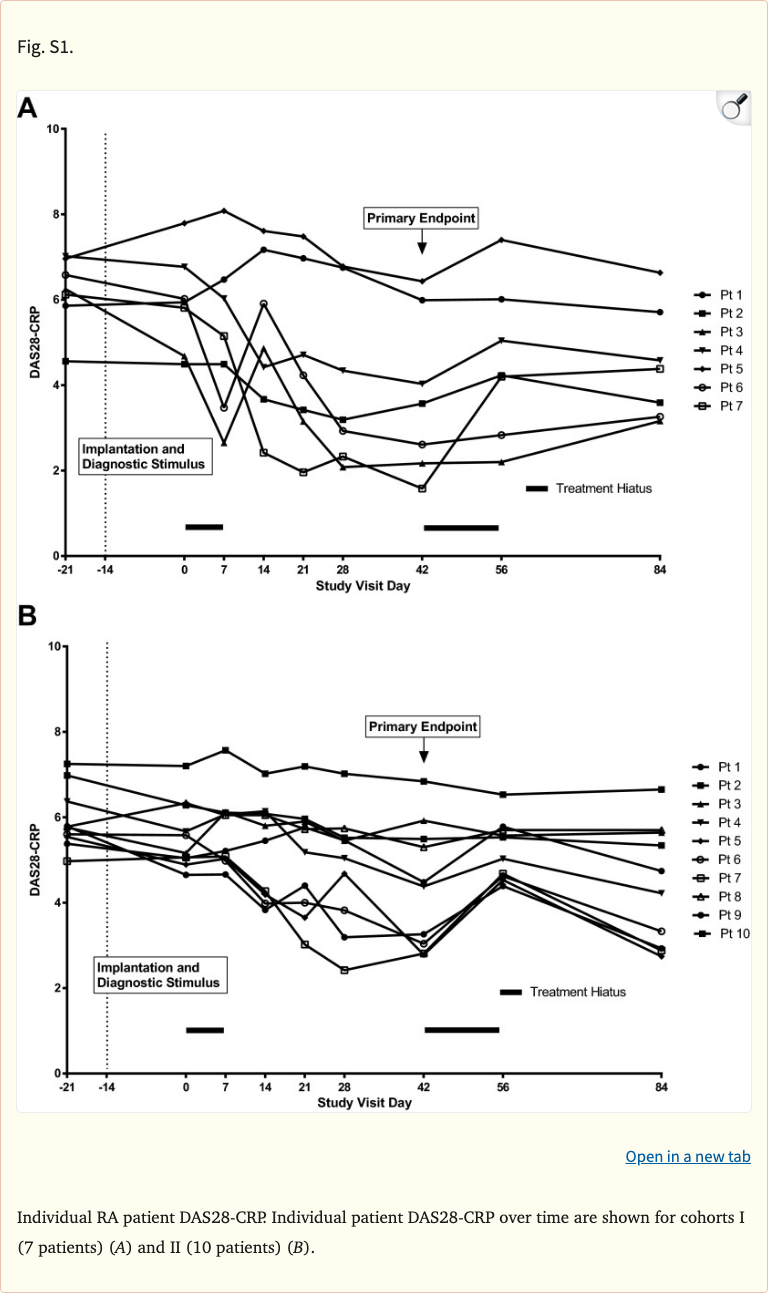 Figure 2
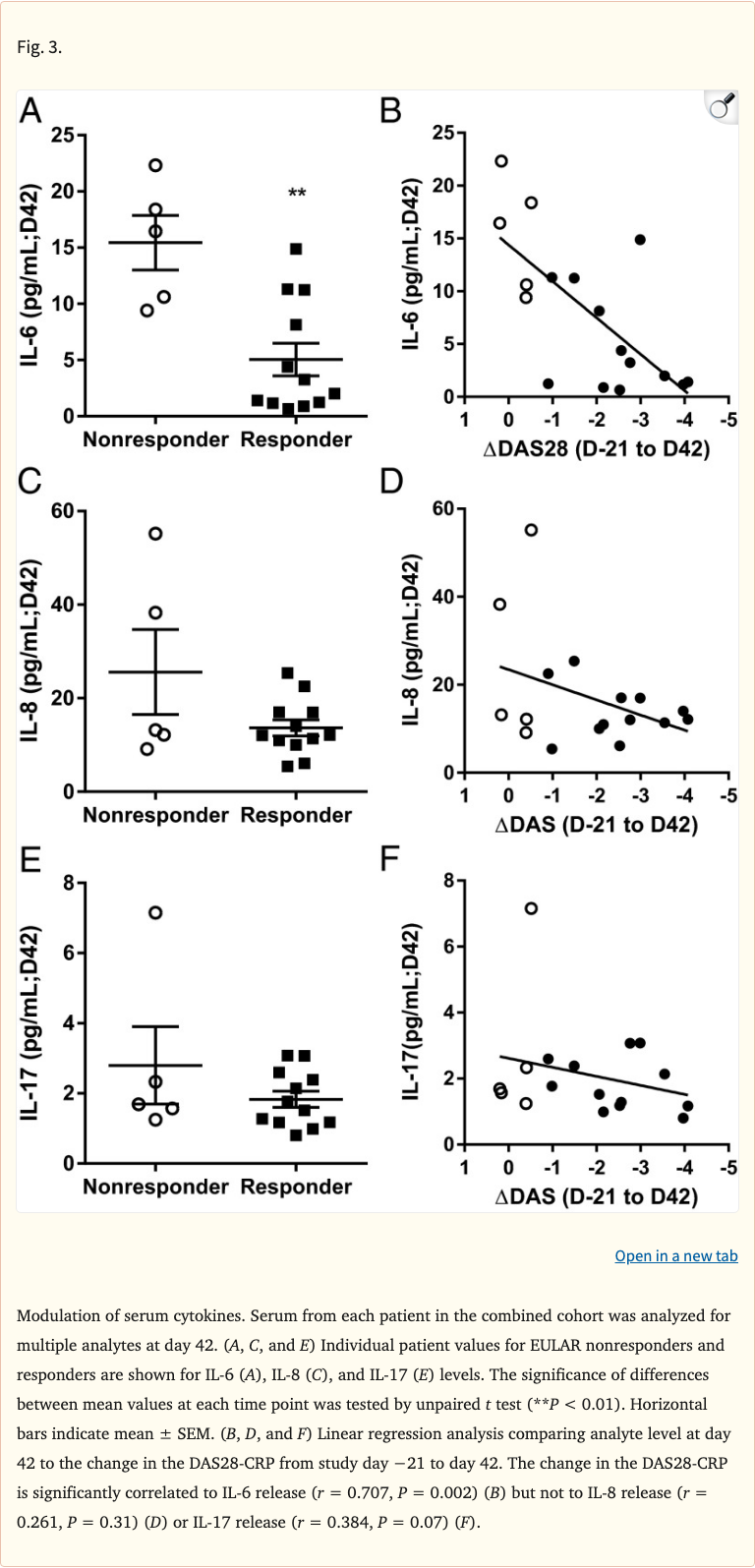 Figure 3
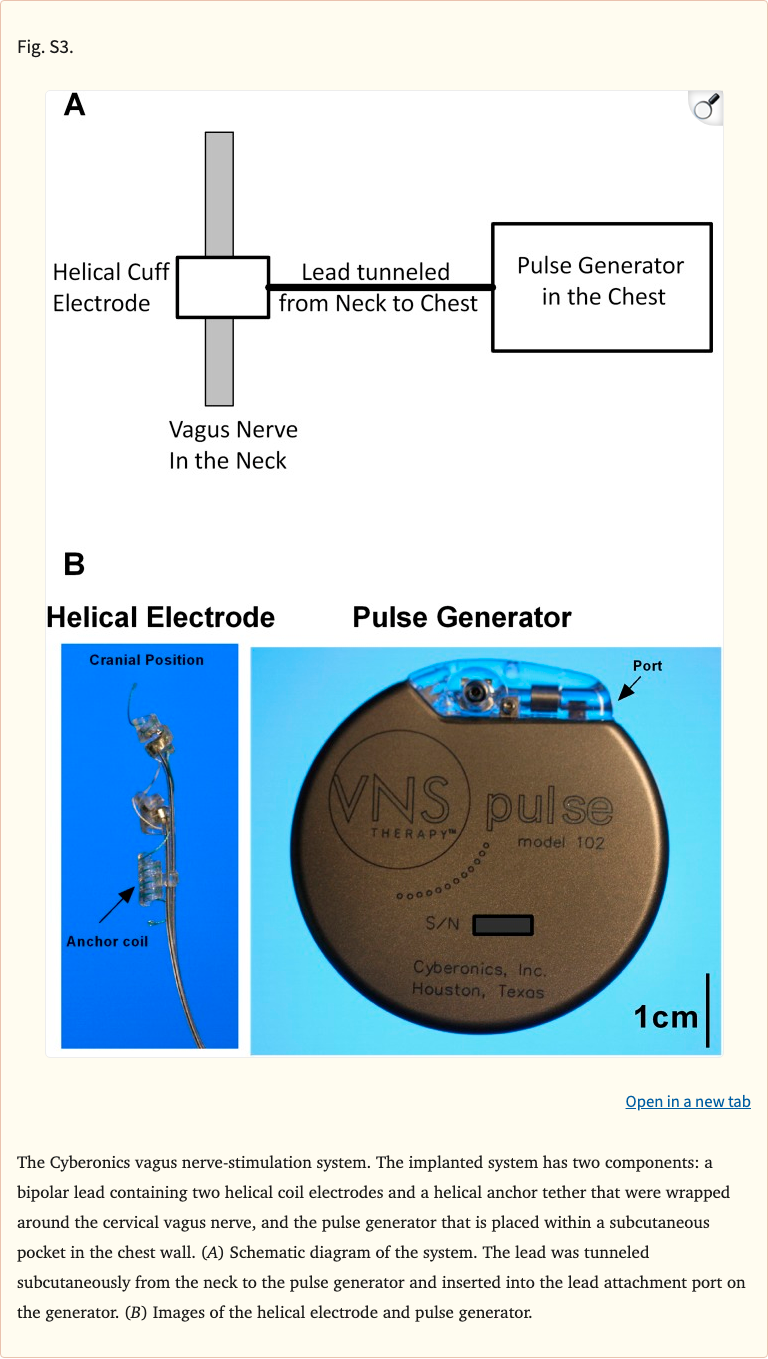 Figure 4
Limitations
- Small sample size (17 patients)
- Open-label design (no placebo control)
- Short follow-up period
- All patients had failed other treatments