Key Takeaway
Current evidence does not support claims that blue light from digital devices causes retinal damage at normal exposure levels, though circadian disruption from evening screen use remains a well-supported concern.
Summary
This review examined the safety of artificial blue light emitted by digital devices, addressing both the potential for retinal damage and the well-documented effects on circadian rhythm. The authors synthesized evidence from cell studies, animal models, and human research to evaluate whether the blue light levels emitted by consumer electronics pose a genuine health risk.
The review found that while high-intensity blue light can damage retinal cells in laboratory settings, the intensity and duration of blue light from typical digital device use falls far below the thresholds shown to cause harm in these experiments. The authors emphasized that exposure levels from screens are orders of magnitude lower than those from sunlight, and current evidence does not support marketing claims that blue-light-filtering products protect against retinal damage from screens.
However, the review did confirm that blue light's impact on the circadian system is well-established. Even at the lower intensities produced by digital devices, evening blue light exposure can suppress melatonin and shift circadian phase. The authors concluded that while blue-blocking glasses and filters are unlikely to prevent eye disease, they may still have a legitimate role in managing circadian disruption for people with significant evening screen exposure.
Methods
Narrative review of published literature on blue light safety, covering in vitro studies on retinal cell damage, animal phototoxicity models, human epidemiological data on light exposure and eye disease, and clinical studies on blue light and circadian function. The review examined exposure levels from digital devices compared to natural sunlight and established safety thresholds.
Key Results
- Blue light from digital screens is far less intense than blue light from sunlight (100-1000x lower)
- In vitro studies showing retinal cell damage used light intensities not representative of screen use
- No epidemiological evidence links normal digital device use to retinal diseases like macular degeneration
- Circadian effects of blue light are confirmed at screen-level intensities
- Evening screen use suppresses melatonin by 20-50% depending on duration and intensity
- Blue-light-blocking products effectively reduce circadian disruption but lack evidence for preventing eye disease
Figures
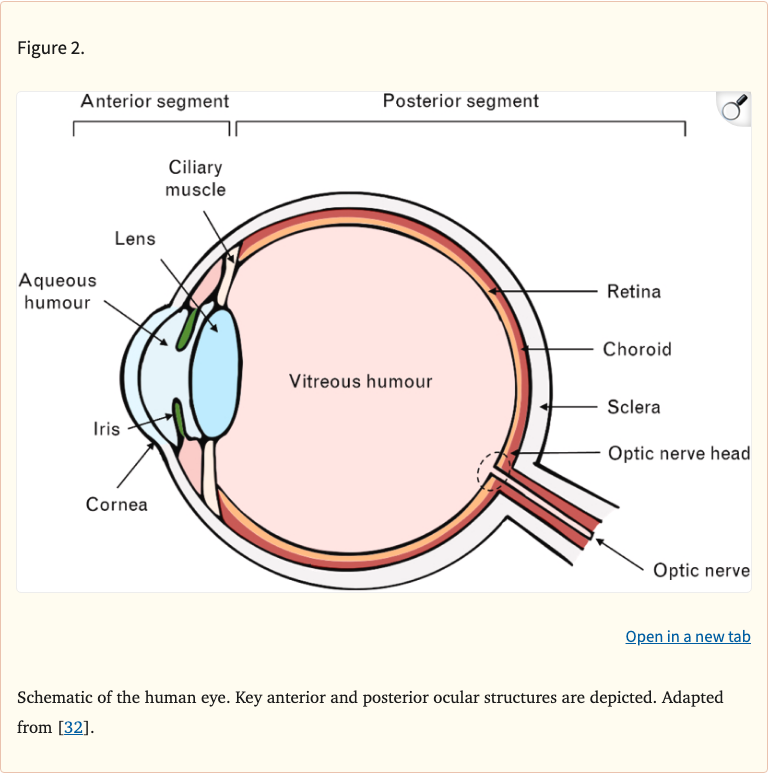 Figure 1
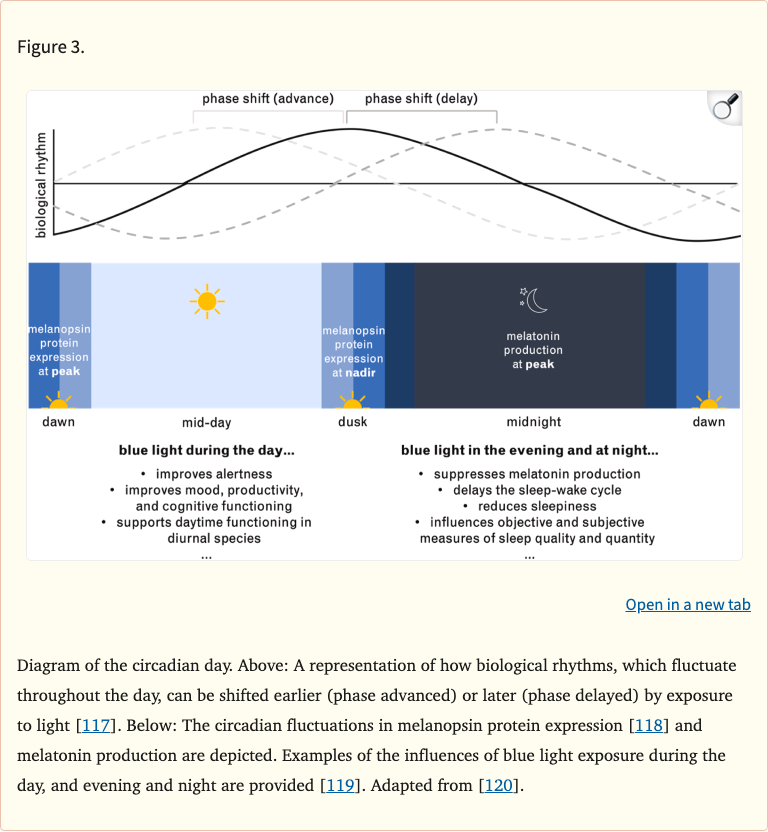 Figure 2
Limitations
- Narrative review methodology rather than systematic review with formal search criteria
- Long-term effects of chronic low-level blue light exposure from devices remain unstudied
- Rapidly evolving technology (OLED, microLED) may change exposure profiles
- Individual variation in light sensitivity and baseline eye health not fully addressed
- Limited human studies specifically measuring retinal effects of screen-level blue light
- Could not quantify exact safe exposure thresholds for digital device use
Related Interventions
Related Studies
Discussed In