Summary
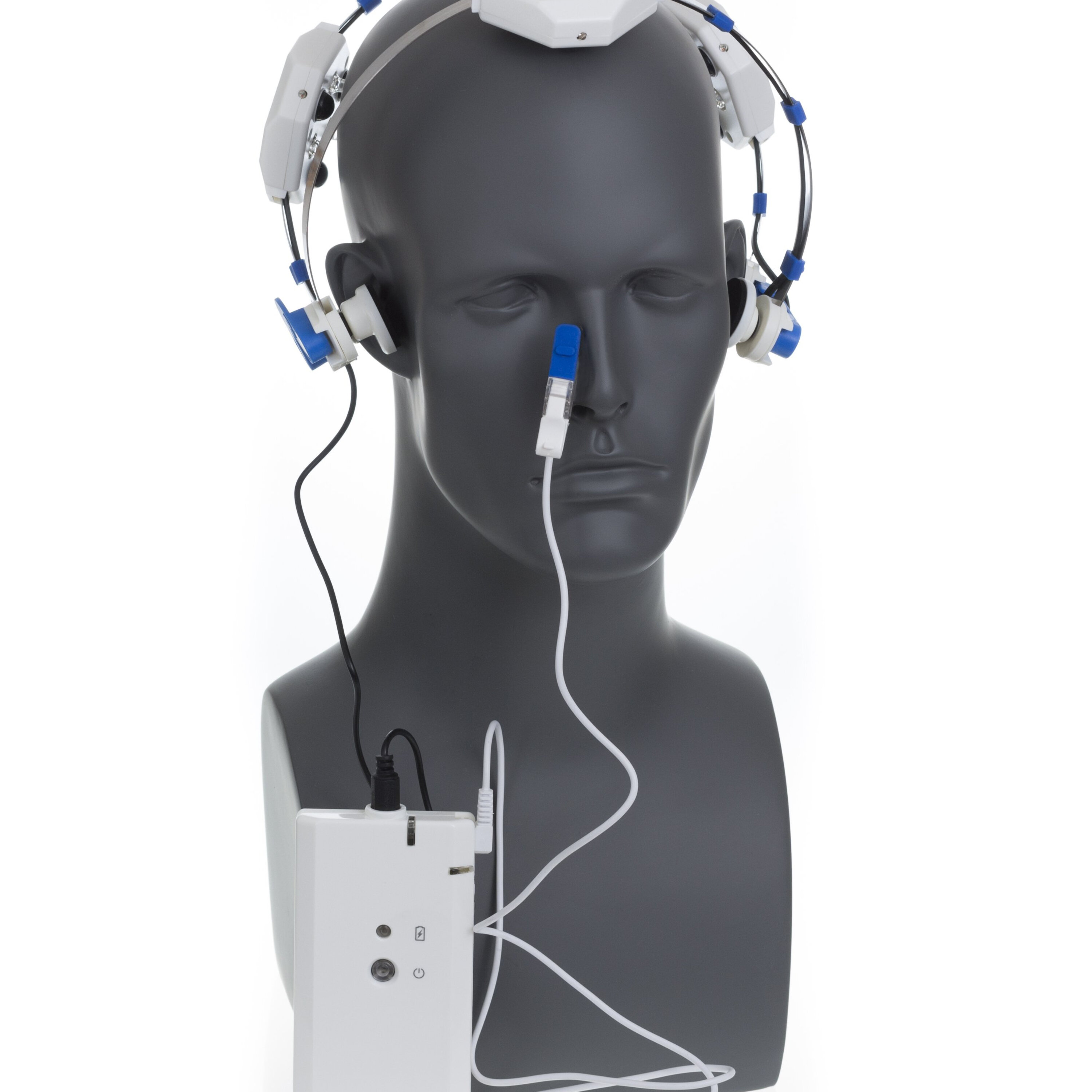
Ben Greenfield interviews Dr. Lew Lim, inventor of the VieLight intranasal light therapy device and expert in photobiomodulation. Dr. Lim explains how low-level light therapy works at the cellular level by stimulating mitochondria to produce more ATP and releasing nitric oxide, which improves blood circulation. The nose is an ideal delivery point because it has the densest concentration of blood capillaries near the surface and is only about three inches from the brain with minimal tissue barrier. The conversation covers applications ranging from cognitive enhancement and Alzheimer's disease treatment to athletic performance and sleep improvement. Dr. Lim describes his ongoing placebo-controlled study for Alzheimer's patients in Toronto showing recovery measured by cognitive scales, and discusses research from the University of Texas showing improved memory retrieval and decision-making from transcranial light therapy. They also explore the biphasic nature of laser light, where low levels heal while high levels are destructive, and the differences between LED and laser delivery methods.
Key Points
- Intranasal light therapy delivers red or near-infrared light through the nose, where blood capillaries are densest and tissue is thin enough for light to reach the brain
- Low-level light stimulates mitochondria to produce more ATP and releases nitric oxide, which relaxes blood vessels and improves circulation
- The nose is about three inches from the brain with mainly soft tissue in between, making it an efficient pathway for brain stimulation
- Laser light is biphasic: low level heals, high level destroys, and somewhere in between nothing happens
- A pilot study for Alzheimer's patients showed cognitive recovery measured by mini mental state exam and daily living assessments
- University of Texas research found transcranial light therapy improved memory retrieval speed, accuracy, and decision-making in students
- Athletes and Olympic teams use low-level light therapy for faster recovery from injuries, with some discussion about whether it constitutes performance-enhancing doping
- Users report improved sleep quality when using intranasal light therapy, possibly through enhanced melatonin release
Key Moments
How intranasal light therapy works at the cellular level
Dr. Lim explains that low-level light stimulates mitochondria to produce more ATP and releases nitric oxide, improving oxygenation and blood circulation throughout the body.
"When a person is not functioning optimally and you're exposed to low-level light or laser therapy, oxygenation actually increases. If you do a PET scan, you can actually see more activity in the brain."
Why the nose is the ideal entry point for brain photobiomodulation
Dr. Lim explains that the nose has more blood capillaries per square centimeter than virtually anywhere else in the body and is only about three inches from the brain with minimal tissue barrier, making it the most efficient route for light to reach the brain.
"The nose has more blood capillaries per square centimeter than virtually anywhere else in the body, believe it or not. You just think about it. Here's the scratch test. You scratch anywhere in the body, including the membrane inside the nose, and just ask yourself which will bleed first."
Intranasal light therapy shows promise for Alzheimer's disease
Dr. Lim describes his pilot study for Alzheimer's patients showing cognitive recovery, and University of Texas research demonstrating improved memory retrieval and decision-making from photobiomodulation.
"Try it. It's not. It is not. You can still breathe freely. And I have people who use two different intranasal devices because we have one set of devices with visible red, which doesn't go quite as deep as the new infrared, which means that it gets into your circulatory system and it feeds your body as a whole in general, whereas the new infrared does direct brain stimulation. So when you do them both together, it's kind of holistic. Really? So you combine low-level light therapy with infrared? Yeah, we have the visible red, which doesn't penetrate that deep, which goes into the blood circulation, and the new infrared, which goes right. Okay, so it's visible and then infrared. And is that on the same device, or do you have to purchase two different devices to combine the two? Yeah, the different devices, because it's often better not to have two different wavelengths coming out of a diode that's close together. There's some interference going yeah that makes sense could you put for example uh the red one in your left nostril and then the infrared one in your right nostril and do both at the same time yes we have a growing number of people doing that i i don't do it because i just i feel healthy i've not my annual medical is been. So I use the infrared to make sure I don't get into a dementia or a cognitive impairment. Yeah. Yeah. Do you use this at all prior to efforts for which you need enhanced cognitive performance, such as writing a paper or recording the Ben Greenfield fitness show? Do uh do you actually use it to like charge your brain up for certain activities yeah that's interesting um i know the professor at university of texas austin um and last year he published a paper um testing on his university students and found that while he didn't use the internet, he directed the light to the front part of the brain and found that the memory retrieval of information improved significantly in terms of the lag time and also more accurate. Then this year, he published another paper demonstrating using the Wisconsin cut test, demonstrating that the decision making is significantly better and learning improved."
Athletic performance and potential doping concerns with light therapy
Discussion of how photobiomodulation is used by Olympic teams for rehabilitation and recovery, with some researchers comparing its effects to blood doping due to improved oxygenation and athletic performance.
"So they're looking at making something like this illegal for using during sports because of its effect? Yeah. There is some discussion. but I say that low-level light laser therapy in sports has been, so far, been used in a lot of Olympic teams, mainly for rehabs, for quicker recovery from injuries. Especially when you have injuries, it is significant if you study the papers published. Again, are you enhancing performance is is arguable but i think you know in lab studies at harvard they show that mice being exposed to low level light therapy actually they perform much better they climb up these uh miniature stack cases quicker rate and The endurance is better. Really? So in a study like that, are they putting little low-level light therapy devices up the noses of the mice, or are they using some other way to introduce that? It's a lot easier than that. They just base the mice in red, probably near-infrared light. That's really interesting. So I use an infrared sauna. And frankly, once I've gotten my cold shower and my body temperature back down after I've come out of that sauna, I feel amazing, right? Like my cognitive performance goes through the roof for the next couple hours and I'm a productivity machine. However, for use during sports, right? Like let's say for the triathlete, you know, hammering a bicycle down the highway or, you know, somebody pounding down the trails during a trail run, how would you practically use something like low-level light therapy in a situation like that? Well, they actually apply low-level light therapy before the event, before your need for performance, and find that the performance and the muscular recovery is quicker. So you do it almost the same way that they've done studies on the use of an ice vest prior to competition, or the same reason that the Tour de France cyclist would sit in an ice bath before they warm up to head out for a time trial, you could use something like low-level light therapy prior to your performance? Yeah, I guess you can. There's no regulation against it. I actually have feedback from a coach who is also, if I remember, a couple of years back, a chiropractor. He was telling me that he had someone that was under him. I'm not sure whether it was rehab or just a guy who does long distance running."