Summary
Boomer Anderson interviews Dr. Lew Lim, founder and CEO of VieLight, about the science of transcranial and intranasal photobiomodulation. Dr. Lim traces the field back to 1967 discoveries in Hungary and explains how red and near-infrared light stimulates cytochrome C oxidase in the mitochondria, triggering ATP production and nitric oxide release. The conversation covers the importance of wavelength selection, with 810 nanometers penetrating deep enough to reach the brain and different pulse frequencies (10 Hz alpha vs 40 Hz gamma) producing distinct neurological effects. They discuss MIT research showing 40 Hz light reduces beta-amyloid plaques, the potential for photobiomodulation to trigger meditative bliss states at higher frequencies, and VieLight's COVID-19 clinical trial with 290 subjects showing accelerated recovery. Dr. Lim also explains how the X+ device targets the thymus gland to boost immune function through enhanced T-cell production and how mitochondrial melatonin production from photobiomodulation acts as a subcellular antioxidant.
Key Points
- Photobiomodulation has been researched for over 50 years, originating from 1967 discoveries in Hungary about low-level laser effects on tissue
- Cytochrome C oxidase in the mitochondria absorbs red to near-infrared light (600-1000nm), boosting ATP production and releasing nitric oxide for improved circulation
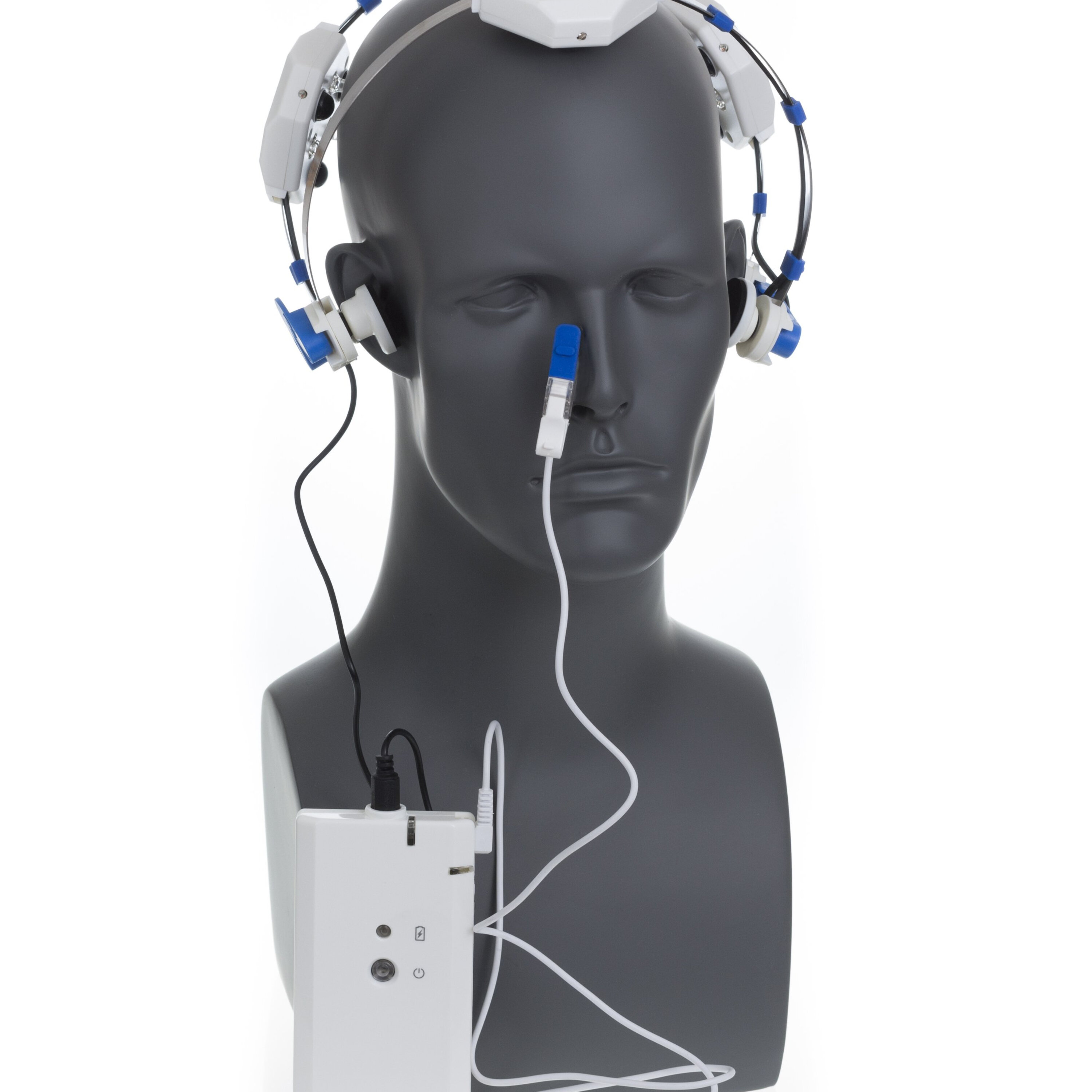
- 810nm near-infrared wavelength penetrates deep enough through nasal tissue and skull to reach the brain directly
- 10 Hz alpha pulse frequency targets the default mode network for relaxation and sleep, while 40 Hz gamma improves memory encoding and reduces beta-amyloid plaques
- MIT research demonstrated that 40 Hz flickering light reduced Alzheimer's markers in the brain
- Advanced meditators report achieving altered states similar to psilocybin experiences at frequencies of 120-400 Hz using the NeuroPro device
- VieLight's COVID-19 clinical trial with 290 subjects showed accelerated recovery, leading to Health Canada approval for coronavirus treatment
- Mitochondria produce subcellular melatonin in response to photobiomodulation, acting as an intracellular antioxidant distinct from pineal gland melatonin
Key Moments
How photobiomodulation activates cytochrome C oxidase in the mitochondria
Dr. Lim explains the core mechanism of photobiomodulation: light enters the mitochondria and interacts with cytochrome C oxidase in the respiratory chain, releasing nitric oxide and boosting ATP production, which triggers gene transcription for healing and cellular integrity.
"The mitochondria, more specifically in the respiratory chain, where this process goes on into creating ATP, the cellular energy. Then it began to close in into a particular enzyme in the respiratory chain that apparently has this chromophore that receives the red to near-infrared light."
Why the nose is the thinnest membrane for delivering light to the brain
Dr. Lim explains his approach of finding the thinnest membrane in the body to deliver light, settling on the nasal cavity where red light can reach blood vessels and near-infrared at 810nm penetrates deep enough to stimulate the brain directly.
"When it gets absorbed by water, it starts agitating the water molecule and it creates heat. So heat helps. It helps with comfort and it does have stimulating qualities, even some healing and so on. But in photobiomodulation, you really don't want to go into the thermal effect of creating heat. So you want to avoid that because all you need is just deliver light to the cells, to the mitochondria."
Alpha vs gamma frequencies for different brain effects
Dr. Lim describes how 10 Hz alpha pulsing targets the default mode network for relaxation and sleep, while 40 Hz gamma improves memory encoding and reduces beta-amyloid plaques, with advanced meditators reporting psilocybin-like experiences at higher frequencies.
"So that's, and I can see why that's happening because that goes back to what I said earlier about, you know, when you use gamma 40 Hertz, you see these changes in alpha beta gamma and actually reducing the power of the slow waves. And when you increase the power of the gamma, what you're doing is in gamma, gamma is, is a place that your brain is not always there unless it's,"
Mitochondrial melatonin production from photobiomodulation
Dr. Lim reveals that mitochondria produce their own melatonin in response to photobiomodulation, distinct from pineal gland melatonin, which acts as a subcellular antioxidant to neutralize free radicals and maintain cellular health.
"a red intranasal rather than an infrared intranasal, which is visible red. So when you put that together with neuro, you're having a more holistic, you know, delivery of further by modulation to your body, because now you're treating deeper in your brain. And then you're having this red that goes more to your system in general. And the health of your brain also depends on the health of the body. So it is kind of holistic. And, you know, if,"