
Key Takeaway
Randomized crossover trial in 21 halitosis patients shows tongue scraping alone does not significantly reduce halitosis-associated bacteria, suggesting its primary benefit is mechanical debris removal rather than antimicrobial action.
Summary
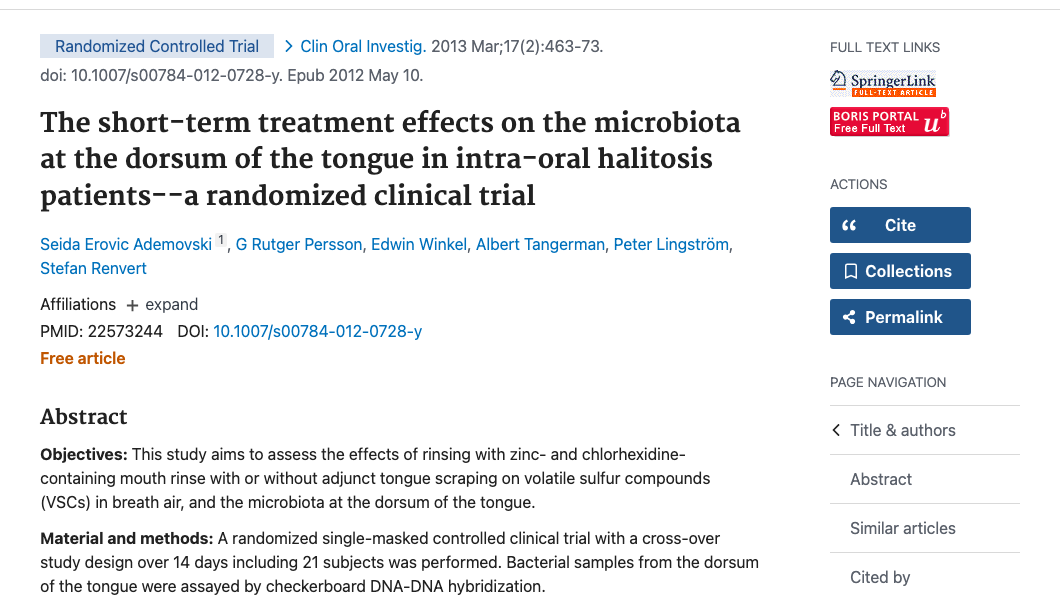
This randomized clinical trial used a crossover design to investigate the short-term effects of tongue cleaning on the bacterial composition of the tongue dorsum in patients with intra-oral halitosis. Twenty-one participants with confirmed halitosis underwent different tongue cleaning interventions, with microbial sampling performed before and after each treatment phase.
The study found that while tongue scraping effectively removed visible tongue coating and temporarily reduced volatile sulfur compound levels, it did not produce statistically significant changes in the composition of halitosis-associated bacterial species on the tongue surface. The bacteria that are most strongly linked to malodor production -- including certain anaerobic species that thrive in the tongue biofilm -- persisted despite mechanical scraping.
This finding is mechanistically important because it suggests that tongue scraping works primarily through physical removal of loose debris, dead cells, and food particles rather than by meaningfully altering the underlying bacterial community. The tongue biofilm is a complex, adherent microbial ecosystem that reforms quickly after mechanical disruption, which may explain why scraping provides temporary but not lasting antimicrobial effects.
The clinical implication is that tongue scraping should be viewed as a daily hygiene practice for mechanical debris removal rather than a bactericidal intervention. For patients with persistent halitosis driven by specific bacterial populations, additional approaches such as antimicrobial mouthwashes or professional periodontal treatment may be needed alongside regular tongue cleaning.
