
Key Takeaway
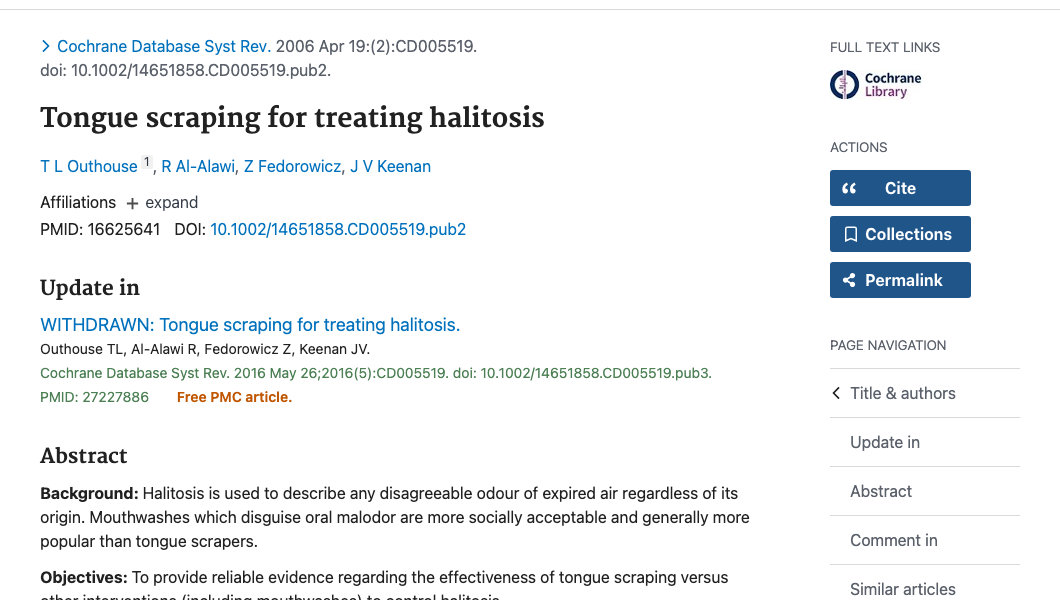
Cochrane review of 2 trials (40 participants) finds tongue scrapers produce a statistically significant reduction in volatile sulfur compounds compared to toothbrushes, though evidence quality is weak.
Summary
This Cochrane systematic review evaluated the evidence for tongue scraping as a treatment for halitosis (bad breath). The authors searched multiple databases and identified only two eligible randomized controlled trials with a combined total of 40 participants, highlighting how limited the formal research base was at the time of publication.
Both included trials compared tongue scrapers to toothbrushes for tongue cleaning. The pooled analysis found a statistically significant but small reduction in volatile sulfur compounds (VSCs) -- the primary chemical markers of oral malodor -- when using tongue scrapers versus toothbrushes. One trial also reported reduced tongue coating scores with the scraper.
The authors noted that the overall quality of available evidence was weak, citing small sample sizes, short follow-up periods, and methodological limitations in both trials. They concluded that while there is modest evidence favoring tongue scrapers over toothbrushes for VSC reduction, no firm conclusions could be drawn about long-term clinical benefit.
Despite the cautious conclusions, this Cochrane review is significant because it represents the highest level of evidence synthesis available for tongue scraping. The fact that even with only two small trials, a statistically significant effect was detected suggests a real (if modest) benefit of scraping over brushing for halitosis management.
