
Key Takeaway
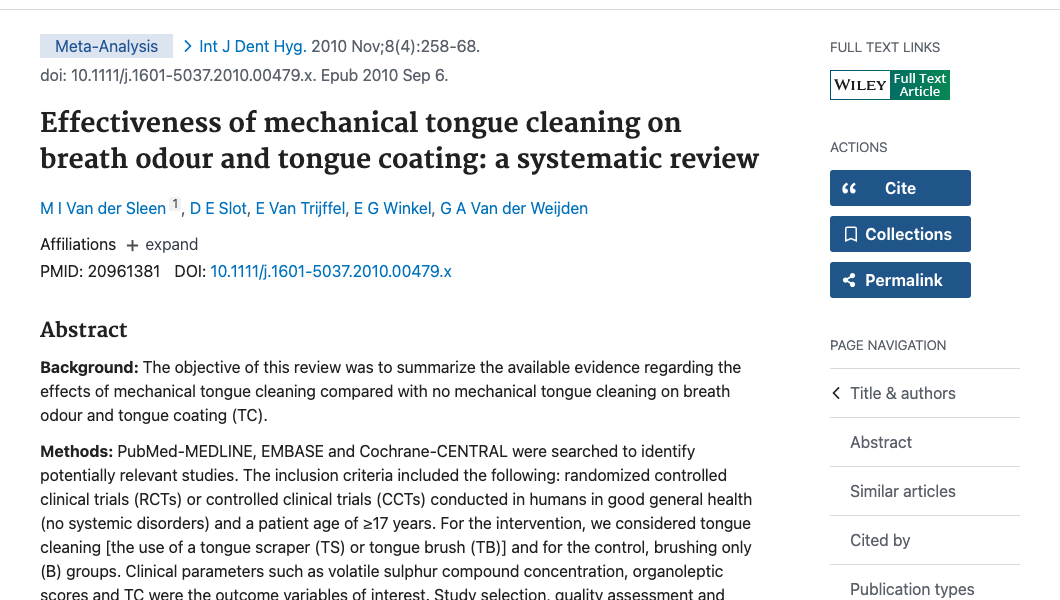
Systematic review of 5 studies (3 RCTs, 2 CCTs) confirms mechanical tongue cleaning reduces oral malodour and tongue coating when added to regular toothbrushing.
Summary
This systematic review examined the effectiveness of mechanical tongue cleaning -- using either tongue scrapers or tongue brushes -- on breath odor and tongue coating. The authors conducted a comprehensive literature search and identified five studies meeting their inclusion criteria: three randomized controlled trials and two controlled clinical trials.
The review found consistent evidence that mechanical tongue cleaning, when performed in addition to regular toothbrushing, leads to measurable reductions in both tongue coating and oral malodor. Studies used various outcome measures including volatile sulfur compound (VSC) levels measured by gas chromatography or portable sulfide monitors, organoleptic (smell-based) assessments by trained judges, and tongue coating indices.
The authors noted that tongue scrapers and specialized tongue brushes both showed benefit, though the evidence was somewhat stronger for scrapers in terms of VSC reduction. The review also highlighted that tongue cleaning appeared most beneficial when tongue coating was visibly present, suggesting that patients with heavier tongue coatings may see the greatest improvements.
While the review concluded that mechanical tongue cleaning is an effective adjunct to toothbrushing for reducing halitosis symptoms, the authors cautioned that the evidence base remained limited in both quantity and quality. They called for larger, longer-term randomized trials with standardized outcome measures to strengthen the clinical recommendations.