
Key Takeaway
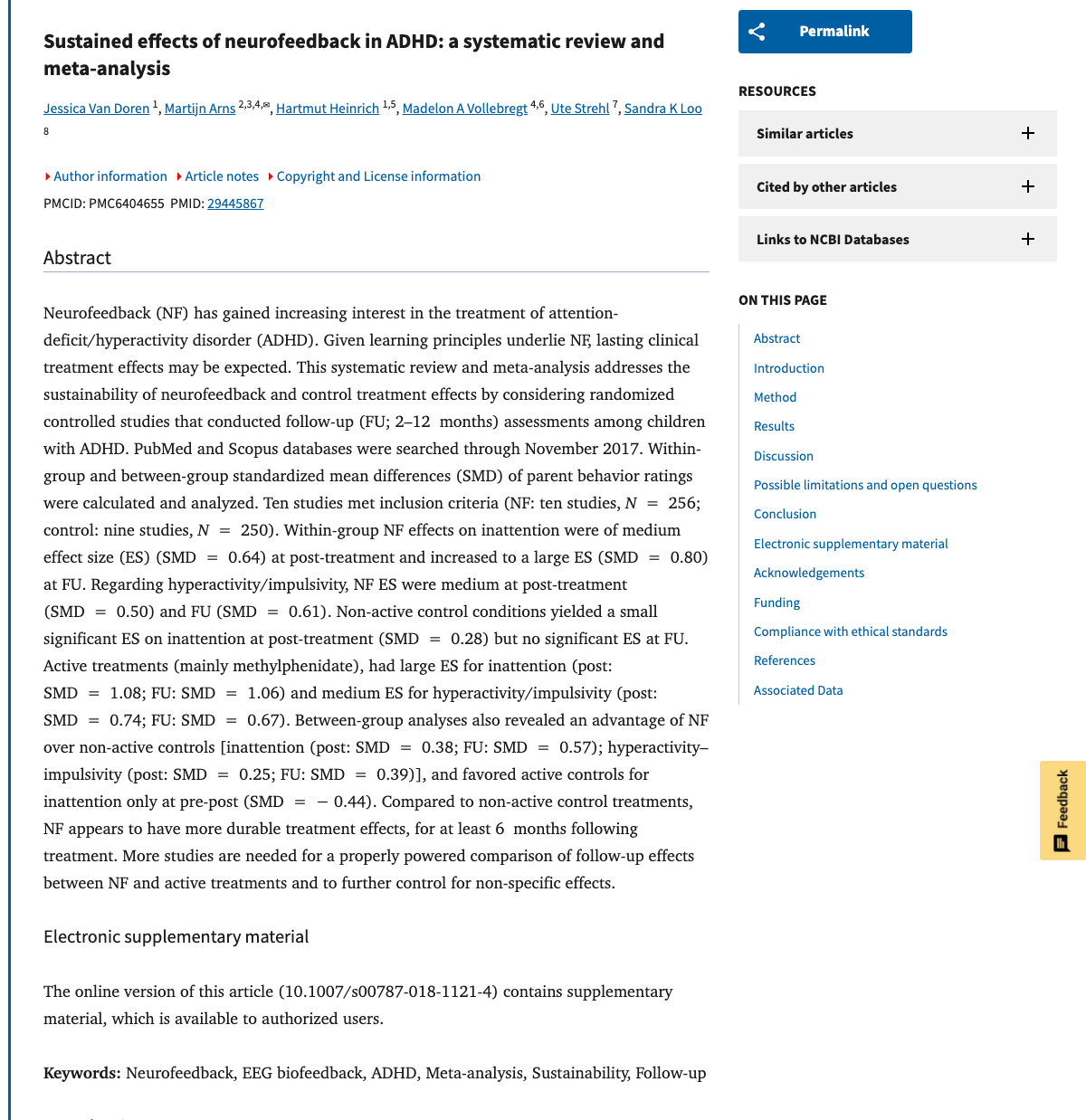
Neurofeedback effects in ADHD are sustained at follow-up (6-12 months), unlike medication effects which require ongoing treatment.
Summary
This meta-analysis specifically examined the long-term sustainability of neurofeedback effects in ADHD, addressing a key question about whether benefits persist after treatment ends.
Analyzing follow-up data from multiple controlled trials, the study found that neurofeedback effects are maintained at 6-12 month follow-up, and in some cases continue to improve. This contrasts with medication, which only works while being taken. The findings suggest neurofeedback produces lasting brain changes rather than temporary symptomatic relief.
Methods
- Meta-analysis of randomized controlled trials with follow-up data
- Focused on studies with 6+ month follow-up
- Analyzed sustainability of treatment effects
- Compared active treatment vs control conditions
Key Results
- Effects sustained at 6-12 month follow-up
- Some improvement between end of treatment and follow-up
- Larger effects in studies with standard protocols
- Benefits maintained without ongoing sessions
- Effect sizes remained clinically meaningful
Figures
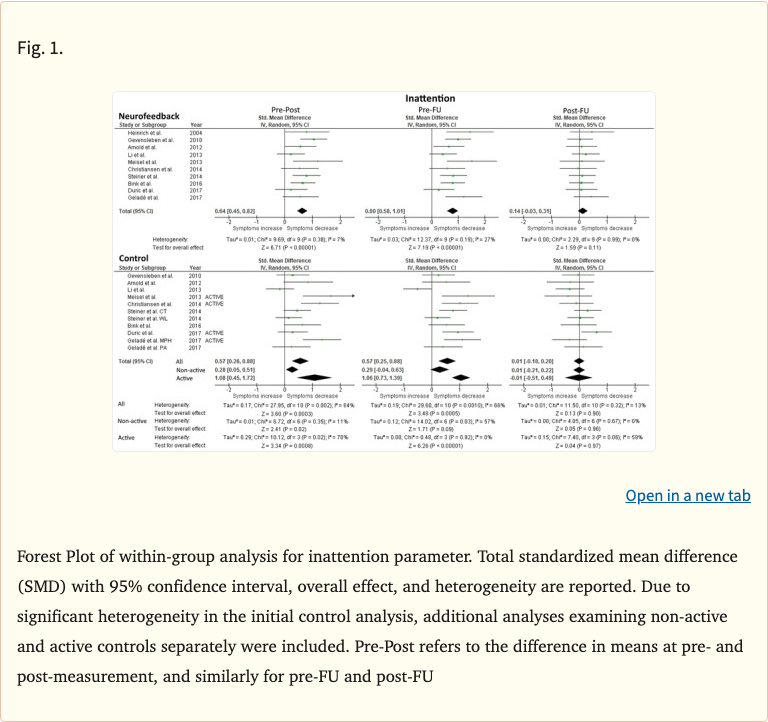 Figure 1
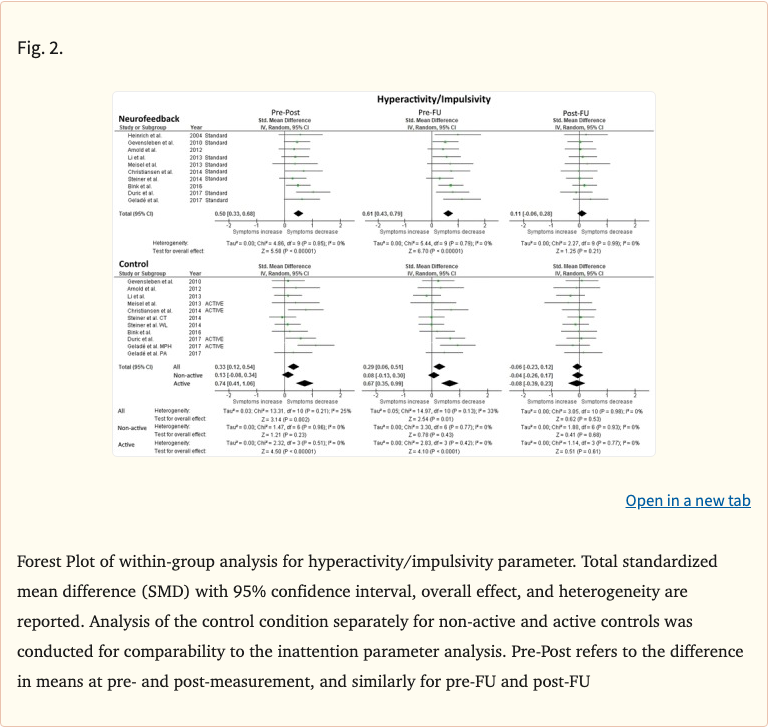 Figure 2
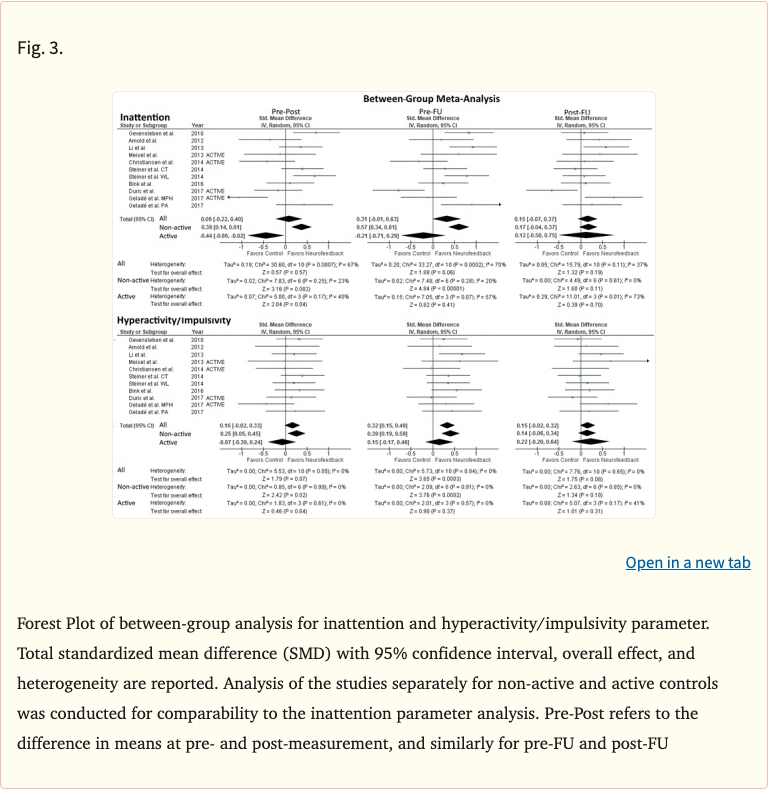 Figure 3
Limitations
- Limited number of studies with long-term follow-up
- Heterogeneous control conditions across studies
- Some studies had significant dropout at follow-up
- Protocol variations may affect generalizability