
Key Takeaway
Neurofeedback training improves performance in music, dance, acting, and sports through enhanced attention and anxiety regulation.
Summary
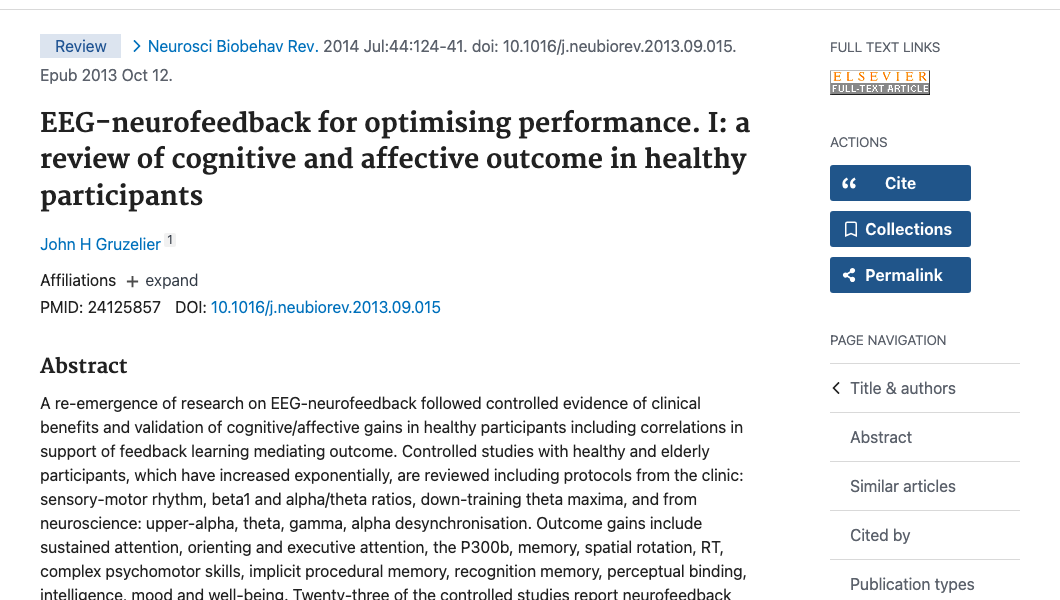
John Gruzelier's comprehensive review examines the application of neurofeedback for peak performance enhancement in healthy individuals. The review covers applications in music, dance, acting, sports, and cognitive tasks.
Key findings include improved musical performance in conservatory students (both technical execution and emotional expression), enhanced microsurgical skills, and improved athletic performance. The mechanisms appear to involve improved attentional control and anxiety regulation.
Methods
- Systematic review of performance enhancement studies
- Analysis of protocols used across different domains
- Examination of mechanisms and individual differences
- Integration of controlled studies with case reports
Key Results
- Significant improvements in musical performance quality
- Enhanced surgical skill performance
- Improved athletic performance and attention
- SMR and alpha/theta protocols most studied for performance
- Effects persist beyond training period
Limitations
- Many studies have small sample sizes
- Blinding challenging in neurofeedback research
- Protocol standardization lacking across studies
- Individual response variation not fully characterized