
Key Takeaway
Neurofeedback produces large effect sizes for inattention and impulsivity in ADHD, comparable to medication effects.
Summary
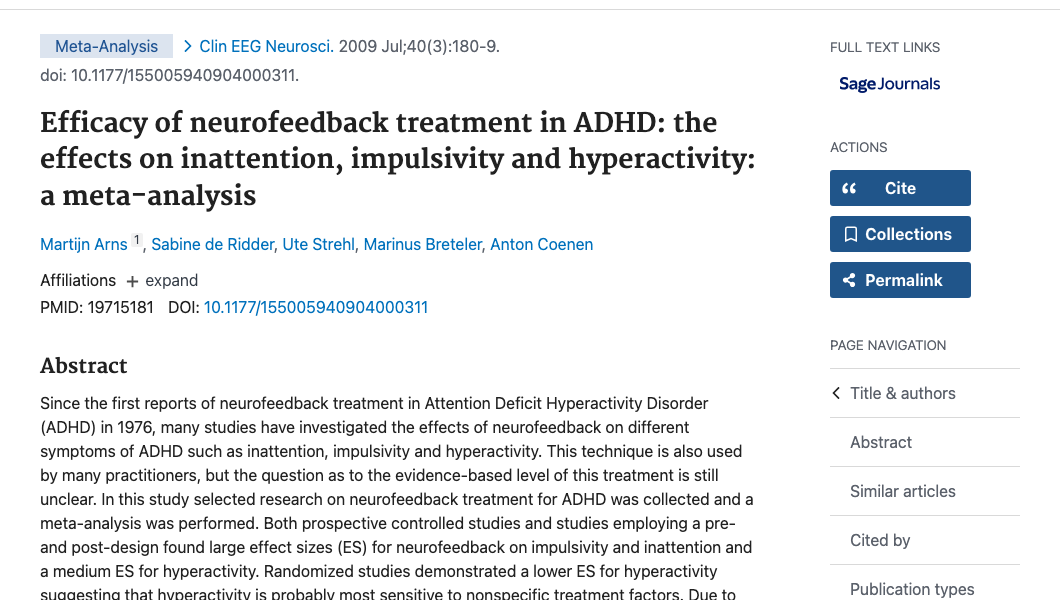
This landmark meta-analysis examined 15 controlled studies of neurofeedback for ADHD, finding significant effects across all three core symptom domains. The analysis established neurofeedback as an evidence-based treatment for ADHD.
Effect sizes were large for inattention (ES=0.81) and impulsivity (ES=0.69), and medium for hyperactivity (ES=0.40). These effects are comparable to those found in medication studies, supporting neurofeedback as a viable treatment alternative.
Methods
- Meta-analysis of 15 controlled studies
- Included studies with pre/post measurements and control groups
- Analyzed effects on inattention, impulsivity, and hyperactivity separately
- Used standardized effect size calculations
Key Results
- Inattention: Large effect size (ES=0.81)
- Impulsivity: Medium-to-large effect size (ES=0.69)
- Hyperactivity: Medium effect size (ES=0.40)
- Effects comparable to medication studies
- Benefits maintained at follow-up in studies that measured it
Limitations
- Heterogeneity in protocols across studies
- Not all studies were randomized controlled trials
- Blinding difficult in neurofeedback research
- Publication bias possible