
Key Takeaway
Comprehensive review documenting neurofeedback efficacy for anxiety, depression, ADHD, and other conditions with lasting effects.
Summary
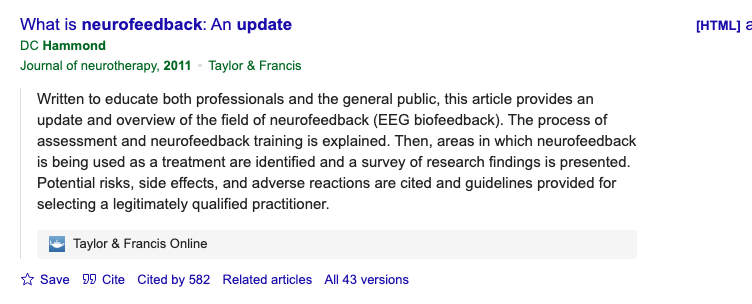
D. Corydon Hammond's extensive review provides an updated overview of neurofeedback applications across multiple clinical conditions. The review synthesizes decades of research establishing neurofeedback as an evidence-based intervention.
Key findings include strong evidence for ADHD treatment, promising results for anxiety and depression, and emerging applications for PTSD, traumatic brain injury, and autism spectrum disorders. The review emphasizes that effects tend to be lasting, unlike medication effects that cease when treatment stops.
Methods
- Narrative review of published literature
- Analysis of efficacy across conditions
- Examination of mechanisms and protocols
- Integration of clinical and research perspectives
Key Results
- ADHD: Level 1 evidence (best support)
- Anxiety: Multiple studies showing benefit
- Depression: Promising early results
- Effects persist at 6-24 month follow-up
- Alpha, alpha/theta, and SMR protocols most studied
Limitations
- Review paper, not primary research
- Heterogeneity in protocols reviewed
- Quality of evidence varies by condition
- Some applications still preliminary