
Key Takeaway
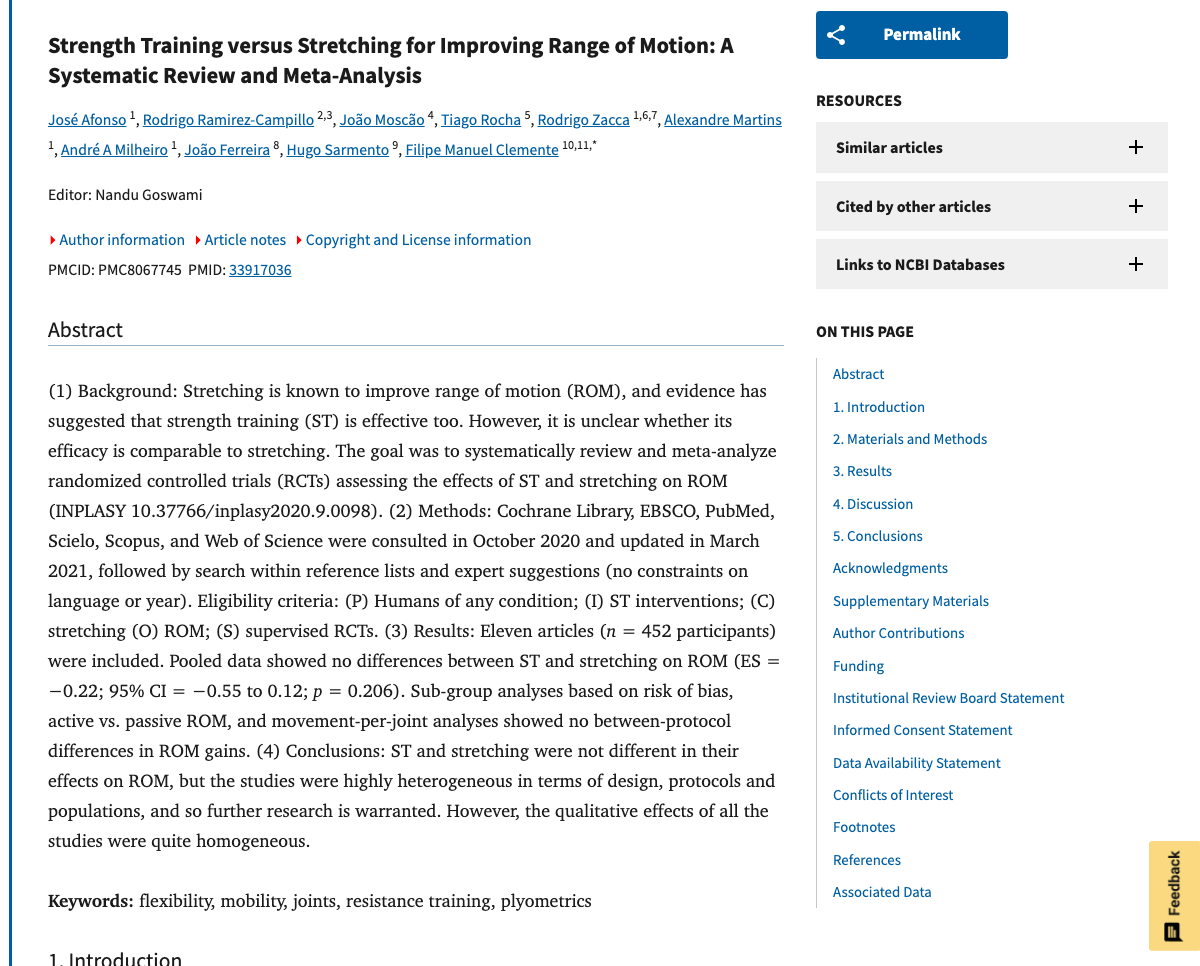
Strength training produces comparable range of motion improvements to stretching, with no significant difference between the two approaches across 11 RCTs.
Summary
This systematic review and meta-analysis directly compared strength training versus stretching for improving joint range of motion. The authors searched six databases (Cochrane Library, EBSCO, PubMed, Scielo, Scopus, Web of Science) through March 2021 and identified 11 randomized controlled trials with 452 total participants.
The pooled analysis found no statistically significant difference between strength training and stretching for ROM improvements (ES = -0.22; 95% CI = -0.55 to 0.12; p = 0.206). Subgroup analyses examining risk of bias, active versus passive ROM measurements, and individual joint movements all showed the same pattern: both approaches were equally effective.
This finding challenges the long-standing assumption that stretching is uniquely important for flexibility. For people who already strength train through full ranges of motion, dedicated stretching sessions may offer no additional ROM benefit. The results support the idea that loading tissues through their full range is itself a potent flexibility stimulus.
Methods
- Searched 6 databases (Cochrane, EBSCO, PubMed, Scielo, Scopus, Web of Science)
- Included 11 supervised RCTs with 452 participants
- Compared strength training vs stretching on ROM outcomes
- No restrictions on health status, age, or sex
- Subgroup analyses by risk of bias, ROM measurement type, and joint
- Random-effects meta-analysis with heterogeneity assessment
Key Results
- No difference between strength training and stretching for ROM (ES = -0.22; p = 0.206)
- Moderate-to-high heterogeneity across studies (I² = 65.4%)
- Hip flexion ROM showed comparable outcomes between approaches (ES = -0.24; p = 0.414)
- Subgroup analyses by risk of bias and measurement type showed no significant differences
- Qualitative effects remained relatively homogeneous despite methodological diversity
Figures
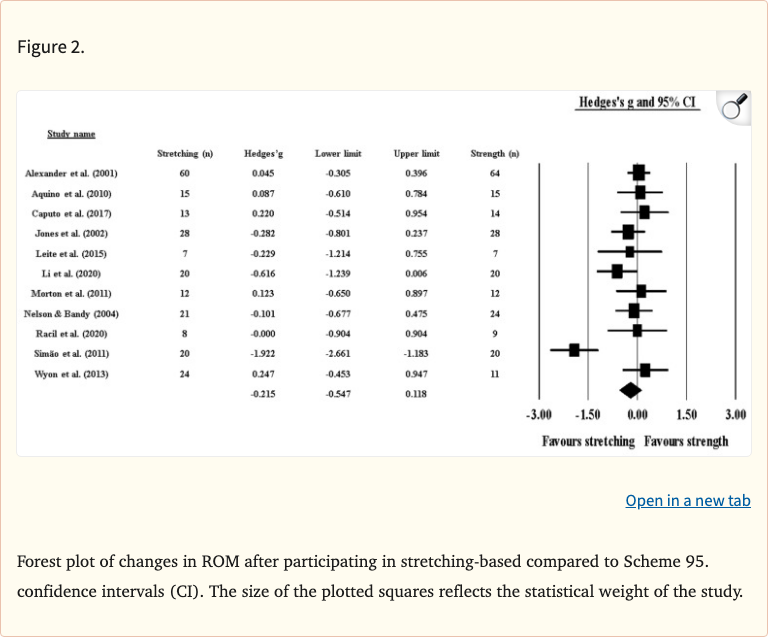 Figure 1
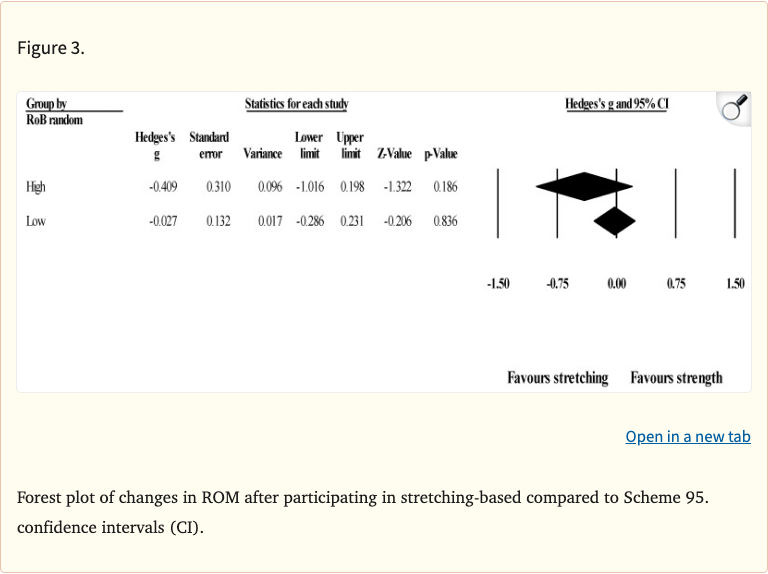 Figure 2
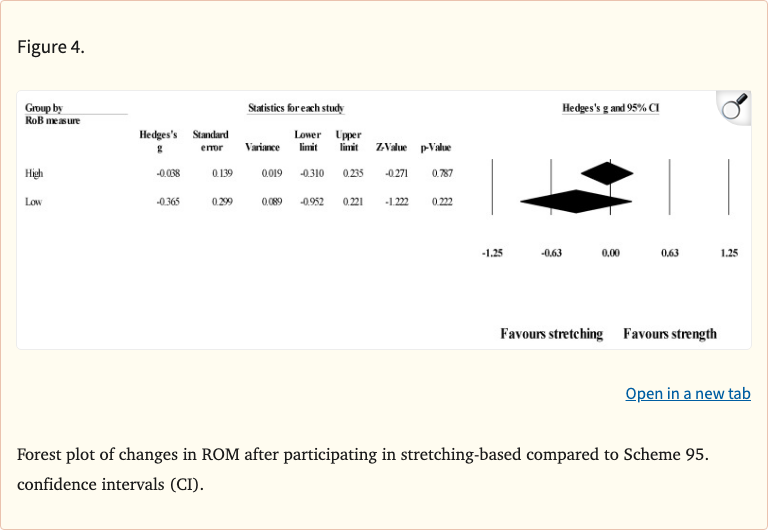 Figure 3
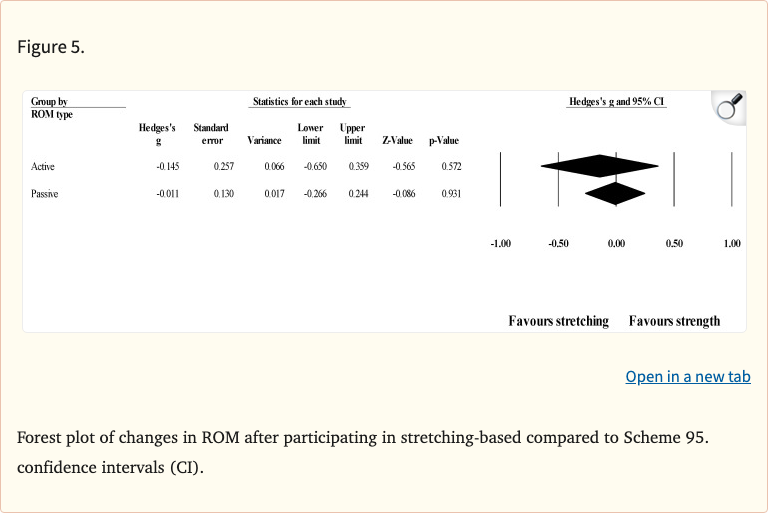 Figure 4
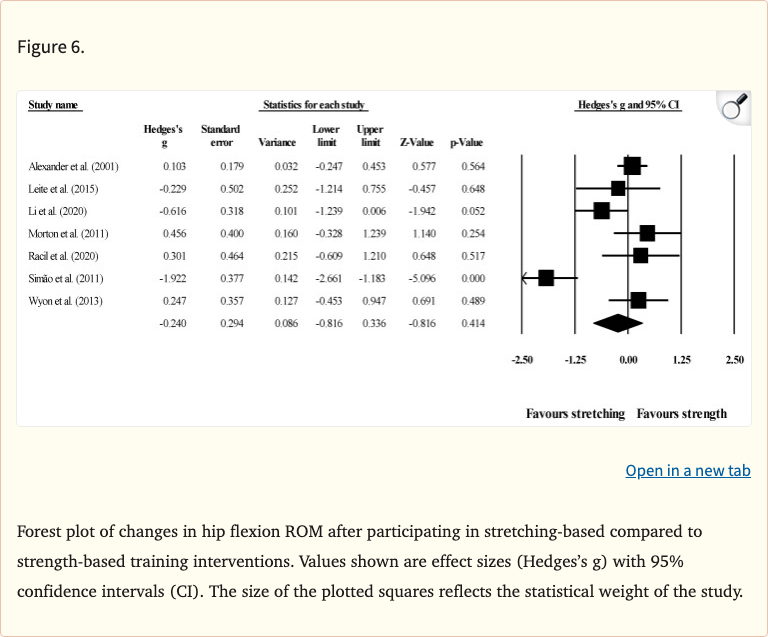 Figure 5
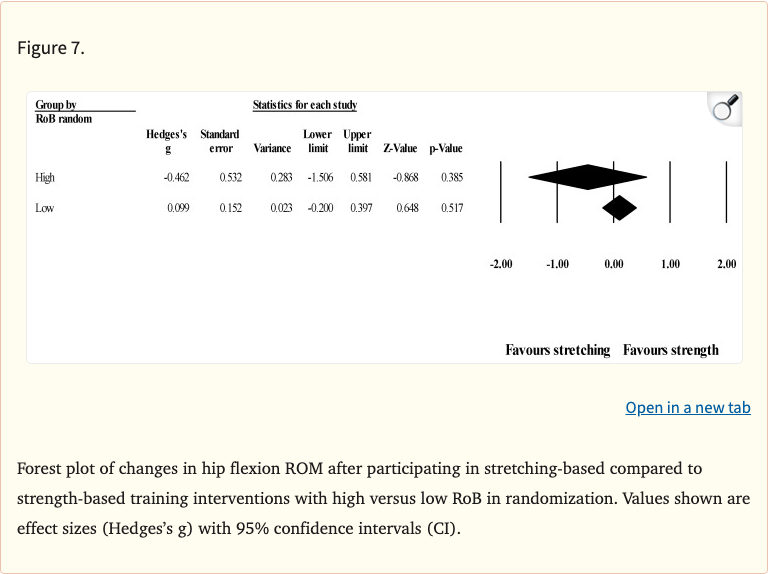 Figure 6
Limitations
- Moderate-to-high heterogeneity (I² = 65.4%) across intervention protocols and populations
- Inadequate reporting of training volume and intensity prevented dose-response analysis
- Predominance of female participants limits generalizability to males
- Limited reporting of partial vs full ROM during strength exercises
- Subgroup analyses by sex or age were not possible due to population heterogeneity