
Key Takeaway
Feldenkrais method was as effective as core stability exercises for reducing pain and disability in chronic low back pain, with additional improvements in body awareness and self-image.
Summary
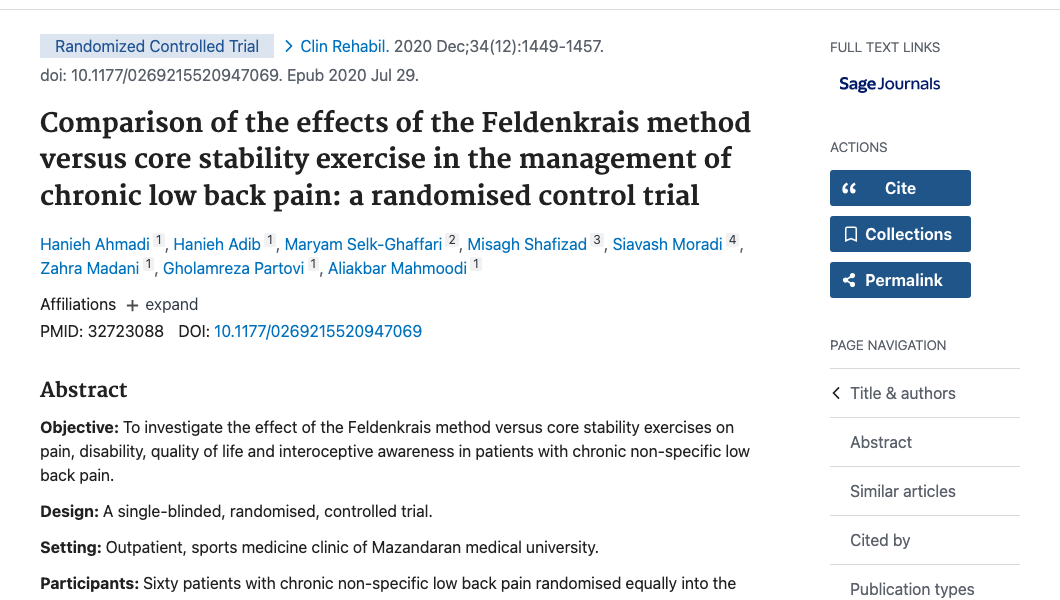
This randomized controlled trial compared the Feldenkrais method to core stability exercises for managing chronic nonspecific low back pain. Participants were randomly assigned to either an 8-week Feldenkrais program or a core stability exercise program, with outcomes measured for pain intensity, functional disability, and body awareness.
Both groups showed significant improvements in pain (measured by Visual Analog Scale) and disability (measured by Oswestry Disability Index) after the intervention period. Notably, there were no significant differences between the two groups on these primary outcomes, suggesting that the Feldenkrais method is comparable to conventional core stability training for pain relief and functional improvement.
However, the Feldenkrais group demonstrated additional benefits in body awareness and self-image measures, reflecting the method's emphasis on somatic education and mindful movement. The study suggests that for patients with chronic low back pain who may not tolerate conventional exercise programs, the Feldenkrais method offers an effective alternative that also enhances proprioceptive awareness and psychological well-being.