
Key Takeaway
Feldenkrais Method showed comparable benefits to Body Awareness Therapy for musculoskeletal disorders, with improvements in pain, function, and psychological well-being.
Summary
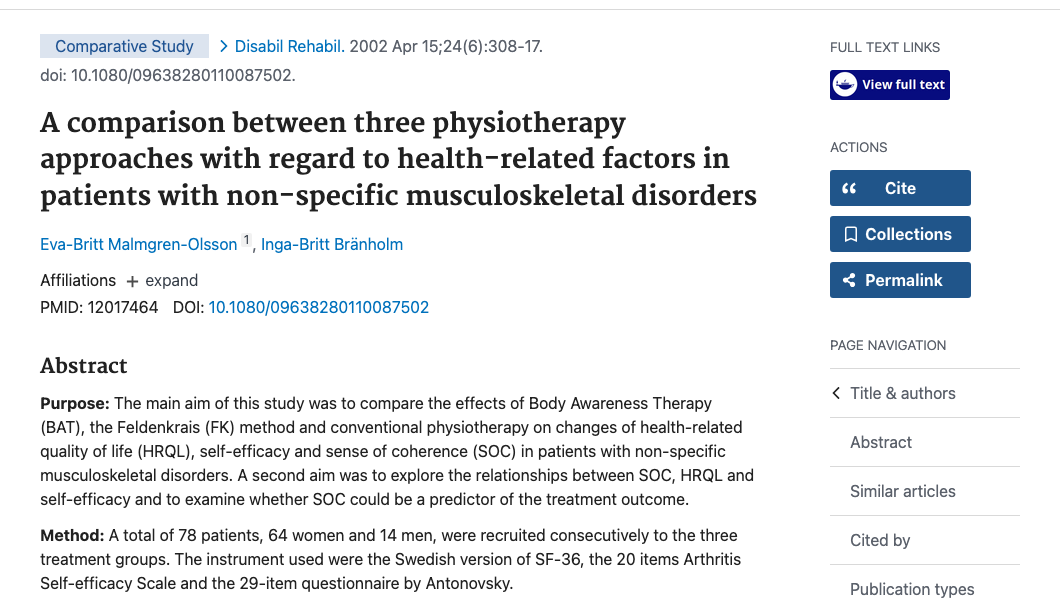
This comparative study evaluated Feldenkrais Method and Body Awareness Therapy (BAT) in patients with nonspecific musculoskeletal disorders, primarily neck and back pain.
Both methods produced significant improvements in pain, physical function, and psychological well-being at post-treatment and follow-up. The Feldenkrais group showed particular improvements in body awareness and movement quality.
The study supports Feldenkrais as an effective approach for chronic musculoskeletal conditions, with benefits comparable to established movement therapies.
Methods
- Patients with nonspecific musculoskeletal pain
- Randomized to Feldenkrais or BAT groups
- Group sessions over several months
- Outcomes: pain, function, psychological measures
Key Results
- Both groups showed significant pain reduction
- Improved physical function in daily activities
- Better psychological well-being scores
- Feldenkrais: enhanced body awareness
- Benefits maintained at follow-up
Limitations
- Small sample size
- No inactive control group
- Self-reported outcomes
- Variable attendance