
Key Takeaway
Feldenkrais method shows significant improvements in balance and functional mobility in elderly populations, with moderate effects on quality of life, compared to conventional physiotherapy or no treatment.
Summary
This systematic review and meta-analysis examined 20 randomized controlled trials evaluating the Feldenkrais method as a physiotherapy tool across diverse populations. The review covered studies involving elderly subjects, patients with chronic low back pain, multiple sclerosis, neck and shoulder complaints, and other conditions.
Meta-analyses revealed that the Feldenkrais method produced statistically significant improvements in the Timed Up and Go test (a measure of functional mobility and balance) in elderly participants. The method also showed moderate positive effects on quality of life dimensions, particularly in physical functioning. For chronic low back pain, the Feldenkrais method demonstrated comparable or superior outcomes to standard physiotherapy in reducing pain and improving disability scores.
The authors noted that while the evidence is promising, many included trials had small sample sizes and methodological limitations. The review concluded that the Feldenkrais method is a viable complementary approach within physiotherapy, particularly for improving balance, mobility, and body awareness in older adults. Further high-quality RCTs with larger samples are recommended to strengthen the evidence base.
Figures
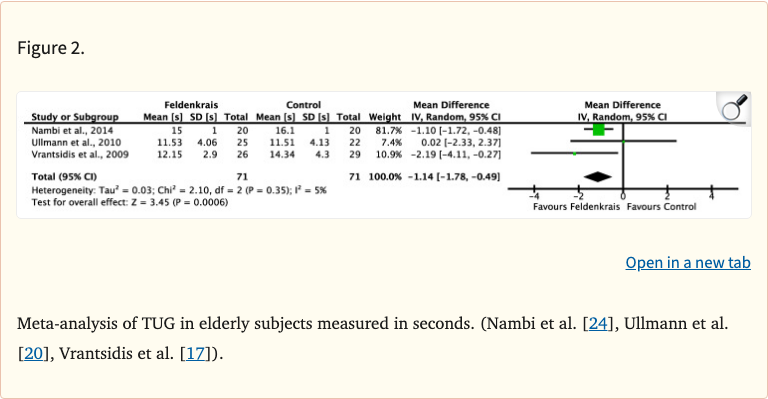 Figure 1
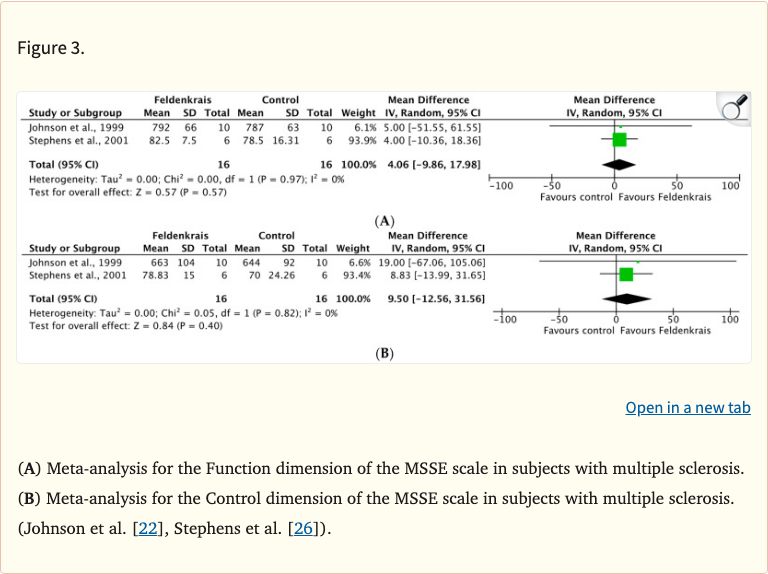 Figure 2