
Key Takeaway
Whole-body vibration reduces body fat percentage and body weight in overweight and obese adults, though effect sizes are modest compared to conventional exercise alone.
Summary
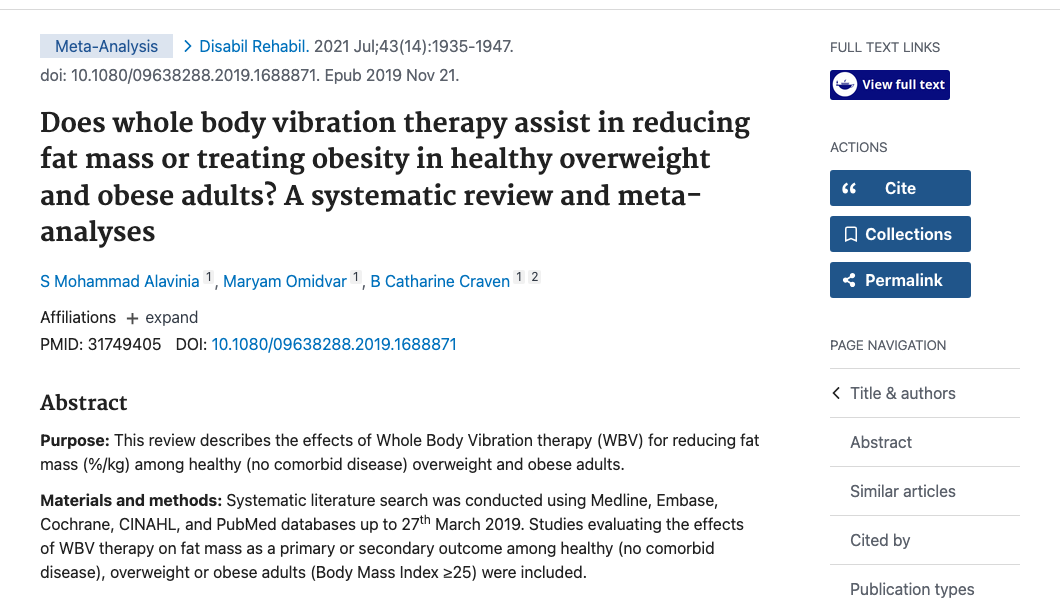
This systematic review and meta-analysis investigated whether whole-body vibration (WBV) therapy is effective for reducing fat mass and treating obesity in healthy overweight and obese adults. The authors synthesized data from randomized controlled trials comparing WBV interventions to control or conventional exercise conditions.
The pooled analysis found that WBV produced statistically significant reductions in body fat percentage and body weight compared to non-exercise controls. When compared to conventional exercise programs alone, WBV showed modest additional benefits, suggesting it may serve as a useful adjunct rather than a replacement for traditional physical activity.
The review highlights WBV as a potentially accessible intervention for individuals with obesity who face barriers to conventional exercise, such as joint pain or limited mobility. The authors noted that study protocols varied widely in vibration parameters, session duration, and intervention length, making it difficult to identify optimal dosing. They recommended larger, well-designed trials with standardized protocols to better define the role of WBV in obesity management.