
Key Takeaway
Meta-analysis of 8 RCTs found whole-body vibration produced small but significant improvements in hip bone mineral density, with greatest benefits in postmenopausal women using high-magnitude, high-frequency protocols.
Summary
This systematic review and meta-analysis evaluated the effect of whole-body vibration (WBV) therapy on bone mineral density (BMD) in adults. The researchers analyzed randomized controlled trials comparing WBV to control conditions.
The pooled analysis found that WBV produced statistically significant improvements in hip BMD, though the effect size was modest. Subgroup analysis suggested that postmenopausal women and protocols using higher frequencies and magnitudes showed the greatest benefits.
Methods
- Systematic review and meta-analysis
- Searched MEDLINE, EMBASE, CINAHL, Cochrane databases
- Included RCTs comparing WBV to control in adults
- Primary outcome: change in BMD at hip and spine
- Quality assessment using Jadad scale
- Random-effects meta-analysis
Key Results
- 8 RCTs included (n=471 participants)
- Hip BMD: Significant improvement with WBV (weighted mean difference 0.015 g/cm², 95% CI 0.008-0.022)
- Spine BMD: Trend toward improvement but not statistically significant
- Higher frequency protocols (>20 Hz) showed greater effects
- Postmenopausal women showed most consistent benefits
- Treatment duration ranged from 6-12 months
Figures
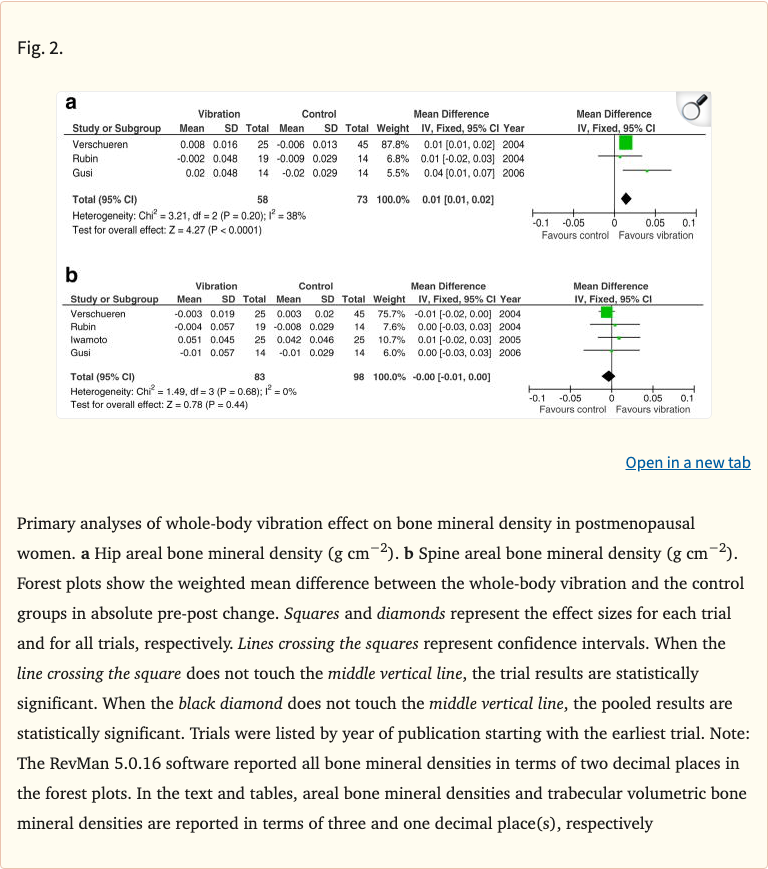 Figure 1
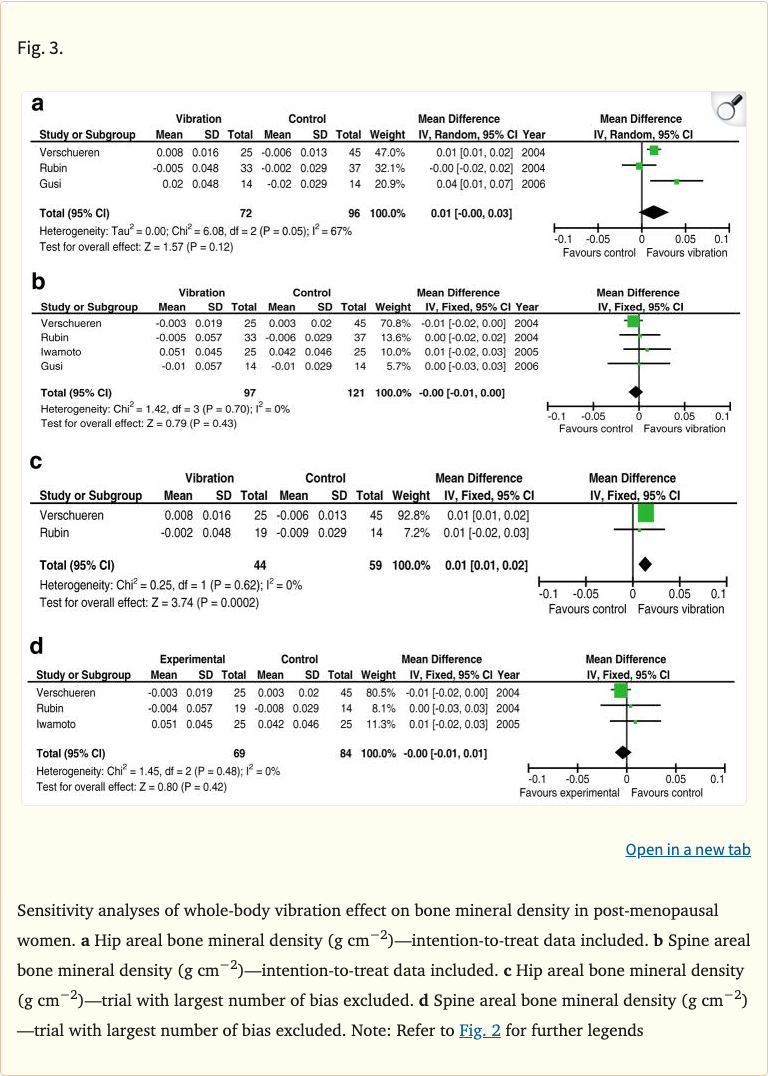 Figure 2
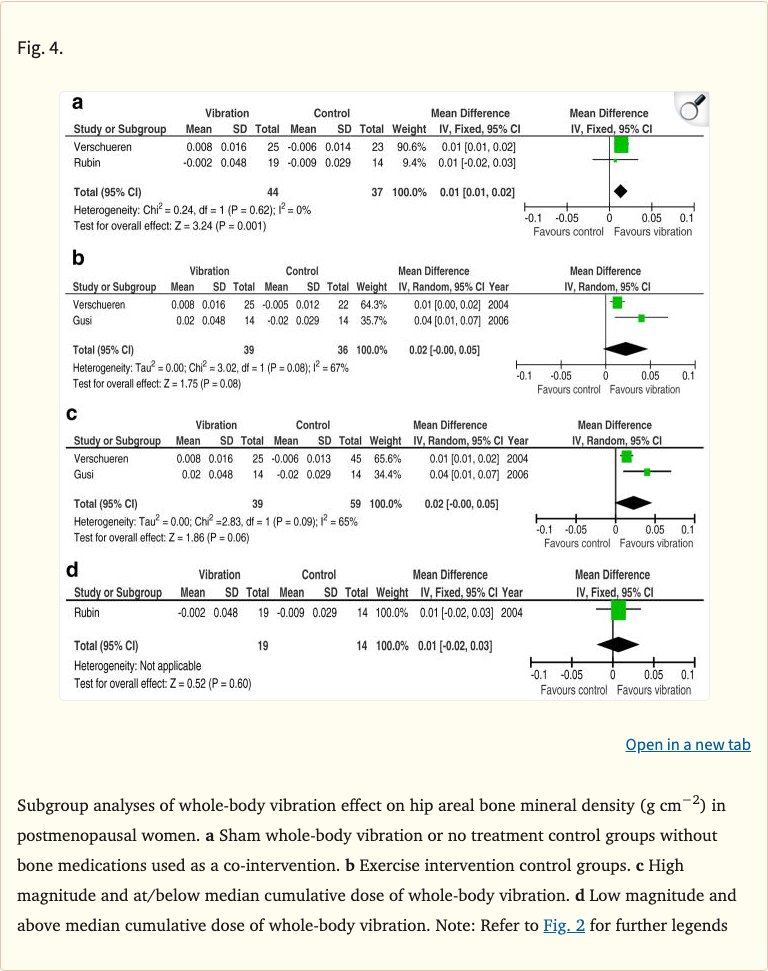 Figure 3
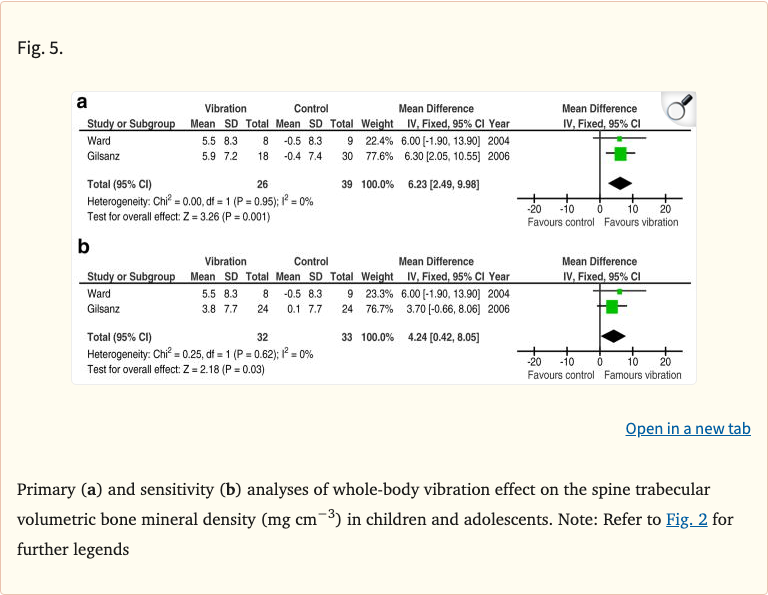 Figure 4
Limitations
- Small number of studies with heterogeneous protocols
- Short follow-up periods (mostly <1 year)
- Varied WBV parameters across studies
- Most studies had small sample sizes
- Publication bias possible
- Long-term fracture outcomes not assessed