
Key Takeaway
Whole-body vibration training produces small but significant improvements in lumbar spine bone mineral density, particularly in postmenopausal women.
Summary
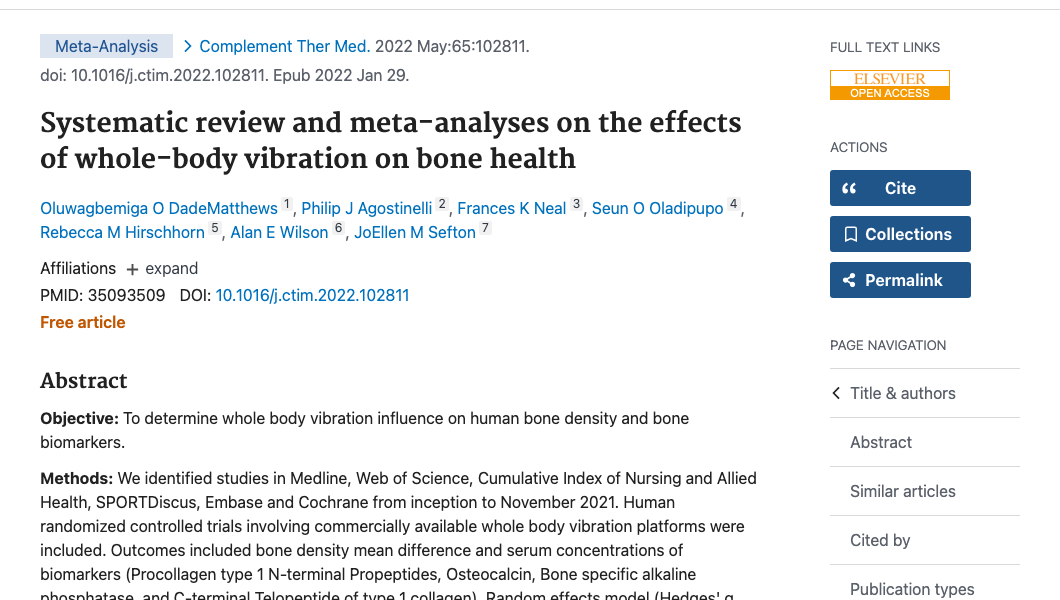
This systematic review and meta-analysis examined the effects of whole-body vibration (WBV) therapy on bone health outcomes across multiple randomized controlled trials. The authors assessed changes in bone mineral density (BMD) at key skeletal sites including the lumbar spine, femoral neck, and total hip.
Pooled results demonstrated that WBV training led to statistically significant improvements in lumbar spine BMD compared to control conditions. The effect was most pronounced in postmenopausal women, a population at high risk for osteoporosis and fragility fractures. Effects at the femoral neck and total hip were smaller and less consistent across studies.
The findings support WBV as a complementary strategy for bone health maintenance, especially for individuals who cannot perform high-impact weight-bearing exercise. However, the authors noted substantial heterogeneity in protocols (frequency, amplitude, duration) across studies and called for standardized WBV prescriptions to optimize skeletal loading and clinical outcomes.