
Key Takeaway
Meta-analysis of 18 RCTs found whole-body vibration training significantly improved knee strength, explosive power, and multiple physical performance measures in older adults aged 65+.
Summary
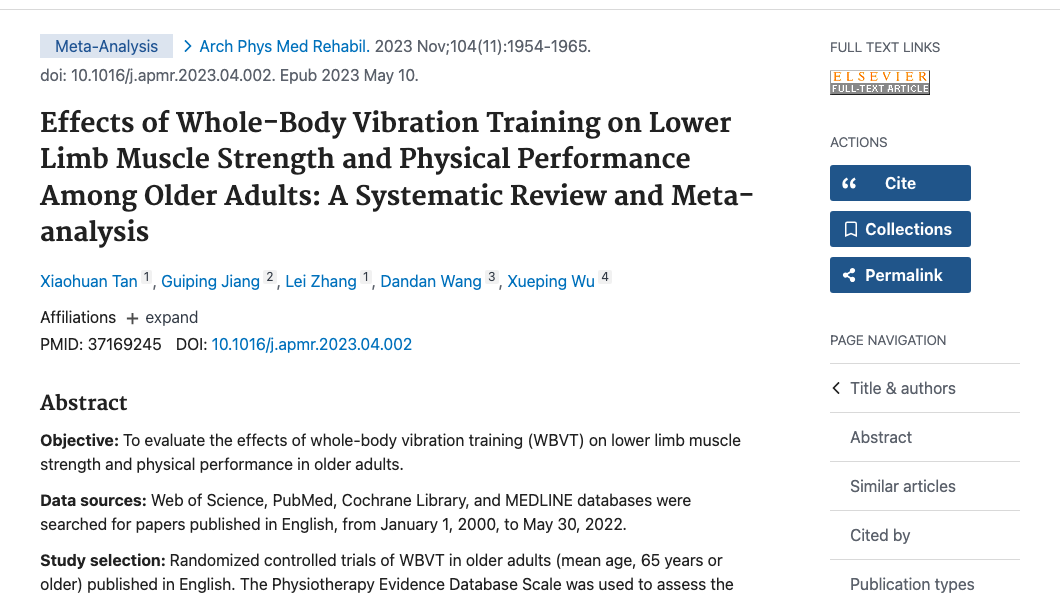
This systematic review and meta-analysis assessed the effects of whole-body vibration training (WBVT) on lower limb muscle strength and physical performance in older adults. The researchers searched Web of Science, PubMed, Cochrane Library, and MEDLINE for RCTs published between 2000 and 2022 involving participants with a mean age of 65 years or older.
Across 18 included RCTs, WBVT demonstrated significant improvements in knee strength (SMD=0.72), explosive power (SMD=0.47), sit-to-stand performance (SMD=0.57), Timed Up and Go test (SMD=0.53), walking speed (SMD=0.46), and walking endurance (SMD=0.43). These effect sizes represent moderate-to-large benefits across both strength and functional performance outcomes.
The authors concluded that WBVT may be an effective intervention to improve lower limb muscle strength and physical performance in older adults, with practical relevance for fall prevention and maintaining functional independence in aging populations.
Methods
- Systematic review and meta-analysis of 18 RCTs
- Searched Web of Science, PubMed, Cochrane Library, and MEDLINE
- Included English-language papers from January 2000 through May 2022
- Participants: older adults with mean age 65 years or older
- Quality assessed using Physiotherapy Evidence Database (PEDro) Scale
- Outcomes: lower limb muscle strength and physical performance measures
Key Results
- 18 RCTs included in the analysis
- Knee strength: SMD=0.72 (95% CI 0.38-1.07) - large effect
- Explosive power: SMD=0.47 (95% CI 0.10-0.83)
- Sit-to-stand test: SMD=0.57 (95% CI 0.30-0.84)
- Timed Up and Go test: SMD=0.53 (95% CI 0.19-0.88)
- Walking speed: SMD=0.46 (95% CI 0.14-0.77)
- Walking endurance: SMD=0.43 (95% CI 0.02-0.85)
- All outcomes favored WBVT over control
Limitations
- Only English-language studies included
- Heterogeneity in vibration protocols across studies
- Tinetti total score findings need further investigation
- Variable training durations and frequencies across trials
- Long-term follow-up data not assessed
- Potential publication bias