
Key Takeaway
Meta-analysis of 23 studies found whole-body vibration training produced clinically significant reductions in systolic blood pressure (-7 mmHg) and improved lower limb strength in overweight/obese adults, though effects on body composition were minimal.
Summary
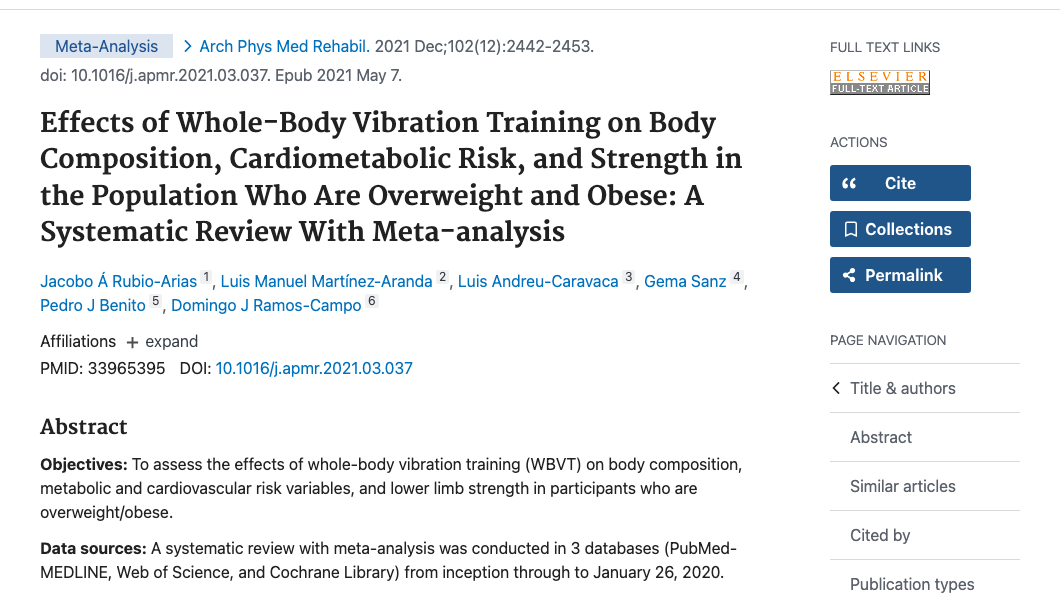
This systematic review and meta-analysis evaluated whether whole-body vibration training (WBVT) affects body composition, cardiometabolic risk factors, and lower limb strength in overweight and obese populations. The authors analyzed 23 studies involving 884 participants (543 in experimental groups) with an average BMI of 31.3 kg/m2, including interventions lasting at least 2 weeks.
The most clinically meaningful finding was a 7.01 mmHg reduction in systolic blood pressure, which the authors deemed clinically significant. WBVT also reduced diastolic blood pressure by 1.83 mmHg and resting heart rate by 2.23 bpm. Lower extremity strength showed a moderate improvement (SMD=0.63). Fat mass decreased by 1.07 kg, though this was considered clinically insignificant.
Notably, WBVT did not significantly change body weight, BMI, muscle mass, cholesterol, triglycerides, or glucose levels. The authors concluded that WBVT could be an effective training modality to reduce blood pressure and improve lower limb strength in this population, but should not be expected to substantially alter metabolic syndrome markers or body composition.
Methods
- Systematic review and meta-analysis of 23 studies (884 participants total)
- Searched three databases through January 2020
- Included overweight/obese adults (average BMI 31.3 kg/m2)
- Minimum intervention duration of 2 weeks
- Outcomes: body composition, cardiovascular risk factors, lower limb strength
- 543 participants in experimental groups (average weight 79.9 kg)
Key Results
- 23 studies included (884 total participants)
- Systolic blood pressure: reduced by 7.01 mmHg (clinically significant)
- Diastolic blood pressure: reduced by 1.83 mmHg
- Resting heart rate: reduced by 2.23 bpm
- Lower limb strength: SMD=0.63 (moderate improvement)
- Fat mass: decreased by 1.07 kg (clinically insignificant)
- No significant changes in body weight, BMI, muscle mass
- No significant changes in cholesterol, triglycerides, or glucose
Limitations
- Heterogeneous WBV protocols across studies
- Variable intervention durations (minimum 2 weeks)
- Most participants were female
- Limited long-term follow-up data
- Potential publication bias
- Some outcomes had high heterogeneity
- Diet and other exercise not consistently controlled across studies