
Key Takeaway
Whole-body vibration at 25-30 Hz significantly improves balance in older adults, with medium-frequency protocols outperforming low- and high-frequency alternatives.
Summary
This network meta-analysis compared the effects of whole-body vibration (WBV) training at different frequencies on balance outcomes in older adults. The authors pooled data from multiple randomized controlled trials to determine which vibration frequency ranges yield the greatest improvements in functional balance tests.
The analysis evaluated outcomes using the Timed Up and Go Test (TUGT) and 5-Times Sit-to-Stand Test (5STS), two widely used clinical measures of balance and functional mobility. Results showed that WBV at medium frequencies (25-30 Hz) produced the largest improvements in both TUGT and 5STS performance compared to no intervention and to lower or higher frequency protocols.
The findings suggest that vibration frequency is an important variable for optimizing WBV-based balance training in older populations. Medium-frequency protocols appear to offer a sweet spot that maximizes neuromuscular activation without excessive fatigue, making them the preferred choice for fall prevention programs targeting the elderly.
Figures
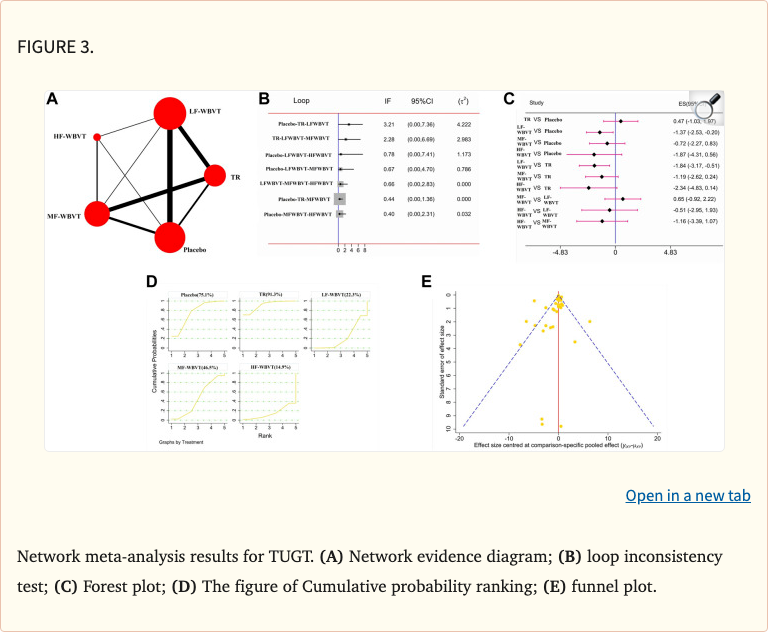 Figure 1
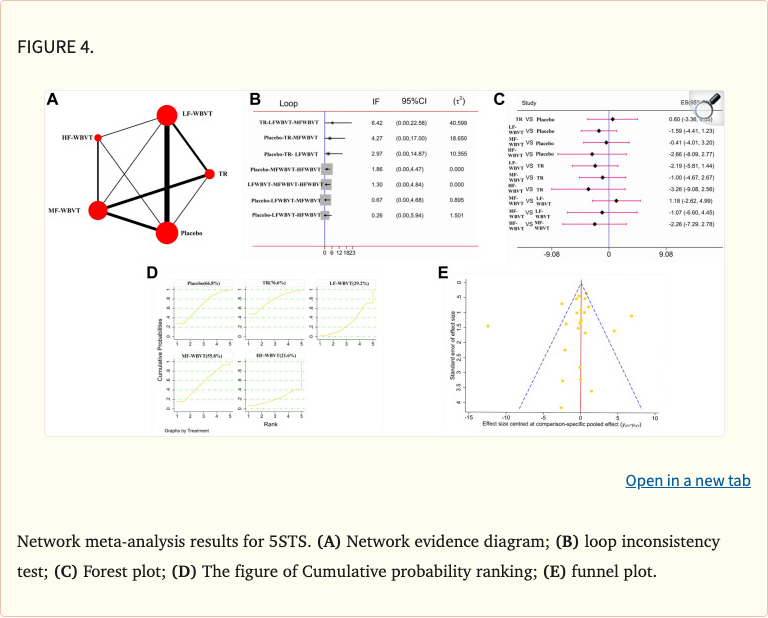 Figure 2