
Key Takeaway
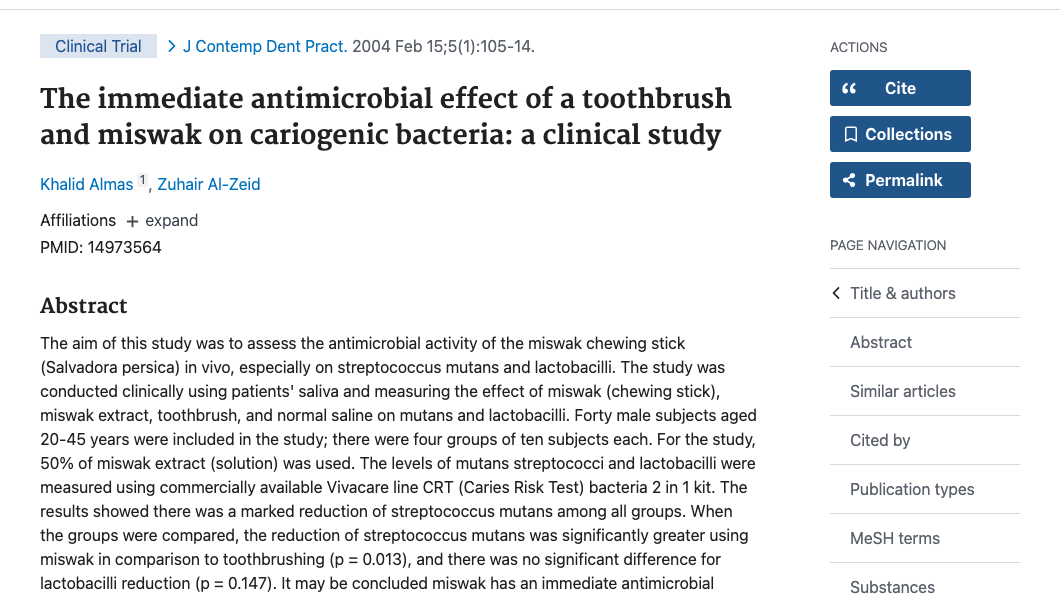
Miswak produces significantly greater reduction in Streptococcus mutans compared to toothbrushing (p=0.013), demonstrating immediate antimicrobial action from the chewing stick's bioactive compounds.
Summary
This clinical study compared the immediate antimicrobial effects of miswak (Salvadora persica chewing stick) versus conventional toothbrushing on cariogenic bacteria. The randomized crossover design enrolled adult participants who used both miswak and a standard toothbrush in separate sessions, with bacterial samples collected before and immediately after each oral hygiene method.
The key finding was that miswak produced a statistically significant greater reduction in Streptococcus mutans, the primary bacterium responsible for dental caries, compared to toothbrushing (p=0.013). Both methods reduced overall bacterial counts, but the miswak's superior performance against S. mutans specifically suggests that its bioactive compounds provide antimicrobial action beyond simple mechanical plaque removal.
The results support the hypothesis that naturally occurring compounds in Salvadora persica, particularly benzyl isothiocyanate and other sulfur-containing phytochemicals, have direct bactericidal effects on oral pathogens. This study is notable for demonstrating immediate rather than cumulative effects, suggesting that miswak's antimicrobial benefits begin with the first use. The crossover design strengthened the findings by eliminating inter-individual variability as a confounding factor, as each participant served as their own control.