
Key Takeaway
Salvadora persica extracts demonstrate clear antiplaque and anticariogenic effects with Level Ia evidence and Class A recommendation strength, though inferior to chlorhexidine gold standard.
Summary
This systematic review and meta-analysis compared the antiplaque and anticariogenic efficacy of Salvadora persica (miswak) mouthrinse to chlorhexidine, the current gold standard antimicrobial mouthwash. The researchers conducted a comprehensive search across PubMed, Scopus, Web of Science, and Cochrane Library, ultimately including clinical trials that directly compared S. persica-based mouthrinses against chlorhexidine formulations.
The pooled analysis demonstrated that while S. persica mouthrinses showed clear antiplaque and anticariogenic properties, they were generally inferior to chlorhexidine in direct comparisons. The evidence was classified as Level Ia (highest evidence level, based on systematic review of RCTs) with a Class A recommendation strength, confirming that S. persica extracts are a legitimately effective oral hygiene agent supported by robust clinical evidence.
The clinical significance lies in miswak-derived mouthrinses offering a natural, plant-based alternative for patients who prefer to avoid synthetic antimicrobials or who experience side effects from chlorhexidine (such as tooth staining and taste alteration). The active compounds in Salvadora persica, including benzyl isothiocyanate and salvadorine, provide antimicrobial activity against cariogenic and periodontopathic bacteria through multiple mechanisms, making it a promising adjunct to standard oral care protocols.
Figures
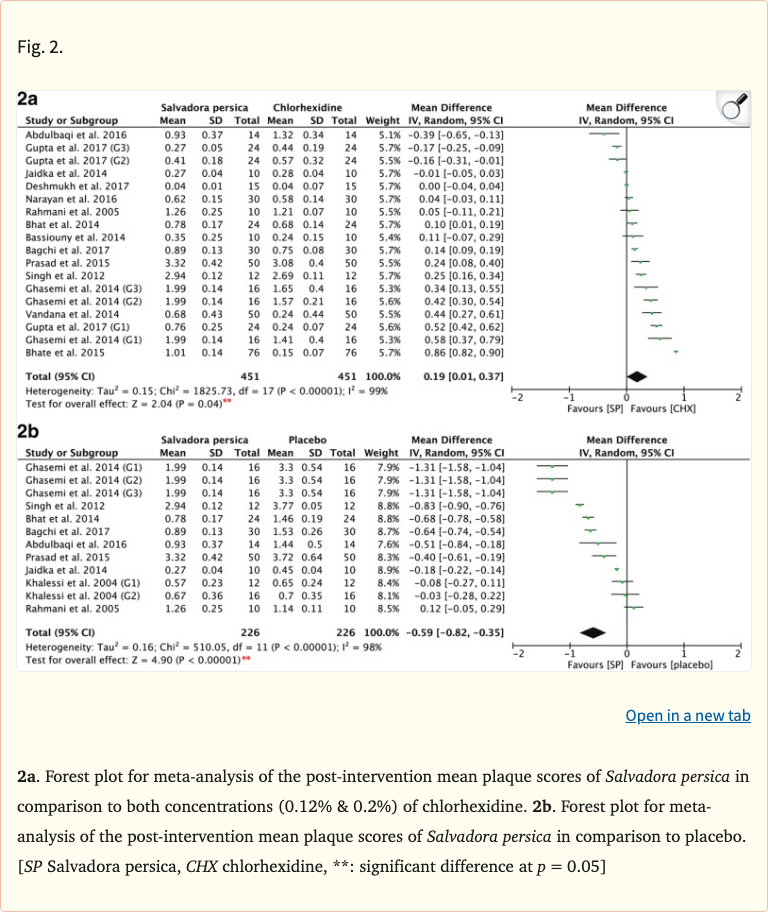 Figure 1
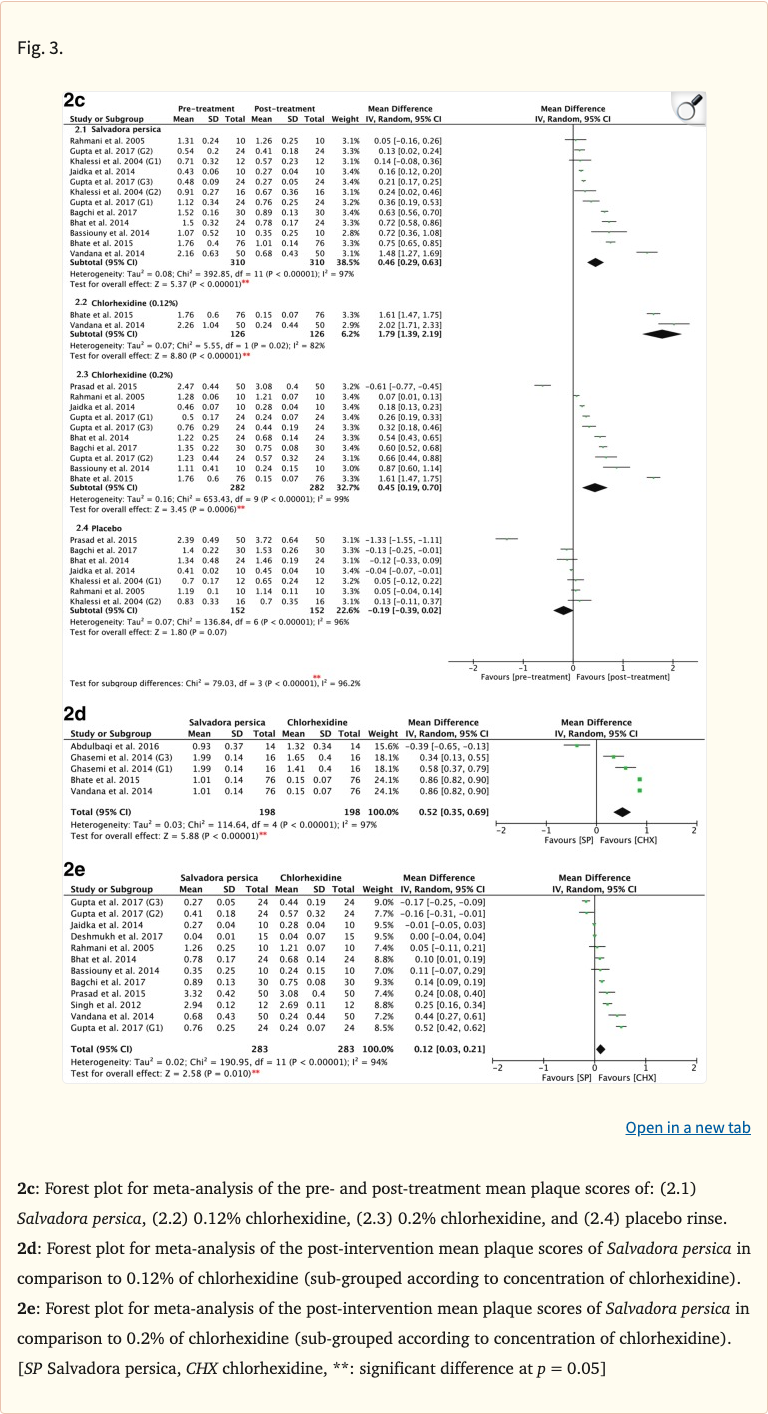 Figure 2
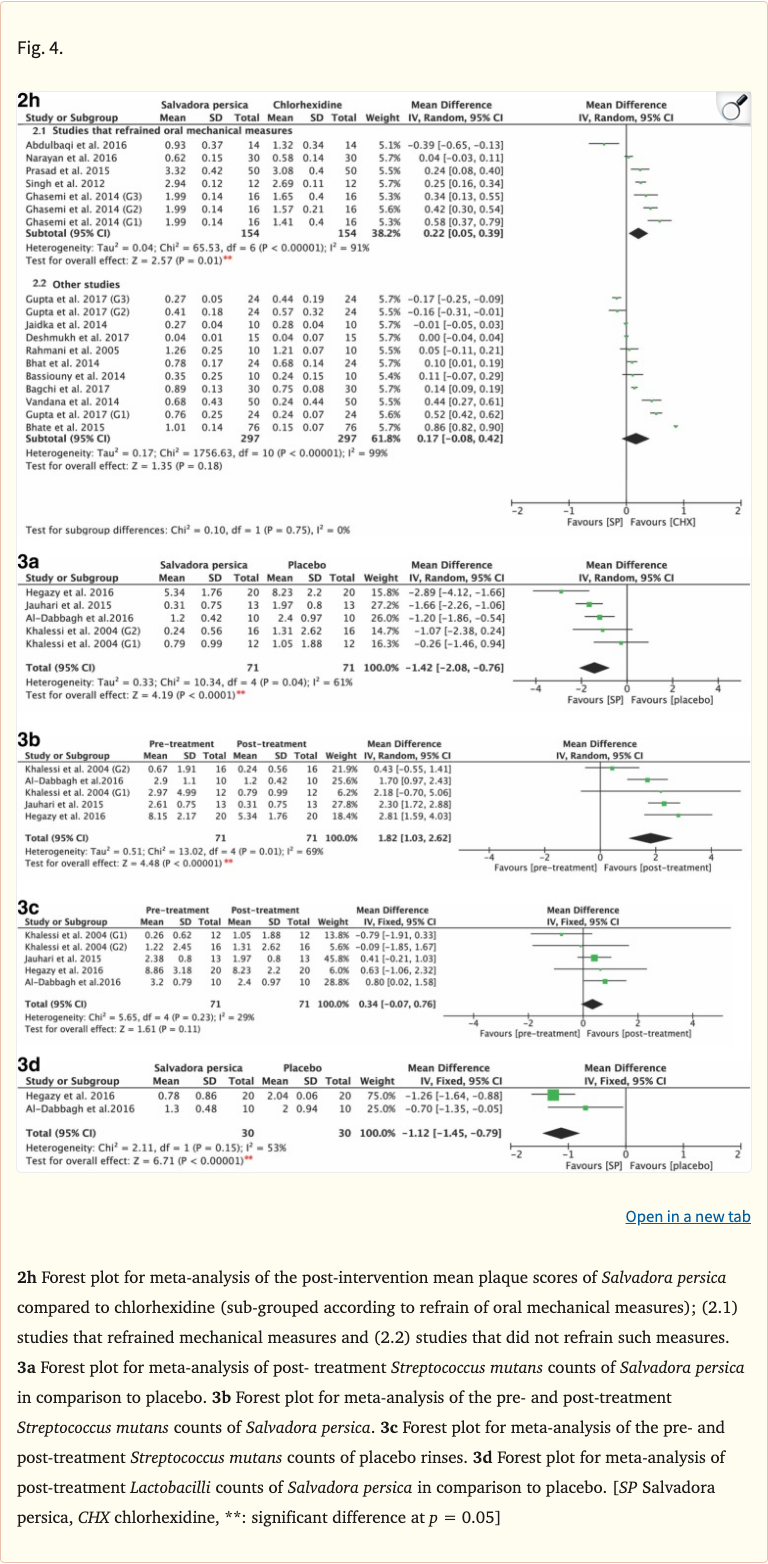 Figure 3
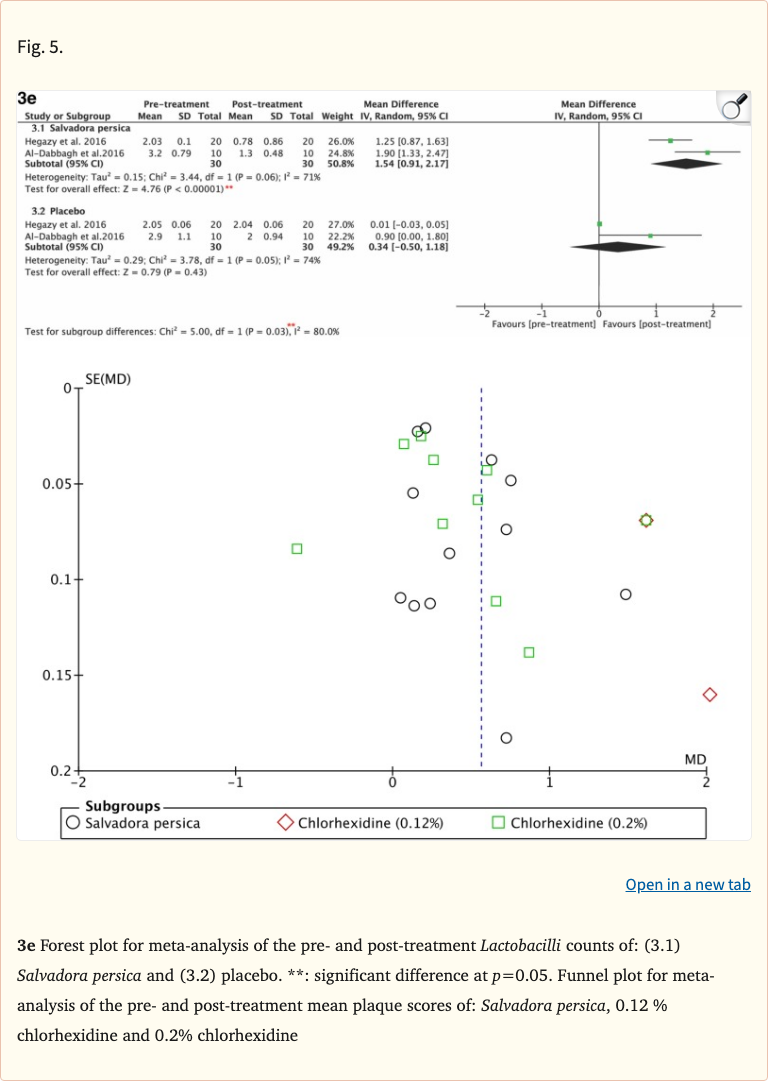 Figure 4