
Key Takeaway
Meta-analysis of 10 RCTs shows miswak is comparable to toothbrushing for plaque (SMD 0.39, p=0.08) and gingivitis (SMD 0.13, p=0.37), with adjunctive miswak use significantly superior for both outcomes.
Summary
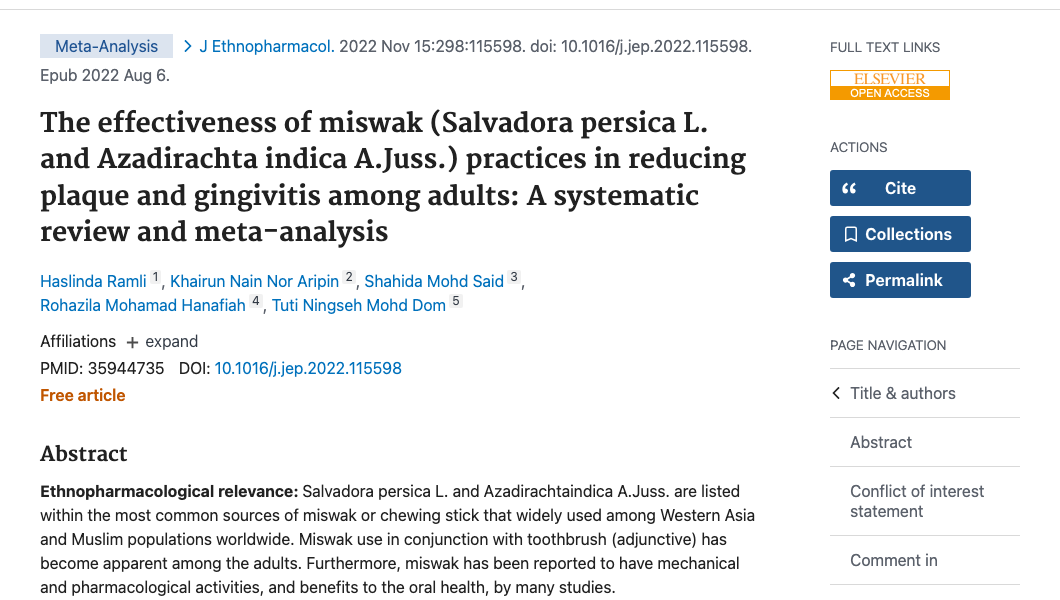
This systematic review and meta-analysis evaluated the effectiveness of miswak (chewing sticks from Salvadora persica and Azadirachta indica) in reducing dental plaque and gingivitis among adults. The authors searched multiple databases and ultimately included 10 randomized controlled trials comparing miswak practices to conventional toothbrushing.
The meta-analysis found no statistically significant difference between miswak alone and toothbrushing for plaque index (SMD 0.39, 95% CI -0.05 to 0.83, p=0.08) or gingival index (SMD 0.13, 95% CI -0.16 to 0.42, p=0.37), indicating that miswak is comparable to conventional toothbrushing for basic oral hygiene. However, when miswak was used as an adjunct to toothbrushing, the combined approach was significantly superior for both plaque reduction and gingivitis prevention compared to toothbrushing alone.
These findings are clinically relevant for populations where toothbrushes and toothpaste are less accessible, as miswak provides a viable, low-cost alternative for maintaining oral health. The study also supports miswak as a beneficial supplement to standard oral hygiene routines, suggesting that its bioactive compounds (benzyl isothiocyanate, salvadorine, and tannins) provide additional antimicrobial and anti-inflammatory benefits beyond mechanical cleaning alone.