
Key Takeaway
Sit-stand desks reduced workplace sedentary time by 90 minutes/day and improved femoral vascular function and metabolic markers over 24 weeks in overweight adults.
Summary
This 24-week prospective study from the Medical College of Wisconsin examined whether introducing sit-stand desks could improve cardiometabolic and vascular health in sedentary overweight/obese office workers without known cardiovascular disease.
Fifteen participants (93% female, mean age 40) received sit-stand workstations and were assessed at baseline, 12 weeks, and 24 weeks. The primary vascular outcome was flow-mediated dilation (FMD) of both brachial and femoral arteries, alongside metabolic markers including fasting glucose, insulin, lipids, and body composition.
The results showed meaningful improvements in leg vascular function and metabolic parameters, suggesting that reducing prolonged sitting through sit-stand desks can positively affect cardiovascular risk factors even without changes in overall exercise habits or body weight.
Methods
- Prospective intervention study with 15 overweight/obese office workers
- Participants received sit-stand desks for 24 weeks
- Assessments at baseline, 12 weeks, and 24 weeks
- Primary outcome: flow-mediated dilation (FMD) of brachial and femoral arteries
- Secondary outcomes: fasting glucose, insulin resistance (HOMA-IR), triglycerides, cholesterol, BMI, body weight
- Sedentary time measured by accelerometer
Key Results
- Daily sedentary time at work decreased by 90 minutes by week 12, maintained at week 24
- Femoral FMD improved from 4.9% at baseline to 6.4% at 12 weeks, continuing to improve
- Significant improvements in fasting triglycerides and insulin resistance
- No changes in brachial artery FMD
- No changes in exercise activity, step counts, weight, or BMI
- Improvements in vascular function occurred independently of weight loss
Figures
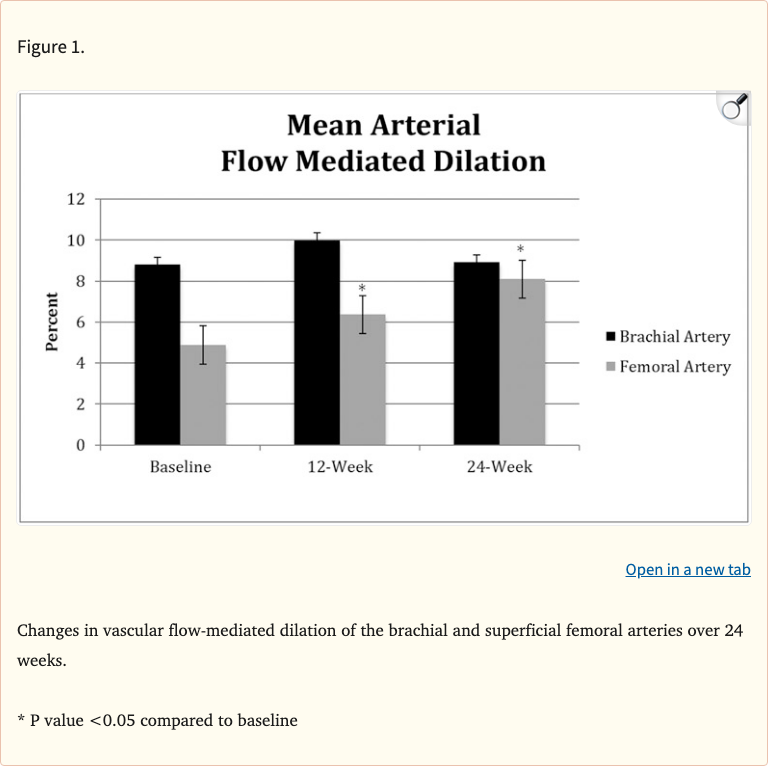 Figure 1
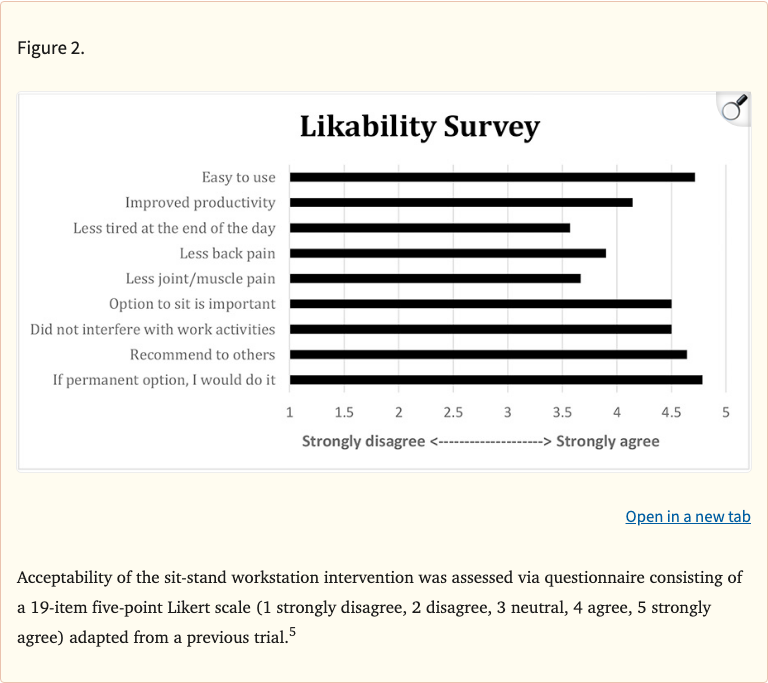 Figure 2
Limitations
- Small sample size (n=15)
- Predominantly female participants (93%), limiting generalizability
- No control group (single-arm design)
- Short-to-medium duration (24 weeks)
- Participants were overweight/obese; results may differ in normal-weight individuals
