
Key Takeaway
Cochrane review found sit-stand desks reduce workplace sitting by ~100 minutes/day at short-term follow-up, though evidence quality remains low and long-term data are lacking.
Summary
This Cochrane systematic review evaluated the effectiveness of various workplace interventions aimed at reducing sitting time among office workers. The review addressed the growing evidence linking prolonged sitting to cardiovascular disease, obesity, diabetes, and all-cause mortality.
The authors searched multiple databases (CENTRAL, MEDLINE, Embase, CINAHL, PsycINFO) through August 2017 and included randomized controlled trials, cluster-RCTs, and controlled before-and-after studies. They assessed interventions across several categories: sit-stand desks, active workstations, policy changes, information/counselling, and combined approaches.
Sit-stand desks emerged as the most effective single intervention for reducing workplace sitting time, though the overall evidence quality was rated as low. The review highlighted significant gaps in long-term data and called for larger, more rigorous trials to establish the durability of sitting reductions and their downstream health effects.
Methods
- Cochrane systematic review and meta-analysis
- Searched CENTRAL, MEDLINE, Embase, CINAHL, PsycINFO, and other databases through August 2017
- Included RCTs, cluster-RCTs, and controlled before-and-after studies
- Categorized interventions: sit-stand desks, active workstations, policy changes, information/counselling, multi-component
- Primary outcome: sitting time at work (self-reported or objectively measured)
- Secondary outcomes: total sitting time, standing time, energy expenditure, productivity, musculoskeletal symptoms
- GRADE assessment of evidence quality
Key Results
- Sit-stand desks reduced workplace sitting by ~100 minutes/day at short-term follow-up
- Medium-term reduction with sit-stand desks averaged 57 minutes/day
- Prolonged sitting bouts (30+ minutes) also decreased with sit-stand desks
- Short activity breaks (1-2 minutes/hour) reduced sitting by ~40 minutes/day
- Information/counselling alone showed modest medium-term benefits (~28 minutes/day reduction)
- Walking strategies showed no significant effects on sitting time
- No adverse effects on work productivity reported across intervention types
Figures
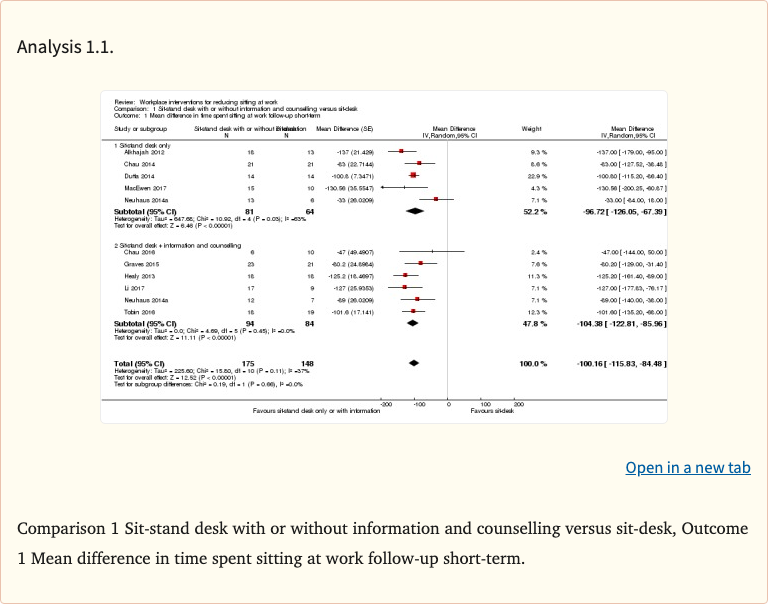 Figure 1
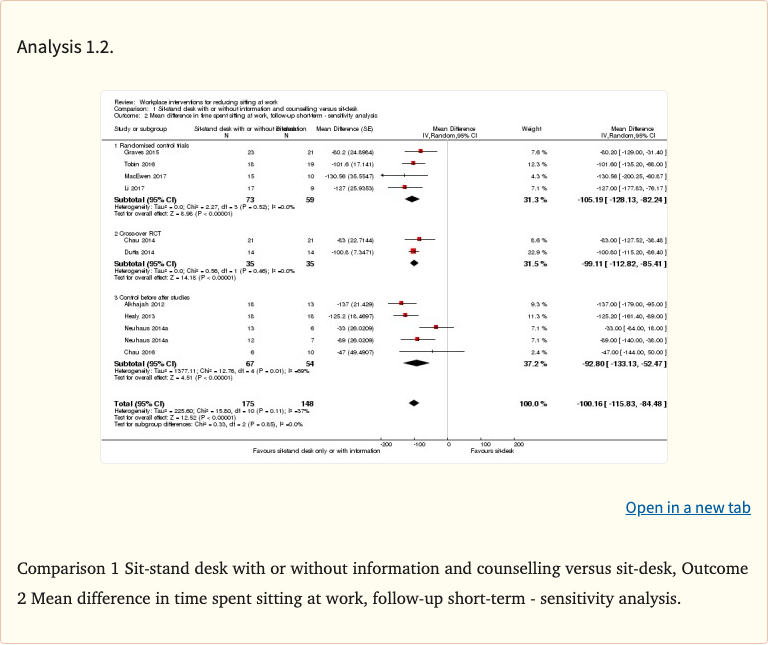 Figure 2
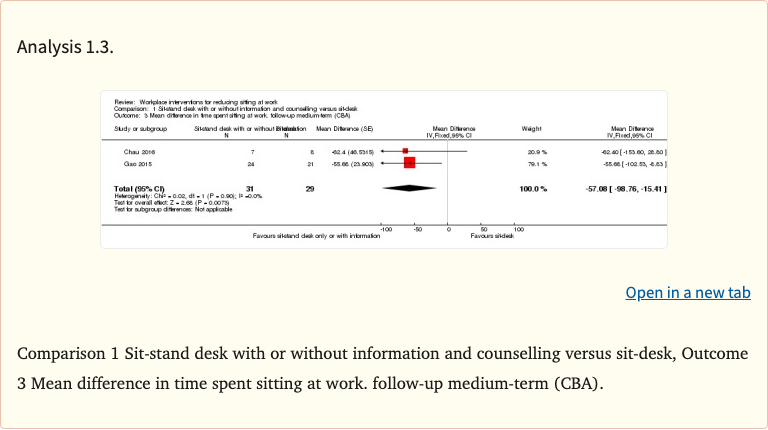 Figure 3
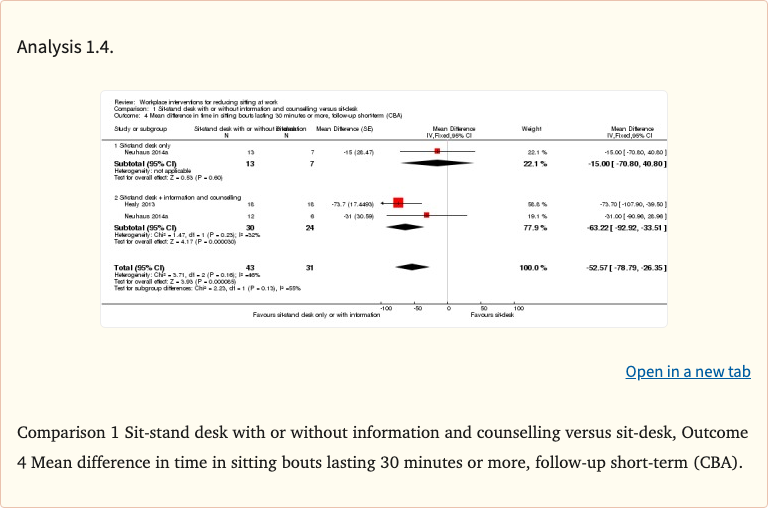 Figure 4
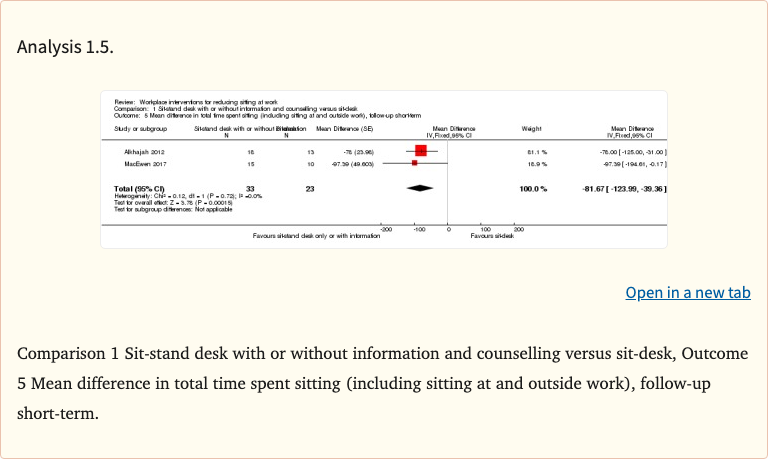 Figure 5
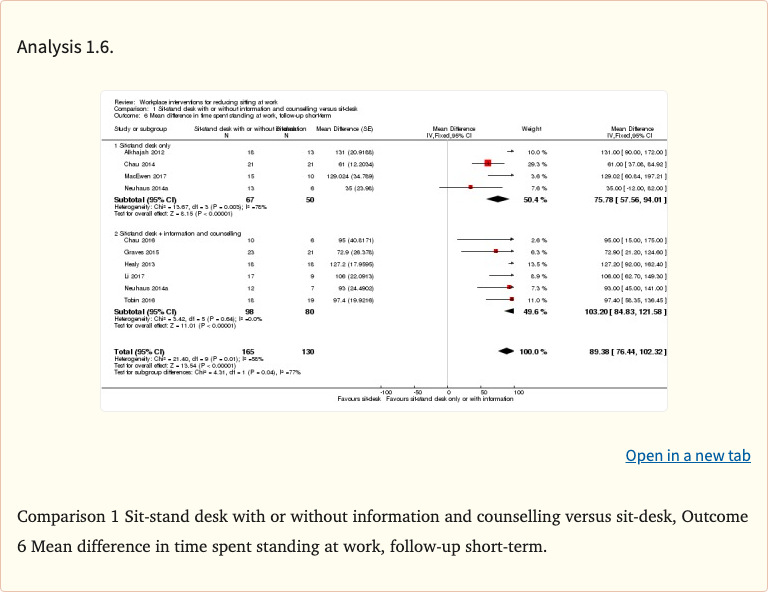 Figure 6
Limitations
- Low quality of evidence overall (GRADE assessment)
- Most studies had small sample sizes
- Short follow-up periods in most included trials (weeks to months)
- Lack of long-term data on sitting reduction sustainability
- Heterogeneity in outcome measurement methods (self-report vs accelerometer)
- Limited data on downstream health outcomes (most studies only measured sitting time)
