
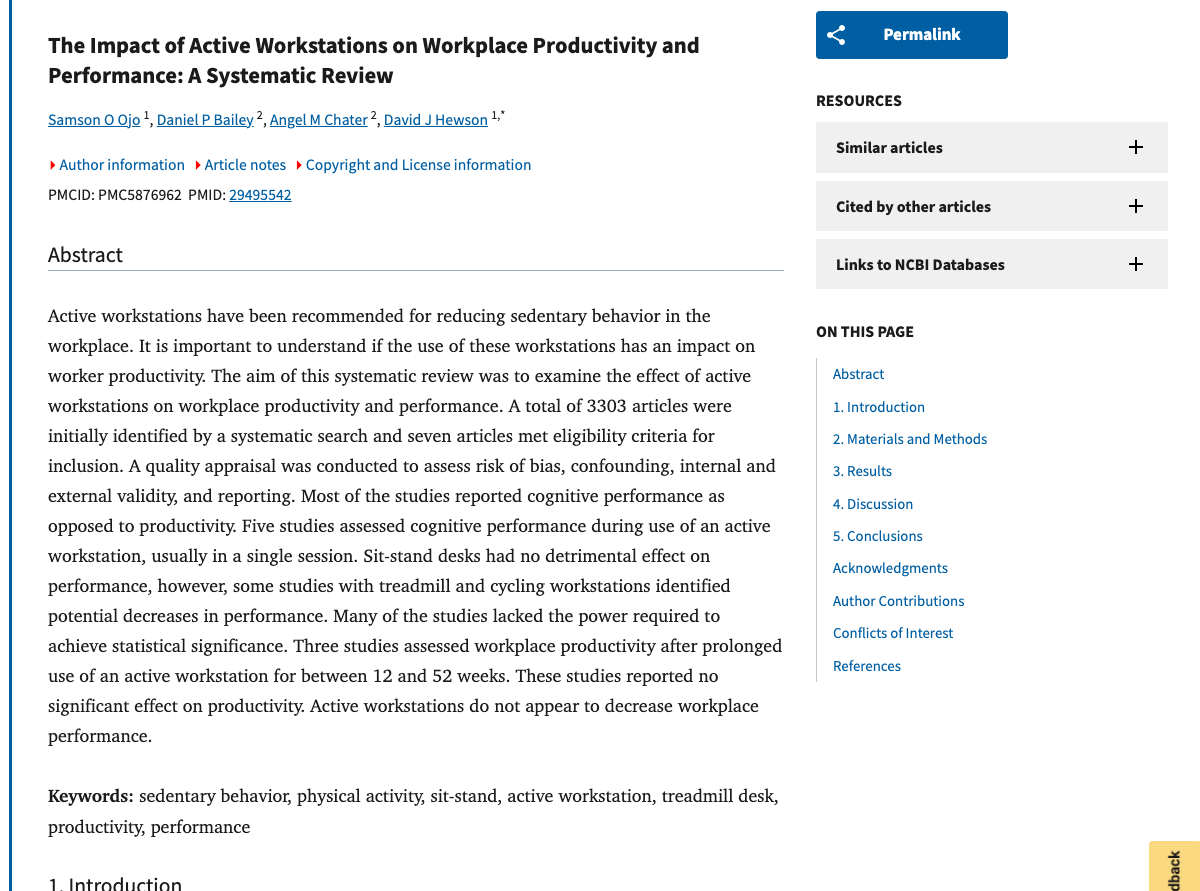
Key Takeaway
Sit-stand desks do not negatively impact productivity and may improve worker energy, focus, and comfort.
Summary
This systematic review examined workplace productivity outcomes in employees using sit-stand desks compared to traditional seated desks.
Key findings:
- No decrease in work productivity measures
- Self-reported improvements in energy and alertness
- Reduced discomfort compared to prolonged sitting
- Some studies showed improved focus and engagement
Productivity outcomes:
- Typing speed: No significant difference
- Cognitive tasks: Maintained or slightly improved
- Self-reported productivity: Often improved
- Absenteeism: Some reduction in intervention groups
Worker experience:
- Increased perceived energy (especially afternoon)
- Reduced musculoskeletal discomfort
- Greater sense of workplace satisfaction
- Improved mood and reduced fatigue
Practical notes:
- Adaptation period of 2-4 weeks common
- Alternation is key, standing all day impairs productivity
- Proper ergonomic setup essential
Clinical significance:
Employers can implement sit-stand desks without concerns about productivity losses, with potential gains in worker wellbeing and engagement.
