
Key Takeaway
Three-month RCT found sit-stand desks significantly reduced sitting time, neck/shoulder pain, while improving subjective health, work vitality, and self-rated productivity.
Summary
This randomized controlled trial from Japan examined whether sit-stand desk interventions could reduce sedentary behavior and improve health and productivity outcomes in office workers.
74 desk workers were randomized to either receive sit-stand desks (n=36) or continue with standard desks (n=38) for three months. The intervention group showed significant improvements across multiple outcomes.
The study provides evidence that sit-stand desks can improve both physical health markers (reduced pain, increased subjective health) and work-related outcomes (increased vitality and self-rated performance), supporting their use in workplace wellness programs.
Methods
- 74 Japanese desk workers
- 3-month randomized controlled trial
- Intervention: sit-stand desk installation
- Control: standard desk (no change)
- Outcomes: sitting time, pain, health, productivity
Key Results
- Significantly decreased sitting time at work (p = 0.002)
- Reduced neck and shoulder pain (p = 0.001)
- Increased subjective health (p = 0.002)
- Improved work-related vitality (p < 0.001)
- Better self-rated work performance (p = 0.017)
Figures
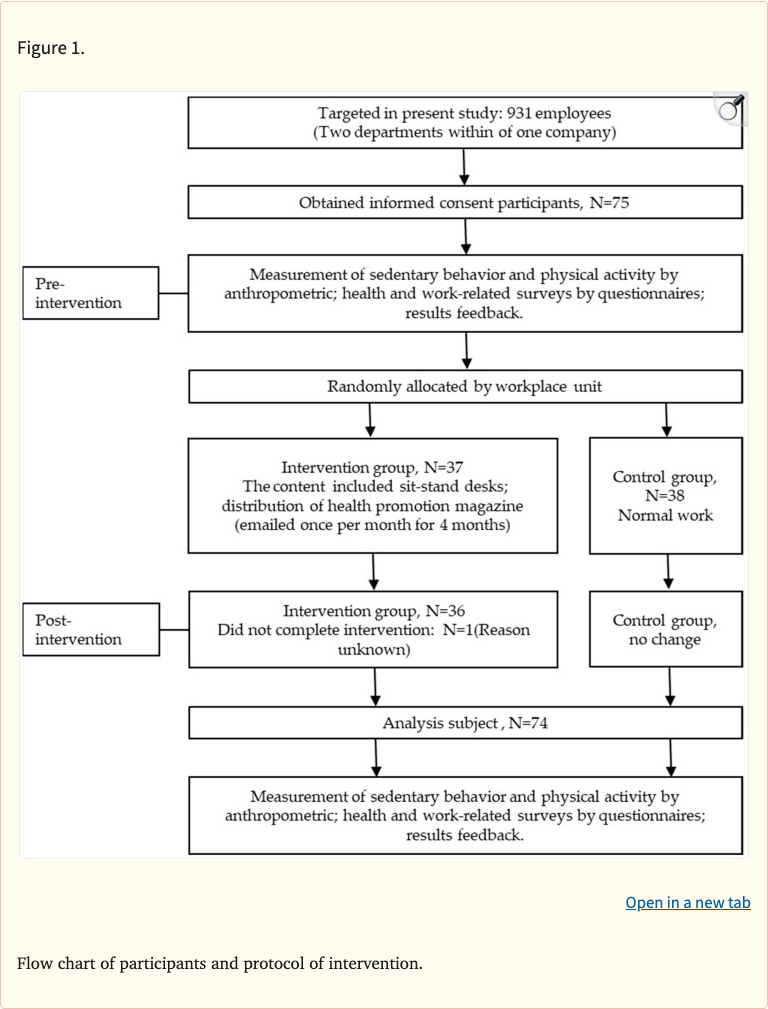 Figure 1
Limitations
- Randomization by worksite, not individual
- No training provided on desk usage
- Self-reported outcomes
- Japanese population may not generalize
- Relatively short follow-up (3 months)
