
Key Takeaway
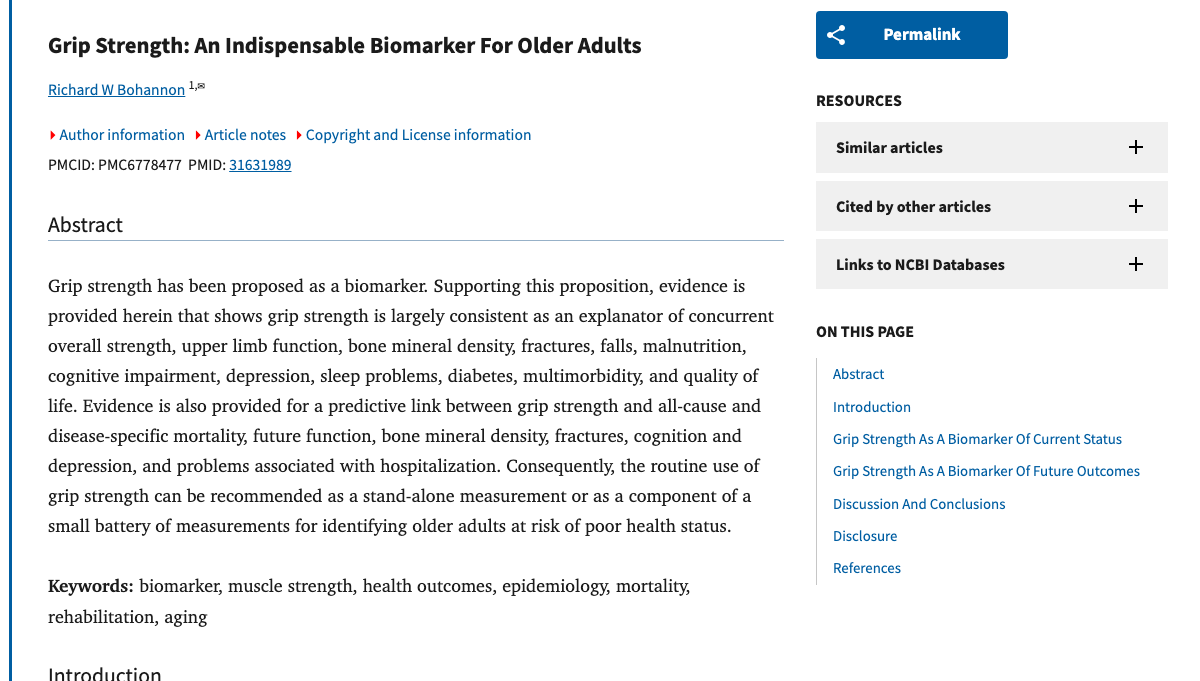
Comprehensive review establishing grip strength as an indispensable biomarker for older adults, predicting mortality, disability, complications, and length of hospital stay.
Summary
This review synthesizes evidence on grip strength as a biomarker for health status in older adults, examining its relationship with various health outcomes.
Grip strength emerges as a simple, inexpensive, and highly predictive measure that should be incorporated into routine clinical assessments for older adults. It predicts not just mortality but functional outcomes critical for quality of life.
Methods
- Narrative review of literature
- Focus on older adult populations
- Multiple health outcomes examined
- Clinical utility assessment
Key Results
- Strong predictor of all-cause mortality
- Predicts future disability and dependence
- Associated with cognitive decline
- Predicts length of hospital stay
- Correlates with nutritional status
- Simple and inexpensive to measure
Limitations
- Narrative review (not systematic)
- Heterogeneous measurement methods
- Cutoff values vary by population
- Causation vs correlation unclear