
Key Takeaway
Meta-analysis confirms grip strength as a robust predictor of mortality, disability, and health outcomes in aging adults, with evidence supporting grip training interventions.
Summary
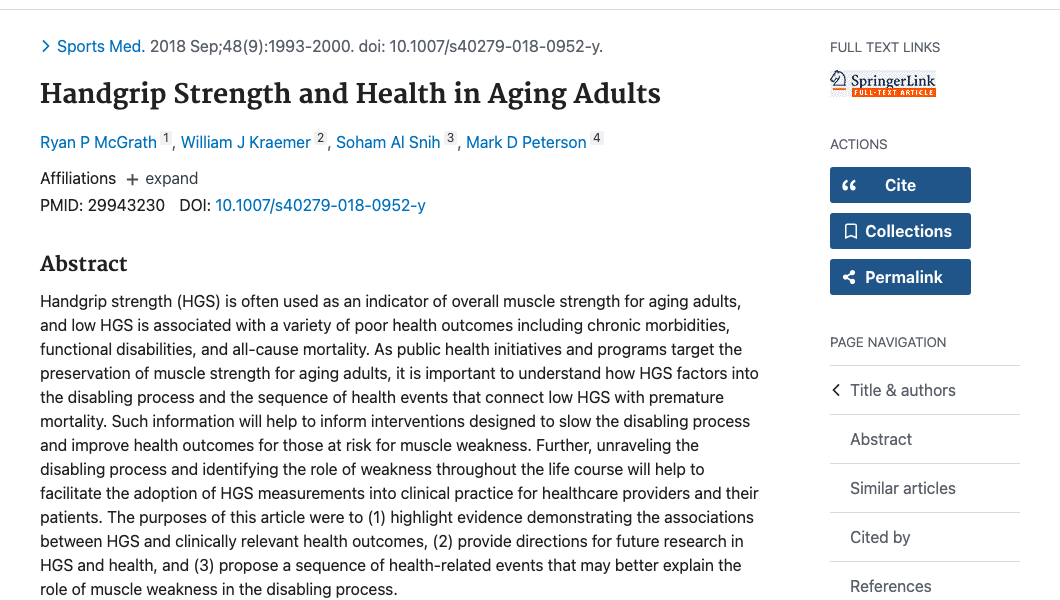
This comprehensive review and meta-analysis examines the relationship between handgrip strength and health outcomes in aging adults, including mortality, disability, and disease risk.
The evidence strongly supports grip strength as both a diagnostic biomarker and potential intervention target, with resistance training shown to improve grip strength and potentially health outcomes.
Methods
- Systematic review and meta-analysis
- Focus on aging adult populations
- Multiple databases searched
- Quality assessment of studies
Key Results
- Consistent mortality prediction across studies
- 45% higher mortality in weak grip groups
- Predicts cognitive decline
- Associated with cardiometabolic health
- Resistance training improves grip strength
- Benefits extend to very old adults
Limitations
- Heterogeneous study populations
- Variable grip measurement methods
- Limited intervention studies
- Optimal training protocols unclear