Key Takeaway
Creatine supplementation combined with resistance training produced a small but consistent increase in direct measures of muscle hypertrophy (0.10–0.16 cm in muscle thickness) in both upper and lower body.
Summary
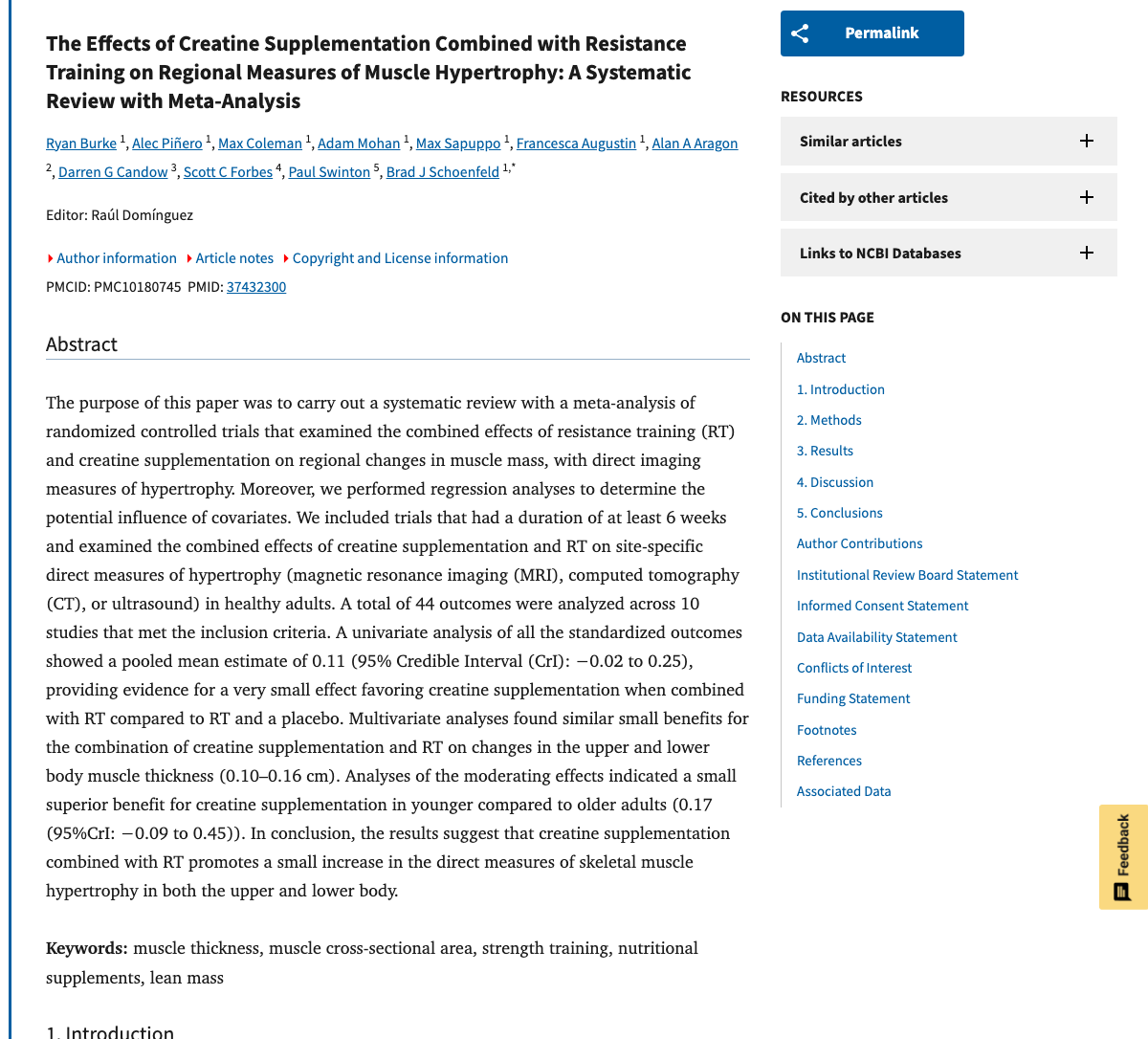
This systematic review with meta-analysis examined the effects of creatine supplementation combined with resistance training on regional (site-specific) measures of muscle hypertrophy using direct imaging techniques such as MRI, CT, and ultrasound. Unlike many prior meta-analyses that relied on indirect measures like DEXA-derived lean mass, this study focused specifically on direct muscle size measurements.
Across 10 studies with 44 outcomes, the Bayesian analysis found a pooled standardized mean estimate of 0.11 (95% CrI: -0.02 to 0.25) favoring creatine supplementation, representing a very small positive effect. Multivariate analyses showed small benefits of 0.10–0.16 cm in muscle thickness for both upper and lower body regions. Moderator analyses suggested a slightly greater benefit in younger versus older adults.
The results confirm that creatine supplementation provides a genuine, albeit small, additive hypertrophic benefit when combined with resistance training. This is notable because direct imaging measures are considered more valid assessments of true muscle growth compared to whole-body composition methods.
Methods
Systematic review with Bayesian meta-analysis of RCTs lasting at least 6 weeks. Included studies that used direct imaging measures of hypertrophy (MRI, CT, or ultrasound) in healthy adults. Analyzed 44 outcomes across 10 studies. Performed univariate and multivariate analyses with regression to assess moderating effects of age, training status, and body region.
Key Results
Pooled standardized mean estimate: 0.11 (95% CrI: -0.02 to 0.25) favoring creatine. Multivariate analyses showed upper and lower body muscle thickness increases of 0.10–0.16 cm with creatine vs. placebo. Younger adults showed a slightly larger benefit than older adults (standardized difference of 0.17, 95% CrI: -0.09 to 0.45). Effects were consistent across upper and lower body measurements.
Figures
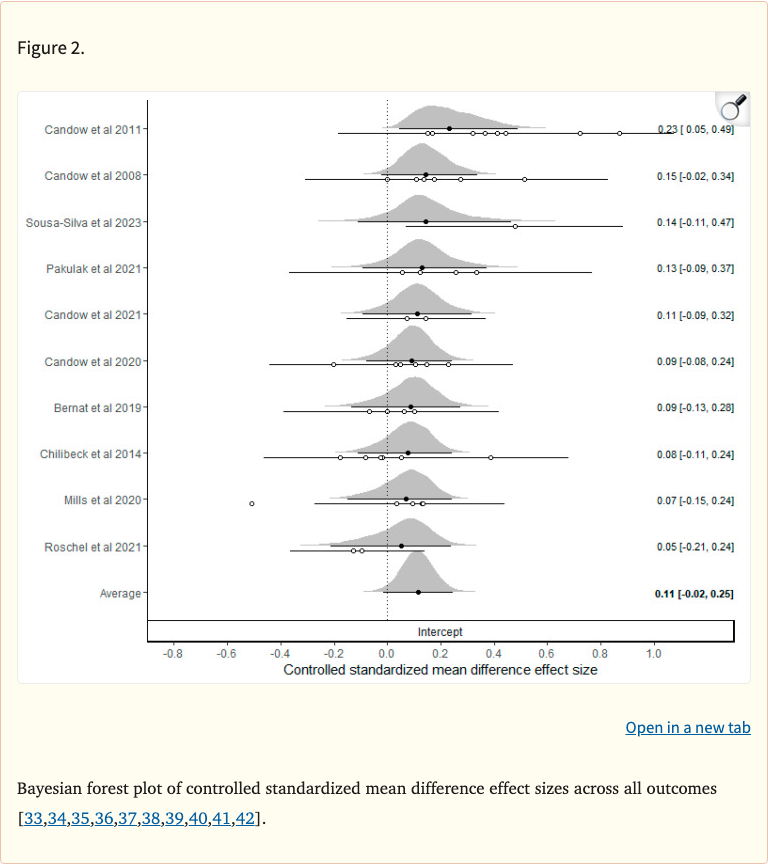 Figure 1
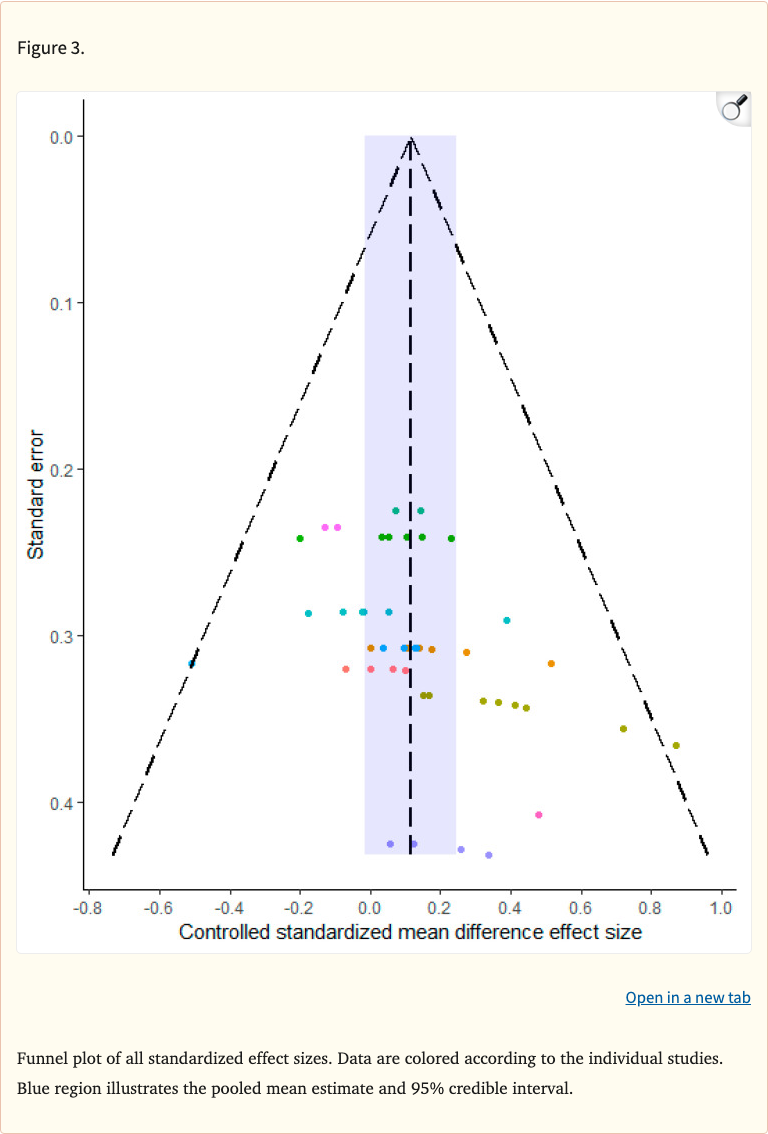 Figure 2
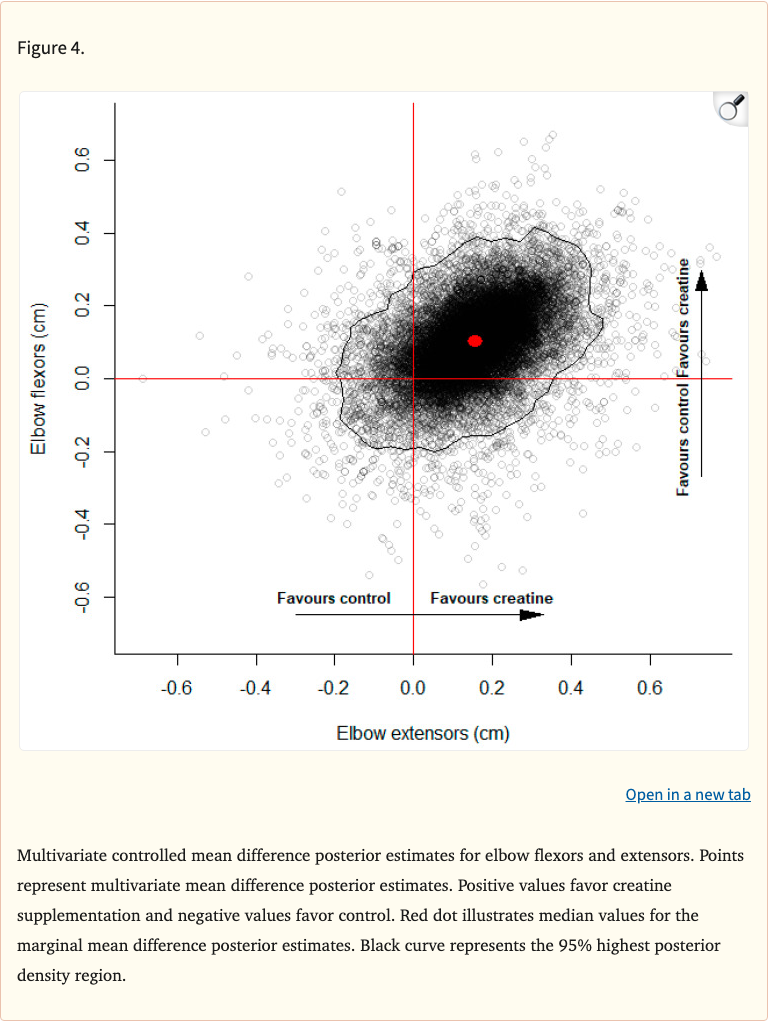 Figure 3
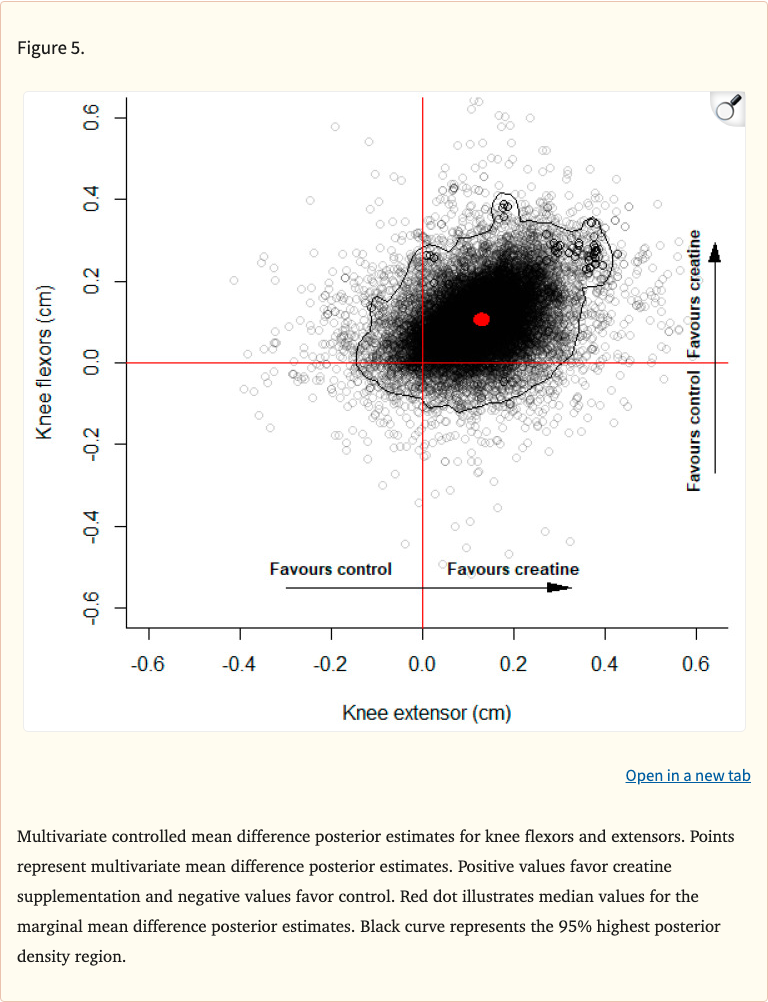 Figure 4
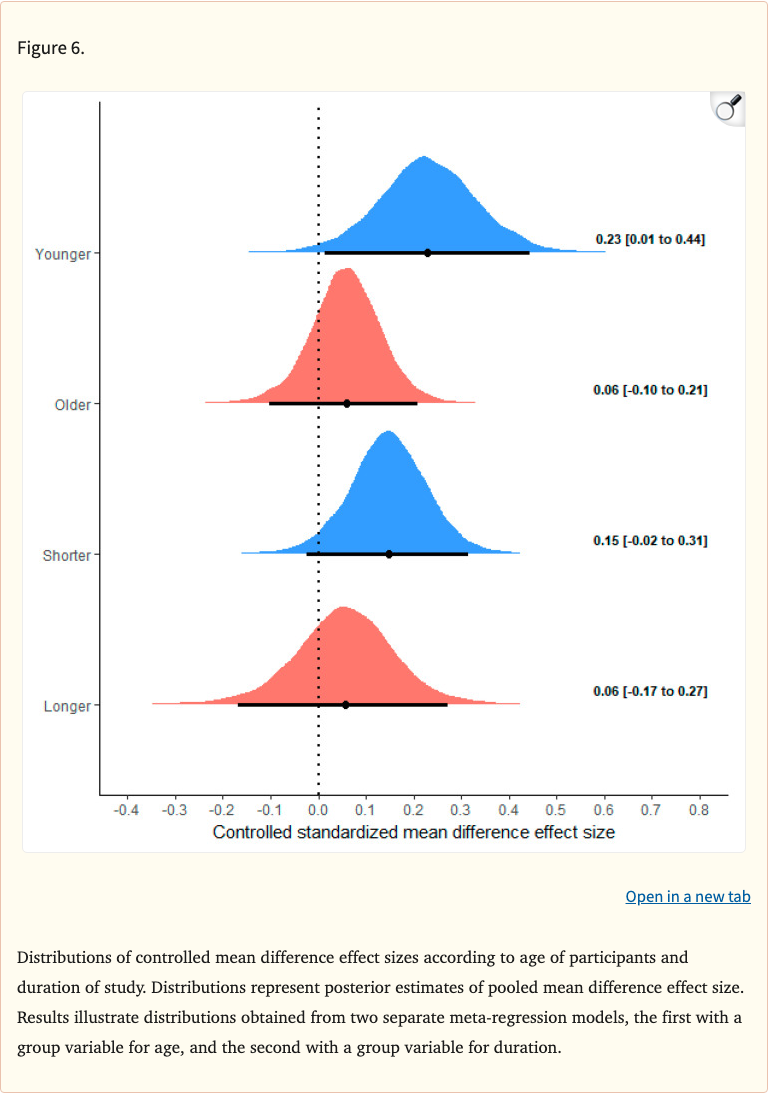 Figure 5
Limitations
Only 10 studies met inclusion criteria, limiting statistical power. Several authors had conflicts of interest with creatine manufacturers. The 95% credible interval for the overall effect crossed zero, suggesting uncertainty about the true magnitude. Most included studies had relatively short durations. Limited ability to assess dose-response relationships.
Related Interventions
Related Studies
Discussed In