Key Takeaway
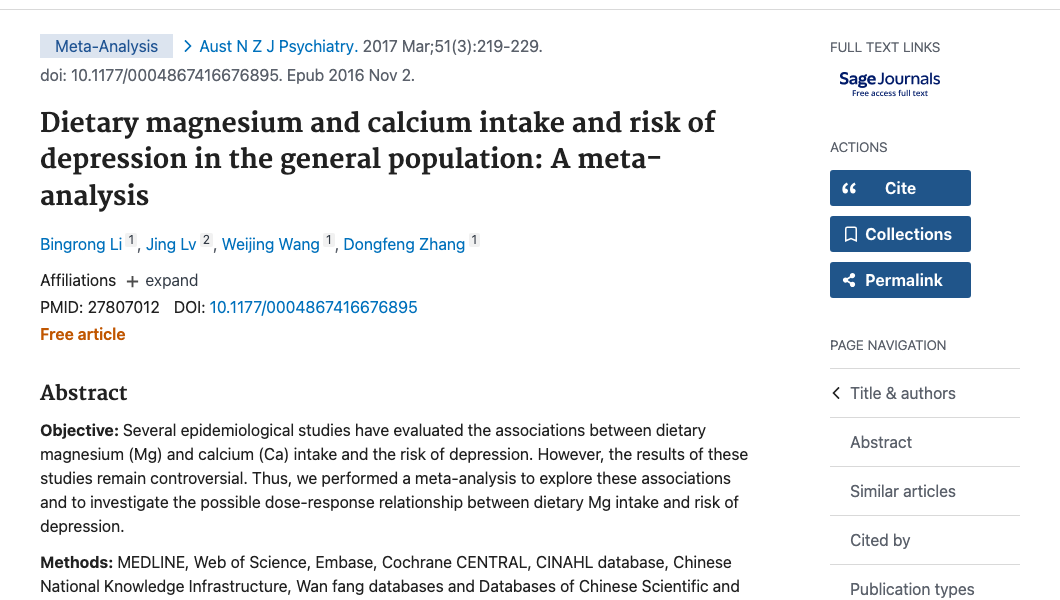
Meta-analysis of 8,894 cases finding that higher dietary magnesium intake is significantly associated with lower risk of depression.
Summary
This meta-analysis examined 9 cross-sectional studies involving 31,712 participants to assess the relationship between magnesium intake and depression risk.
Key findings:
- Significant inverse association between magnesium intake and depression risk
- Higher magnesium intake associated with lower depression rates
- Association was consistent across different populations
- Effect was dose-dependent
Mechanism proposed:
- Magnesium's role in NMDA receptor regulation
- Effects on HPA axis and stress response
- Influence on inflammatory pathways
- GABA modulation
Clinical implications:
Supports optimizing magnesium intake as part of mental health support, though prospective trials are needed to establish causation.