
Key Takeaway
Hypertonic saline nasal irrigation is significantly more effective than isotonic saline for chronic rhinosinusitis symptom relief and mucociliary clearance.
Summary
This systematic review and meta-analysis evaluated the comparative efficacy of hypertonic versus isotonic saline nasal irrigation for chronic rhinosinusitis (CRS). Seven studies were included in the analysis, providing evidence on symptom outcomes, radiologic findings, and mucociliary function.
Results strongly favored hypertonic saline across most symptom domains. Hypertonic irrigation showed significant advantages in reducing nasal secretion (SMD=1.52), nasal congestion (SMD=1.52), headache (SMD=0.82), and overall symptom burden (SMD=1.63). Mucociliary clearance time also improved more with hypertonic solutions.
However, the two solutions showed no significant difference for olfactory improvement or radiologic score changes on imaging. Hypertonic saline did cause more minor adverse effects such as nasal burning and stinging, but no serious adverse events were reported.
The authors concluded that hypertonic saline irrigation is significantly more effective than isotonic saline for managing CRS symptoms and improving ciliary function, though they noted the need for further research on optimal concentration and application methods.
Methods
- Systematic review and meta-analysis
- 7 studies included
- Compared hypertonic vs isotonic saline nasal irrigation
- Focused on chronic rhinosinusitis patients
- Outcomes: symptom scores, radiologic scores, mucociliary clearance time
- Standard meta-analytic pooling with standardized mean differences
Key Results
- Hypertonic saline superior for nasal secretion reduction (SMD=1.52)
- Hypertonic saline superior for nasal congestion relief (SMD=1.52)
- Hypertonic saline superior for headache improvement (SMD=0.82)
- Hypertonic saline superior for overall symptom relief (SMD=1.63)
- Greater improvement in mucociliary clearance time with hypertonic saline
- No significant difference in olfactory improvement
- No significant difference in radiologic score improvement
- Minor adverse effects more common with hypertonic saline
Figures
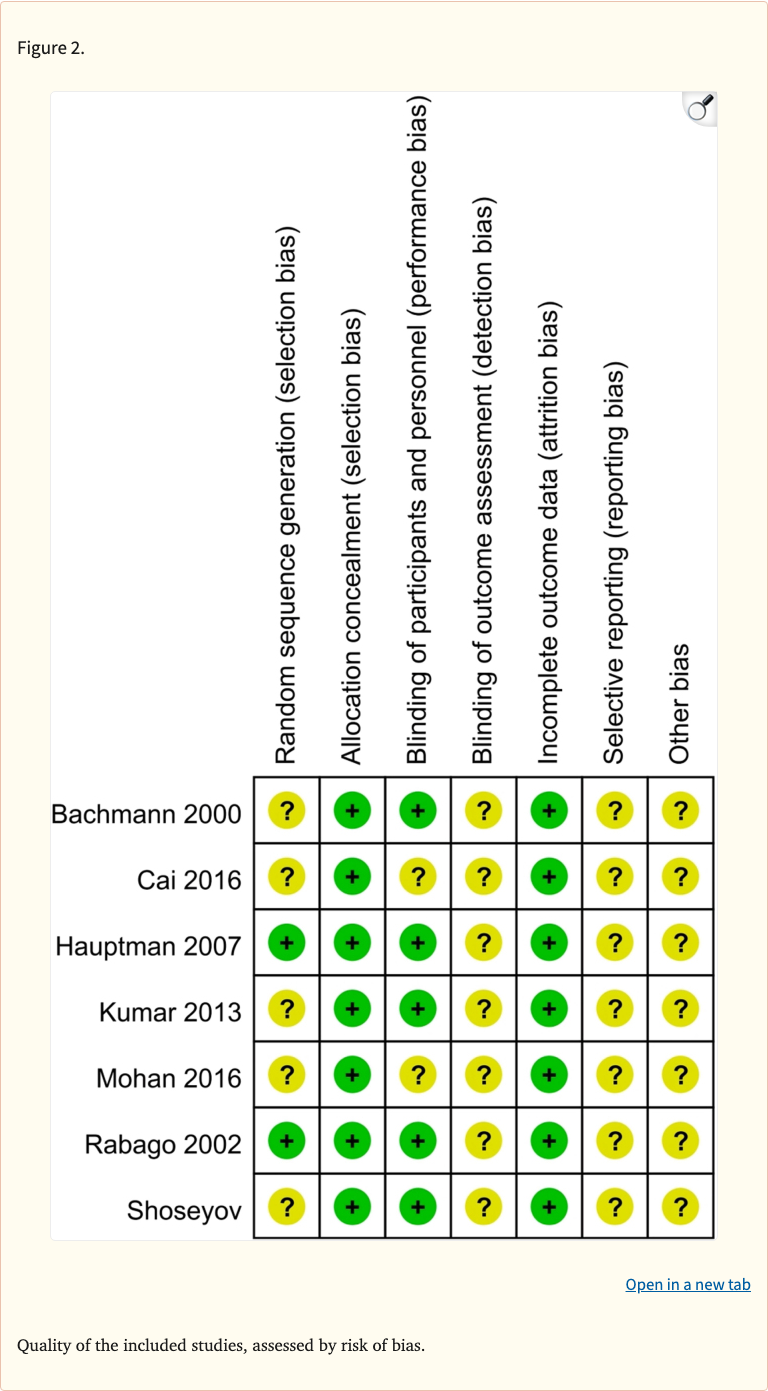 Figure 1
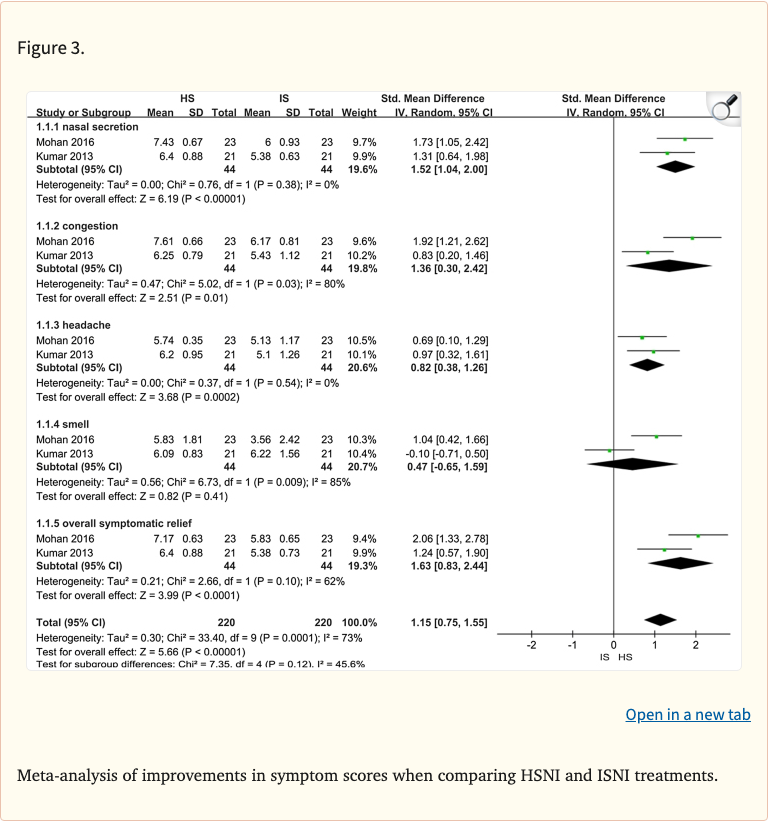 Figure 2
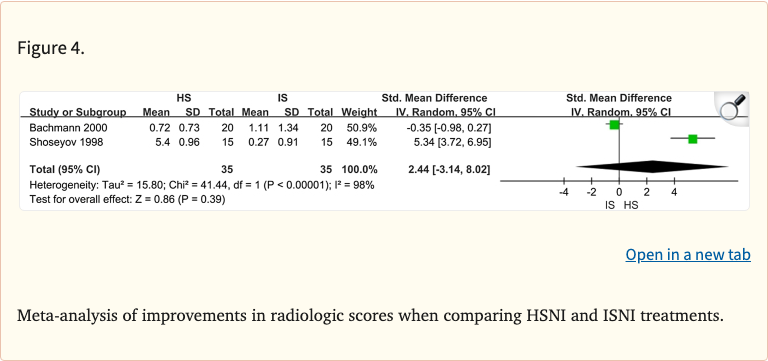 Figure 3
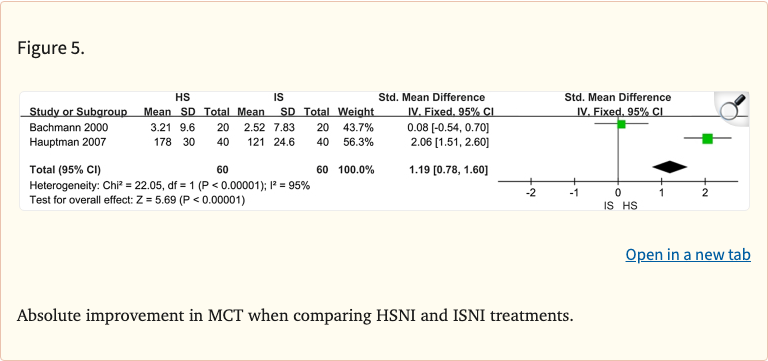 Figure 4
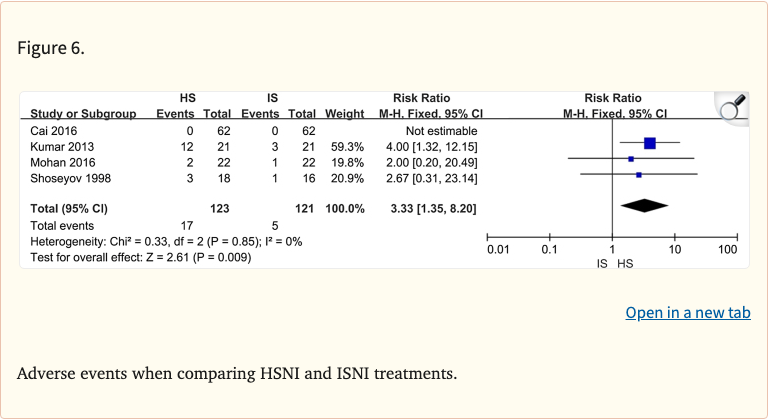 Figure 5
Limitations
- Only 7 studies included, limiting statistical power
- Heterogeneity in saline concentrations and irrigation methods across studies
- Optimal hypertonic concentration not established
- Long-term outcomes not well characterized
- Blinding difficult due to differences in saline sensation