
Key Takeaway
Cupping therapy shows promise for musculoskeletal and sports rehabilitation, with evidence supporting pain reduction and improved range of motion, though adverse effects are generally mild and transient.
Summary
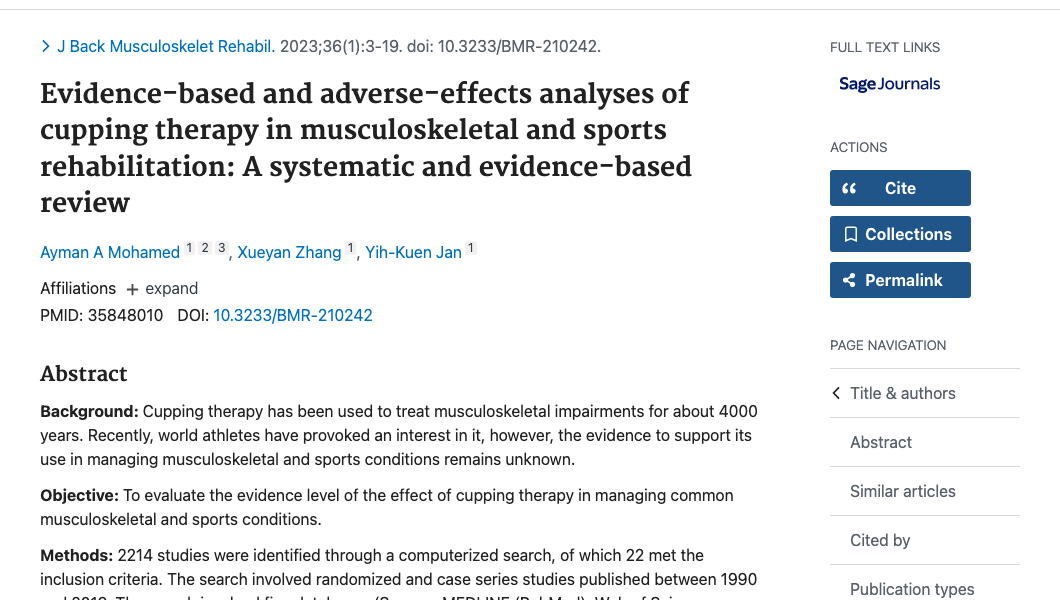
This systematic review evaluated the evidence base for cupping therapy in musculoskeletal and sports rehabilitation settings, with a particular focus on both therapeutic efficacy and adverse effects. The authors conducted a comprehensive search of multiple databases to identify relevant clinical trials and observational studies.
The review found that cupping therapy demonstrated beneficial effects for various musculoskeletal conditions, including reduced pain intensity, improved range of motion, and enhanced recovery in sports-related injuries. Both dry and wet cupping techniques were examined across different populations, from chronic pain patients to athletes.
Adverse effects analysis revealed that cupping-related side effects were generally mild and self-limiting, including skin discoloration, mild discomfort during treatment, and occasional bruising. Serious adverse events were rare when cupping was performed by trained practitioners. The authors concluded that cupping can be a useful adjunct therapy in musculoskeletal rehabilitation, though they noted the need for higher-quality randomized controlled trials with standardized protocols to strengthen the evidence base.
