Key Takeaway
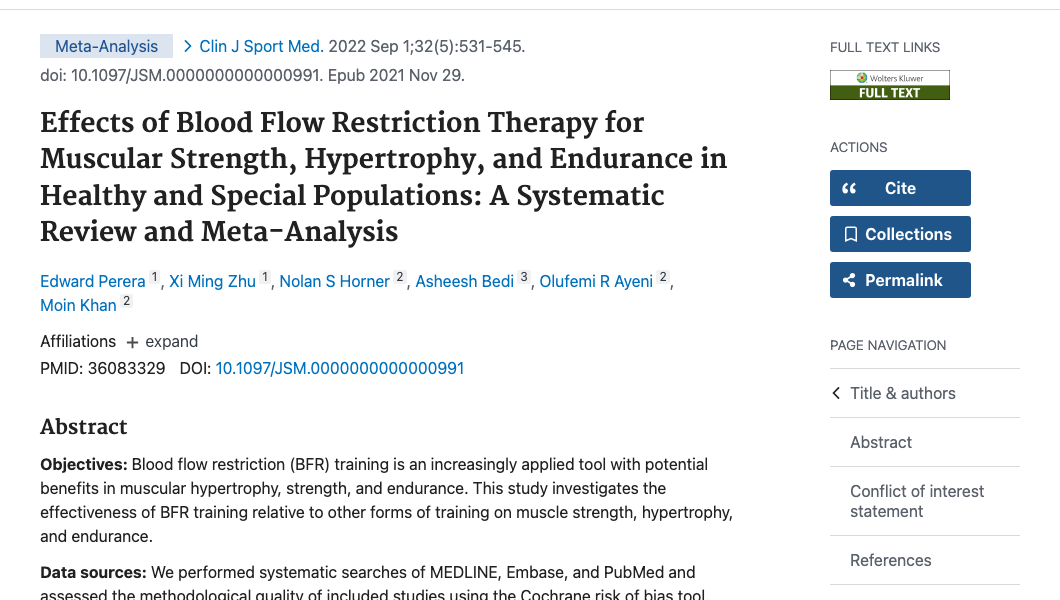
BFR training effectively improves strength, hypertrophy, and endurance across both healthy individuals and clinical populations including post-surgical and elderly patients.
Summary
This comprehensive systematic review and meta-analysis evaluated the effects of blood flow restriction therapy across a broad range of populations, including healthy adults, elderly individuals, and clinical populations recovering from surgery or managing chronic conditions. The goal was to determine whether BFR benefits extend beyond healthy young adults to groups who may benefit most from low-load training.
The analysis confirmed that BFR training produces significant improvements in muscular strength, hypertrophy, and endurance compared to control conditions. Importantly, these benefits were observed in both healthy populations and special populations such as post-ACL reconstruction patients, individuals with knee osteoarthritis, and older adults with sarcopenia concerns.
The findings support BFR as a versatile rehabilitation and training tool with applications extending well beyond traditional gym settings. For clinical populations who cannot tolerate heavy loads, BFR offers a viable alternative for maintaining and building muscle tissue.
Methods
Systematic review and meta-analysis of randomized controlled trials. Searched PubMed, MEDLINE, Embase, and Cochrane databases. Included studies on both healthy participants and special populations (post-surgical, elderly, clinical conditions). Primary outcomes were muscular strength, hypertrophy, and endurance. Quality assessment performed using PEDro scale.
Key Results
- Significant improvements in muscle strength with BFR vs. control across populations
- Hypertrophy gains achieved with low-load BFR training
- Muscular endurance also improved with BFR protocols
- Benefits observed in healthy adults, elderly, and post-surgical patients
- Effect sizes comparable to previous meta-analyses on BFR in healthy populations
Limitations
- Variability in BFR protocols and occlusion pressures across studies
- Heterogeneity in outcome measures and assessment methods
- Limited data on optimal protocols for specific clinical populations
- Most studies relatively short duration (4-12 weeks)
- Publication bias possible given positive result tendency in BFR literature
Related Interventions
Related Studies
Discussed In