Key Takeaway
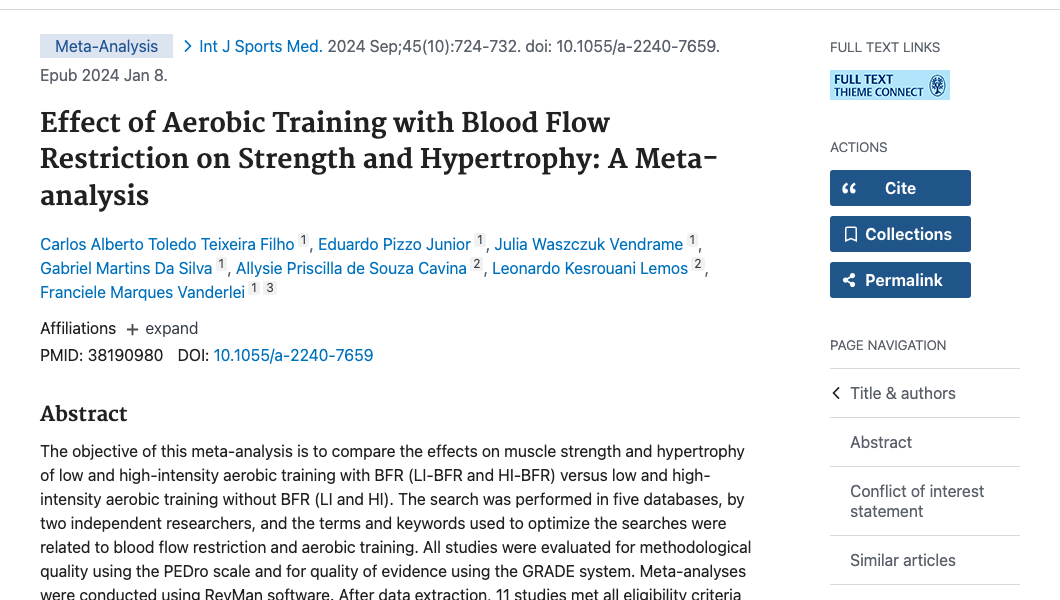
Aerobic training with blood flow restriction produces significant improvements in both muscle strength and hypertrophy compared to aerobic training alone.
Summary
This meta-analysis examined whether combining aerobic exercise with blood flow restriction (BFR) can enhance muscular adaptations beyond what aerobic training alone provides. The analysis pooled data from randomized controlled trials comparing aerobic BFR training to standard aerobic training without restriction.
The findings demonstrate that aerobic BFR training produces statistically significant improvements in both muscle strength and hypertrophy compared to unrestricted aerobic training. This suggests that BFR can convert traditionally non-hypertrophic aerobic exercise into a stimulus capable of building muscle, expanding the utility of BFR beyond resistance training applications.
These results have practical implications for populations who may benefit from aerobic exercise but also need to preserve or build muscle mass, such as older adults, rehabilitation patients, or endurance athletes seeking to maintain muscle during high-volume cardio phases.
Methods
Systematic review and meta-analysis following PRISMA guidelines. Searched major databases for randomized controlled trials comparing aerobic training with BFR to aerobic training without BFR. Included studies measuring strength and/or hypertrophy outcomes. Effect sizes calculated as standardized mean differences and pooled using random-effects models.
Key Results
- Aerobic BFR training produced significantly greater strength gains than aerobic training alone
- Muscle hypertrophy was also significantly improved with the addition of BFR
- Effects were observed across different aerobic modalities (walking, cycling)
- BFR transformed aerobic exercise into a hypertrophic stimulus
Limitations
- Heterogeneity in BFR protocols (pressure, cuff width, exercise modality) across included studies
- Most studies had relatively short intervention durations
- Limited long-term follow-up data available
- Population samples varied in age and training status
Related Interventions
Related Studies
Discussed In