
Key Takeaway
Slow breathing at approximately 6 breaths per minute optimizes heart rate variability and reduces markers of physiological stress.
Summary
This review examined the physiological effects of slow breathing techniques, finding that breathing at approximately 6 breaths per minute (about 5 seconds inhale, 5 seconds exhale) produces optimal heart rate variability and parasympathetic activation.
The authors explain how slow breathing enhances vagal tone, improves baroreflex sensitivity, and shifts autonomic balance toward parasympathetic dominance. This explains why breathing practices across cultures have converged on similar slow breathing rates.
The findings provide scientific support for pranayama, meditation, and other slow breathing practices used for stress reduction and health.
Methods
- Narrative review of slow breathing literature
- Examined effects on autonomic nervous system
- Analyzed heart rate variability responses
- Compared different breathing rates
Key Results
- 6 breaths/min optimizes HRV
- Increases parasympathetic activity
- Improves baroreflex sensitivity
- Reduces blood pressure acutely
- Decreases anxiety and stress markers
Figures
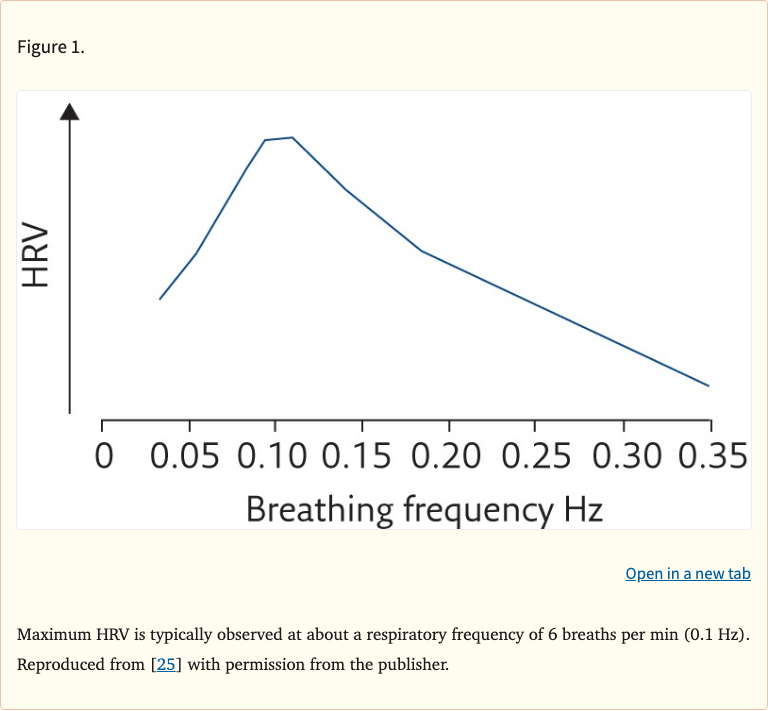 Figure 1
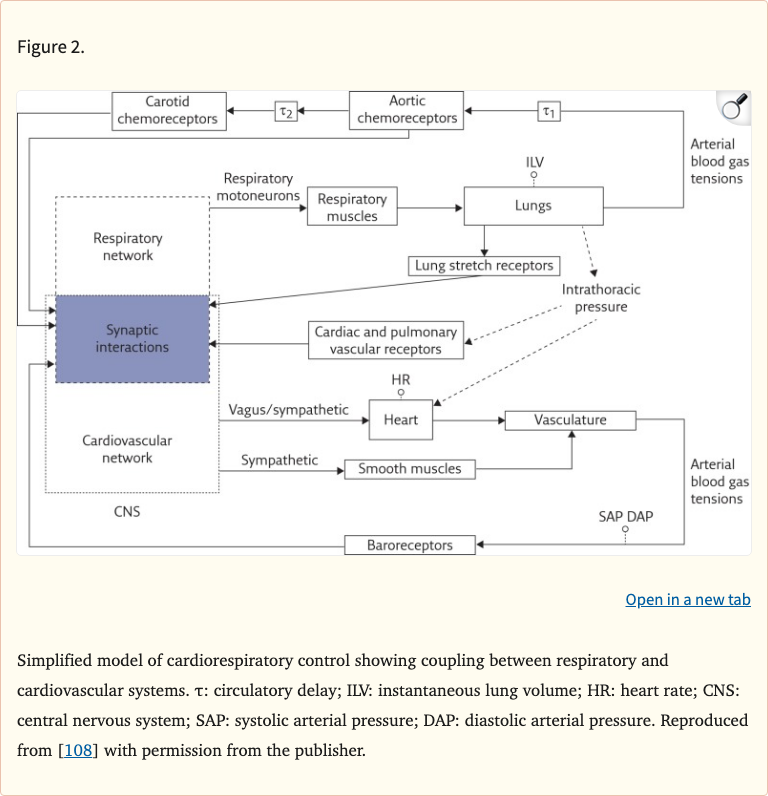 Figure 2
Limitations
- Narrative review, not systematic
- Most studies short-term
- Optimal breathing rate may vary individually
- Long-term benefits less studied