
Key Takeaway
HRV biofeedback improves autonomic function through resonance frequency breathing, with documented benefits for anxiety, depression, asthma, and athletic performance.
Summary
This comprehensive review by Paul Lehrer and Richard Gevirtz, pioneers in HRV biofeedback research, explains the mechanisms behind HRV biofeedback training and reviews the clinical evidence.
The key mechanism is resonance frequency breathing - breathing at a rate (typically 5-7 breaths/min) where respiratory and cardiovascular rhythms synchronize, maximizing HRV amplitude. Regular practice at this frequency strengthens baroreflex function and vagal tone.
The review documents efficacy for anxiety, depression, PTSD, asthma, hypertension, chronic pain, and athletic performance, establishing HRV biofeedback as an evidence-based intervention.
Methods
- Systematic review of mechanisms and clinical studies
- Analysis of resonance frequency physiology
- Integration of baroreflex and autonomic research
Key Results
- Resonance breathing maximizes HRV amplitude
- Baroreflex function improves with training
- Documented benefits across multiple conditions
- Effects persist after training ends
Figures
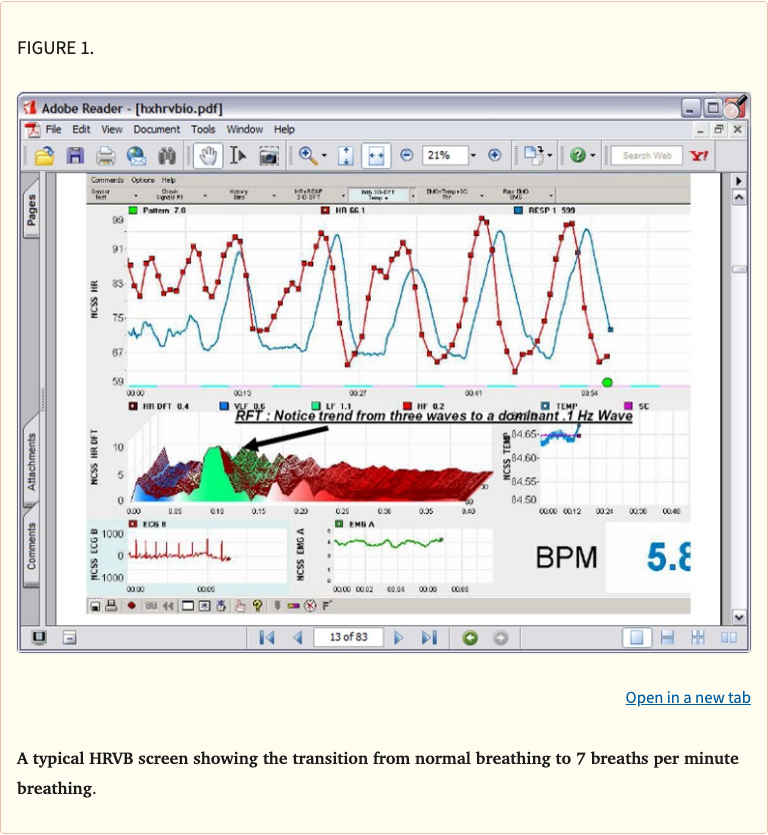 Figure 1
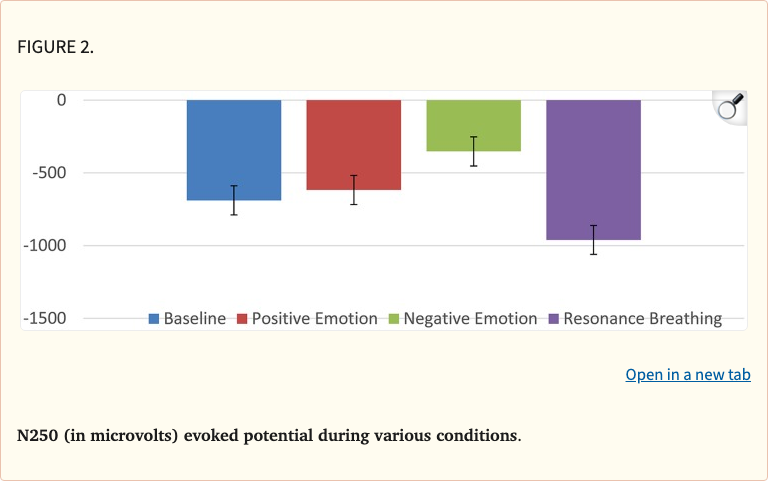 Figure 2
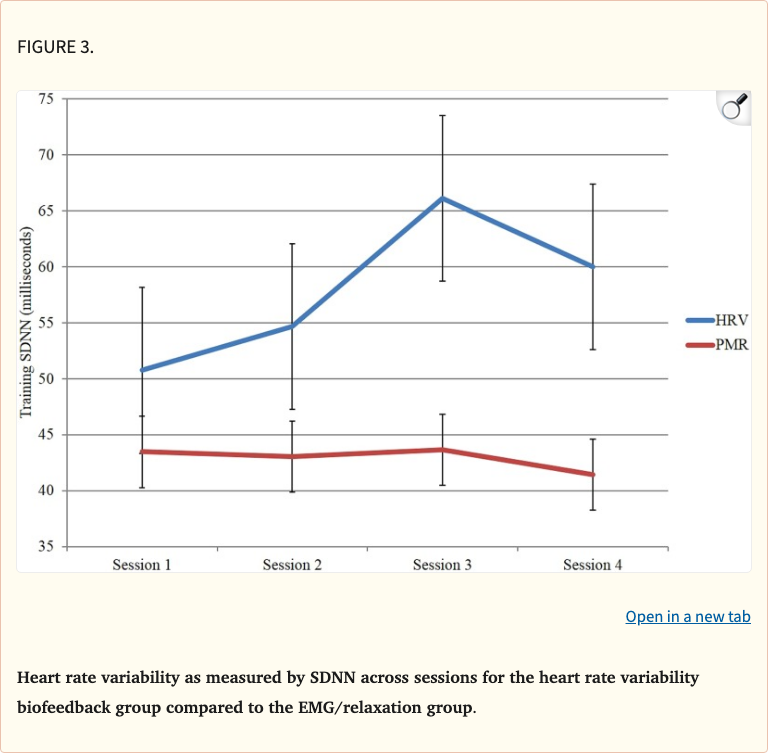 Figure 3
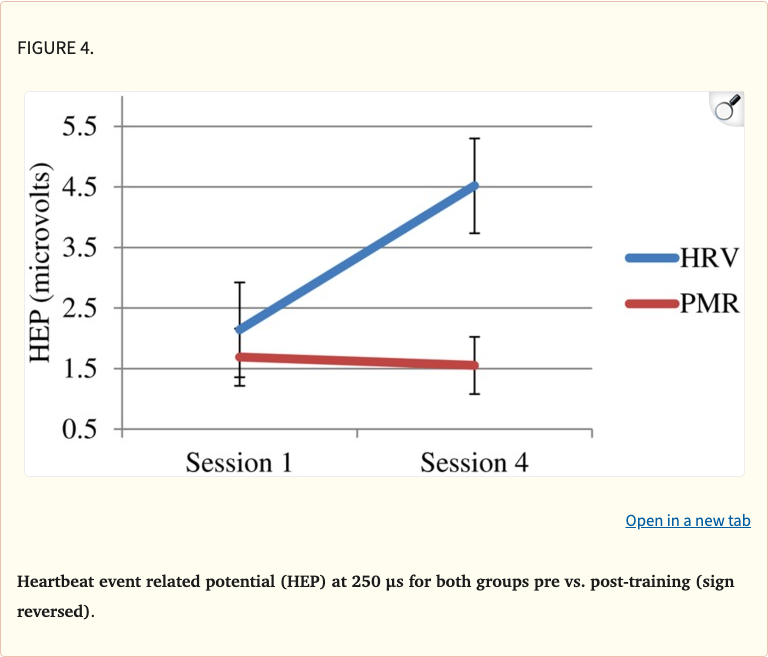 Figure 4
Limitations
- Review paper, not primary research
- Study quality varies across conditions
- Optimal protocols still being refined