Key Takeaway
Systematic review confirming that slow breathing techniques reliably enhance autonomic function, improve HRV, and reduce anxiety across multiple studies.
Summary
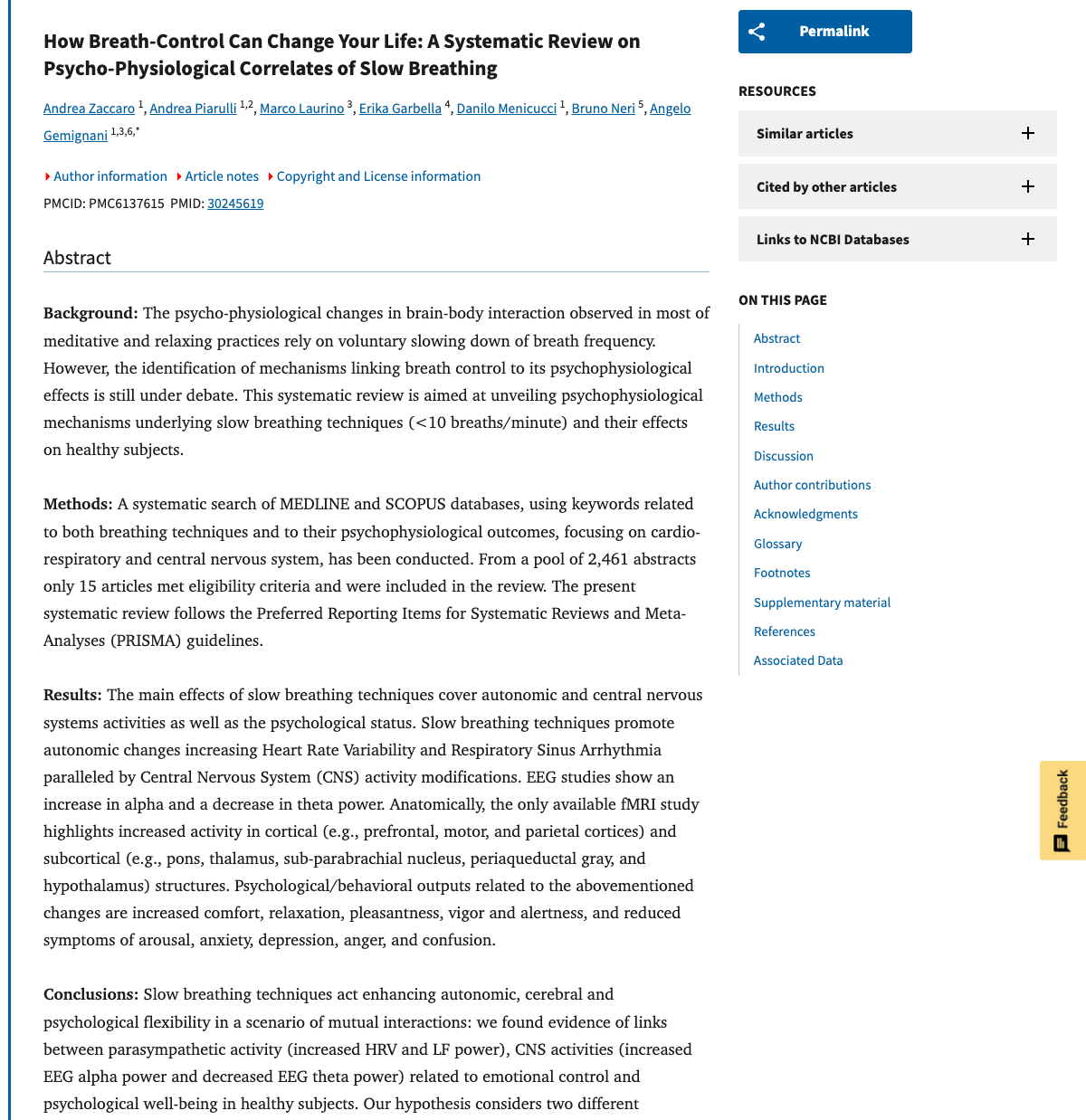
This systematic review comprehensively examined the evidence for slow breathing effects on psychological and physiological outcomes. The authors analyzed studies using various slow breathing techniques including pranayama, coherent breathing, and paced respiration.
The review found consistent evidence that slow breathing (typically at 6 breaths per minute or slower) increases heart rate variability, enhances parasympathetic activity, reduces blood pressure, and decreases anxiety. Effects were seen across healthy individuals and various clinical populations.
The paper provides a mechanistic framework explaining how slow breathing influences autonomic function through baroreflex and vagal pathways.
Methods
- Systematic review following PRISMA guidelines
- Included studies on slow breathing (< 10 breaths/min)
- Examined psychological and physiological outcomes
- Assessed quality of evidence
Key Results
- Consistent HRV improvements across studies
- Reliable anxiety reduction
- Blood pressure decreases
- Enhanced EEG alpha power
- Improved emotional regulation
Limitations
- Heterogeneous methodologies across studies
- Variable definitions of "slow breathing"
- Many studies had small samples
- Limited long-term follow-up data
Related Interventions
Related Studies
Discussed In