
Key Takeaway
Daily supplementation with 3 g of matcha powder for 12 weeks showed protective effects against cognitive decline in community-dwelling elderly women, as measured by improvements in MoCA scores.
Summary
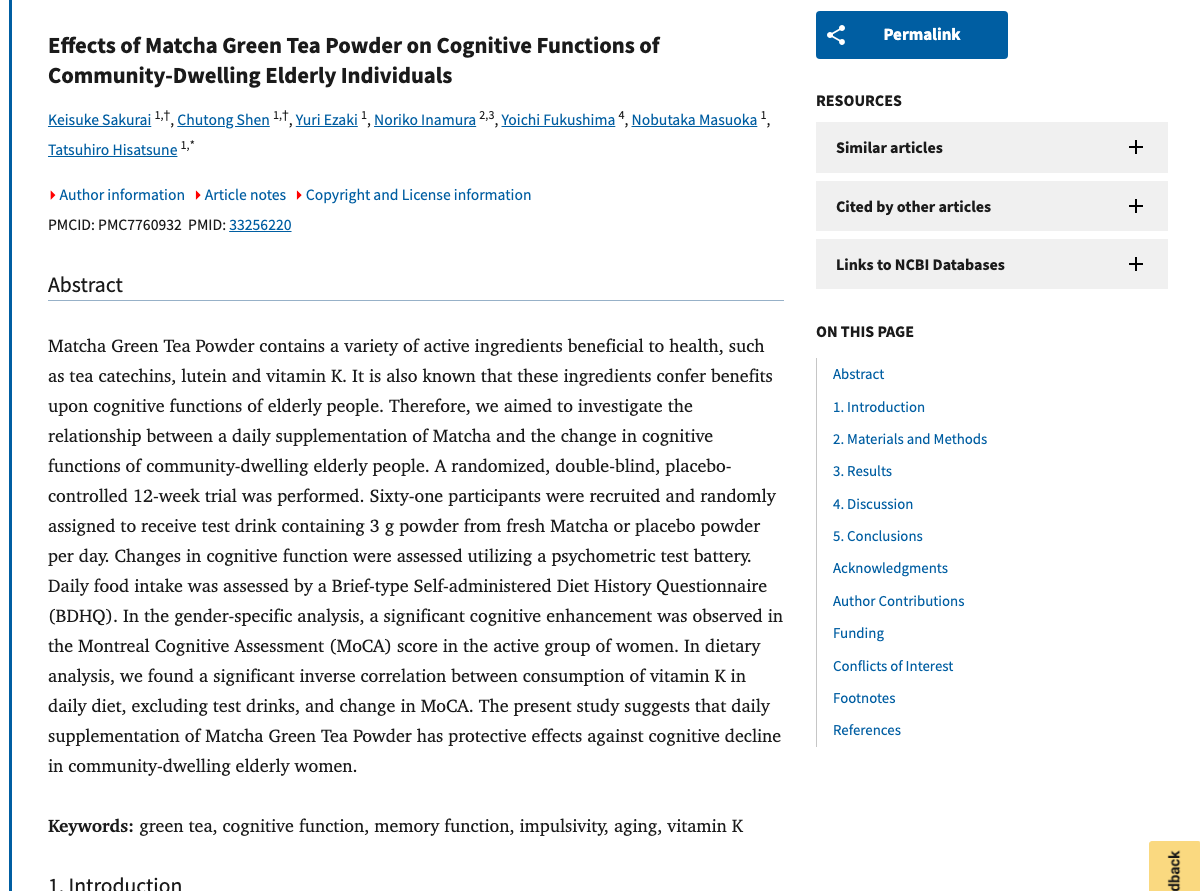
This randomized, double-blind, placebo-controlled trial examined whether daily matcha supplementation could improve cognitive function in community-dwelling elderly individuals. Sixty-one participants were randomly assigned to receive a test drink containing 3 g of matcha powder or a placebo daily for 12 weeks.
Cognitive changes were assessed using a psychometric test battery including the Montreal Cognitive Assessment (MoCA). Dietary intake was evaluated using the Brief-type Self-administered Diet History Questionnaire (BDHQ) to account for baseline nutritional factors.
Gender-specific analysis revealed a significant cognitive enhancement in MoCA scores among women in the matcha group compared to placebo. Additionally, dietary analysis showed a significant inverse correlation between daily vitamin K consumption (excluding test drinks) and changes in MoCA score, suggesting that vitamin K may be one of the active components contributing to matcha's cognitive benefits alongside catechins and lutein.
The study provides evidence that regular matcha supplementation may offer neuroprotective benefits for elderly women, potentially through the synergistic action of multiple bioactive compounds including catechins, lutein, and vitamin K.
Methods
Randomized, double-blind, placebo-controlled 12-week trial. Sixty-one community-dwelling elderly participants were randomly assigned to receive a test drink containing 3 g of fresh matcha green tea powder or placebo powder daily. Cognitive function was assessed using a psychometric test battery including the Montreal Cognitive Assessment (MoCA). Daily food intake was assessed by the Brief-type Self-administered Diet History Questionnaire (BDHQ). Gender-specific subgroup analyses were performed.
Key Results
- Significant cognitive enhancement observed in MoCA scores in the matcha group among women (gender-specific analysis)
- Significant inverse correlation between daily dietary vitamin K consumption and change in MoCA score
- Results suggest protective effects against cognitive decline specifically in elderly women
- The effect was not significant when analyzing all participants combined (both genders)
Limitations
- Relatively small sample size (61 participants total)
- The primary finding emerged from gender-specific subgroup analysis rather than the overall cohort
- 12-week duration may be insufficient to capture long-term cognitive trajectory
- Community-dwelling participants may not represent those with more advanced cognitive decline
- Could not determine which specific matcha compound (catechins, lutein, vitamin K) was most responsible for the observed effects
- Funded in part by Nestlé Japan Ltd.