
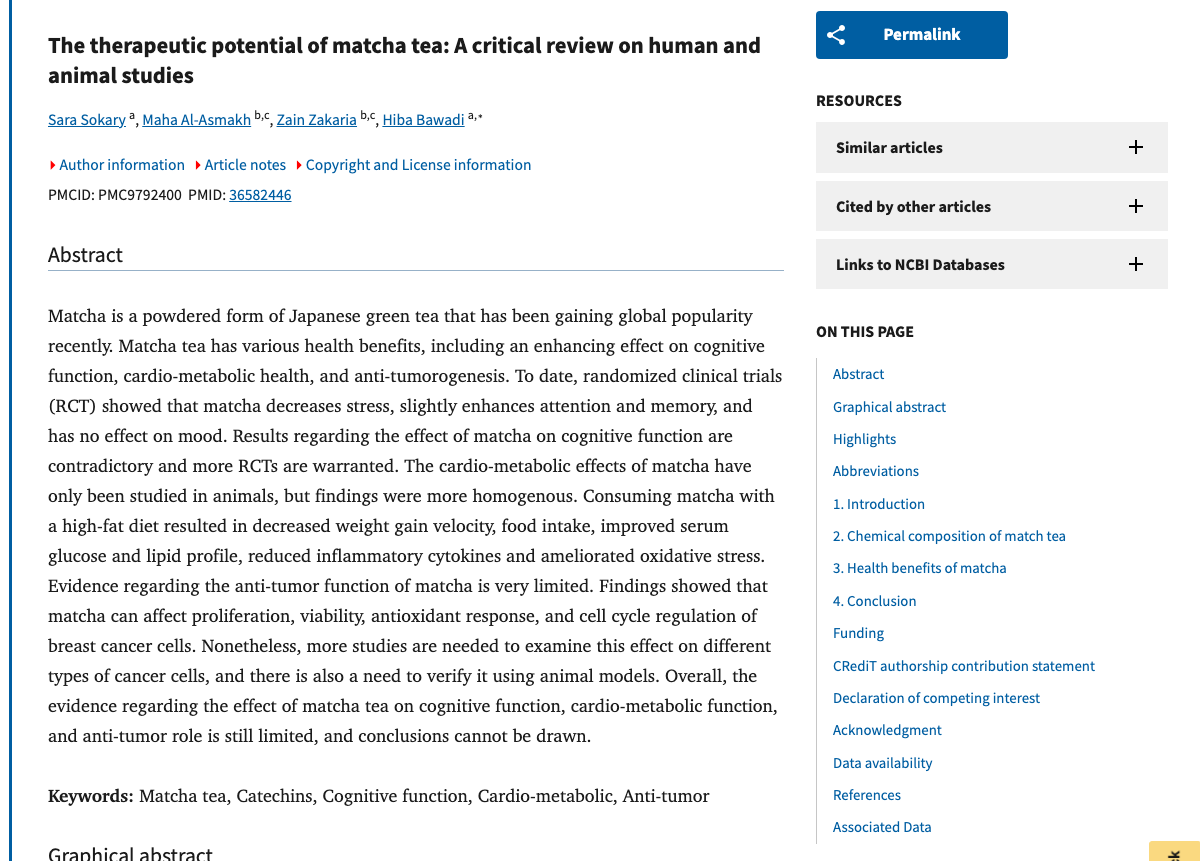
Key Takeaway
Critical review finds matcha decreases stress, slightly enhances attention and memory, reduces weight gain, improves lipid profiles, and shows anti-cancer properties through EGCG and L-theanine.
Summary
This critical review by Sokary et al. examined the therapeutic potential of matcha tea across human and animal studies, focusing on three domains: cognitive function, cardio-metabolic health, and anti-tumor properties. The review synthesized findings from 82 references to provide a comprehensive assessment of the current evidence base for matcha's health claims.
In the cognitive domain, the review found that randomized clinical trials showed matcha decreases stress and slightly enhances attention and memory, though it had no significant effect on mood. The authors noted that results across studies were sometimes contradictory, reflecting differences in matcha dosing, study duration, and outcome measures. For cardio-metabolic effects, animal studies showed more consistent results: matcha combined with high-fat diets led to decreased weight gain velocity, reduced food intake, improved glucose and lipid levels, lowered inflammatory markers, and reduced oxidative stress. These benefits were attributed primarily to matcha's high concentrations of EGCG and L-theanine.
Regarding anti-tumor potential, the evidence remained very limited but showed matcha could influence proliferation, viability, antioxidant response, and cell cycle regulation of breast cancer cells in vitro. The authors emphasized that expanded cancer-type testing and animal model verification are needed. Overall, the review concluded that while the evidence is promising, particularly for stress reduction and metabolic health, more well-designed RCTs are needed before definitive conclusions can be drawn about matcha's therapeutic applications.
Figures
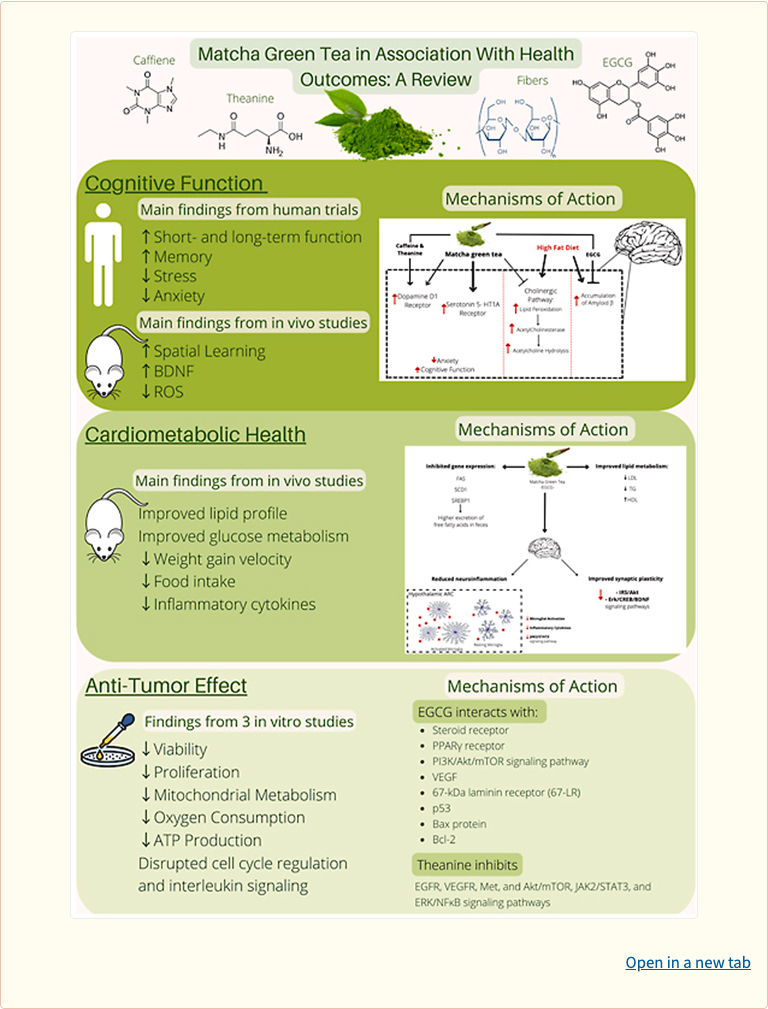 Figure 1
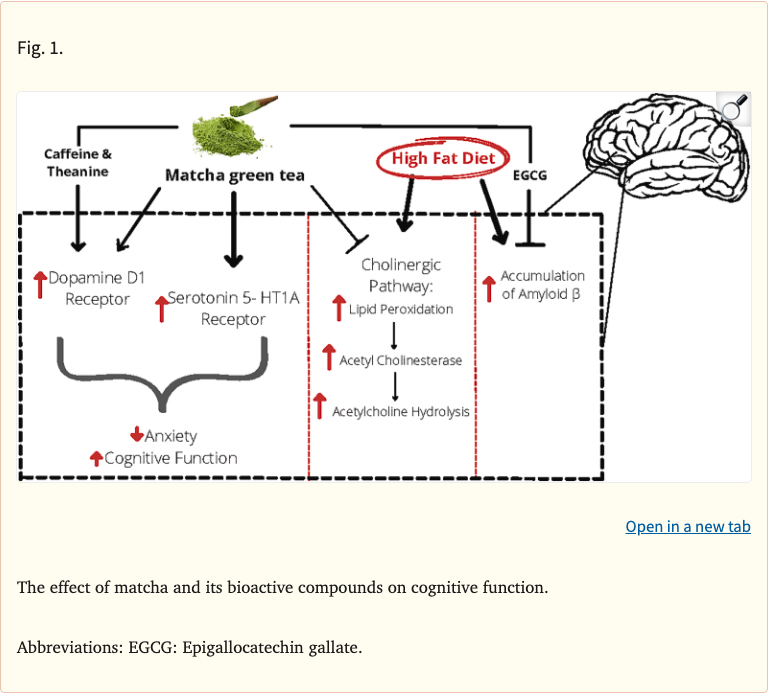 Figure 2
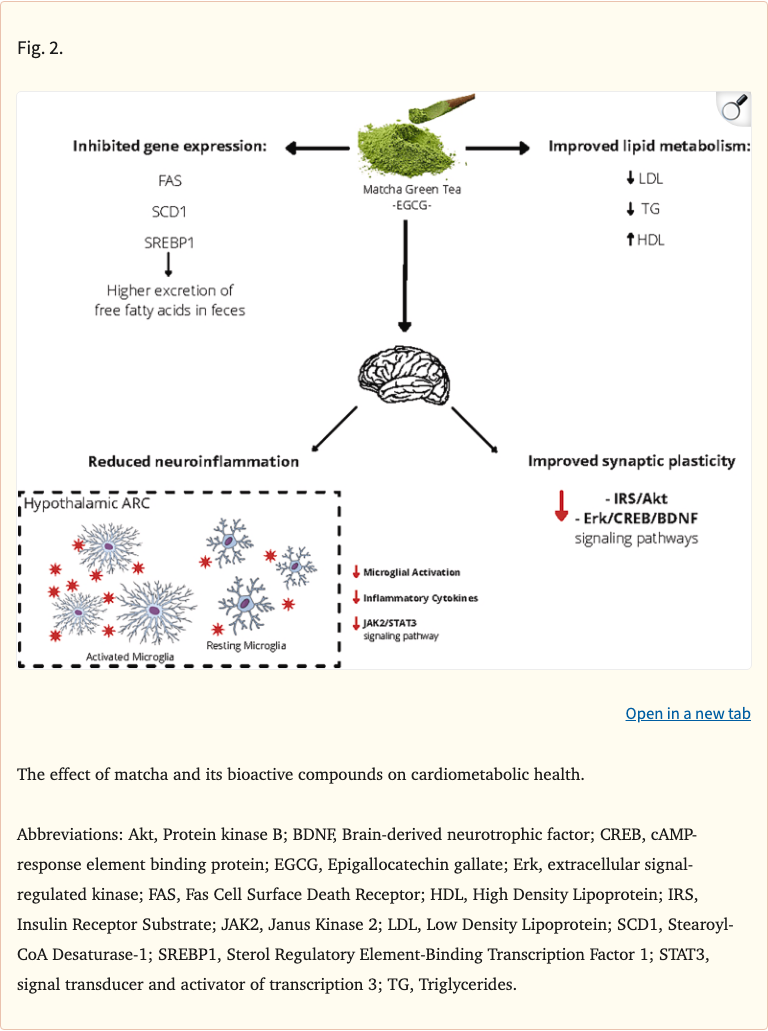 Figure 3