
Key Takeaway
12-month double-blind RCT in 99 older adults shows matcha consumption significantly improves social acuity and sleep quality, though primary cognitive endpoints (MoCA) did not reach significance.
Summary
This 12-month randomized, double-blind, placebo-controlled trial by Uchida et al. investigated the effects of daily matcha consumption on cognitive function and sleep quality in older adults with cognitive decline. The study enrolled 99 participants (64 with subjective cognitive decline and 35 with mild cognitive impairment), randomized to receive either 2 grams of matcha powder daily (n=49) or placebo (n=50), stratified by baseline age and APOE genotype.
The primary endpoints were changes in Montreal Cognitive Assessment (MoCA) scores and Alzheimer's Disease Cooperative Study Activities of Daily Living (ADCS-ADL) scores from baseline to 12 months. Neither primary endpoint reached statistical significance, indicating that matcha did not produce measurable improvements in global cognitive function or daily living activities over the study period.
However, secondary analyses revealed notable findings. Social acuity, measured by facial emotion perception, showed significant improvement in the matcha group compared to placebo (difference of -1.39, 95% CI: -2.78 to 0.002, P = 0.028). Sleep quality assessed by the Pittsburgh Sleep Quality Index showed a trend toward improvement (difference of 0.86, 95% CI: -0.002 to 1.71, P = 0.088). The active compounds responsible for these effects were identified as epigallocatechin gallate (EGCG), theanine, and caffeine.
The researchers concluded that regular matcha consumption could improve emotional perception and sleep quality in older adults with mild cognitive decline, even though broad cognitive measures did not significantly change. The study's strengths include its long duration, rigorous double-blind design, and stratification by APOE genotype. Limitations include the relatively small sample size and the possibility that MoCA may lack sensitivity for detecting subtle cognitive changes in this population.
Figures
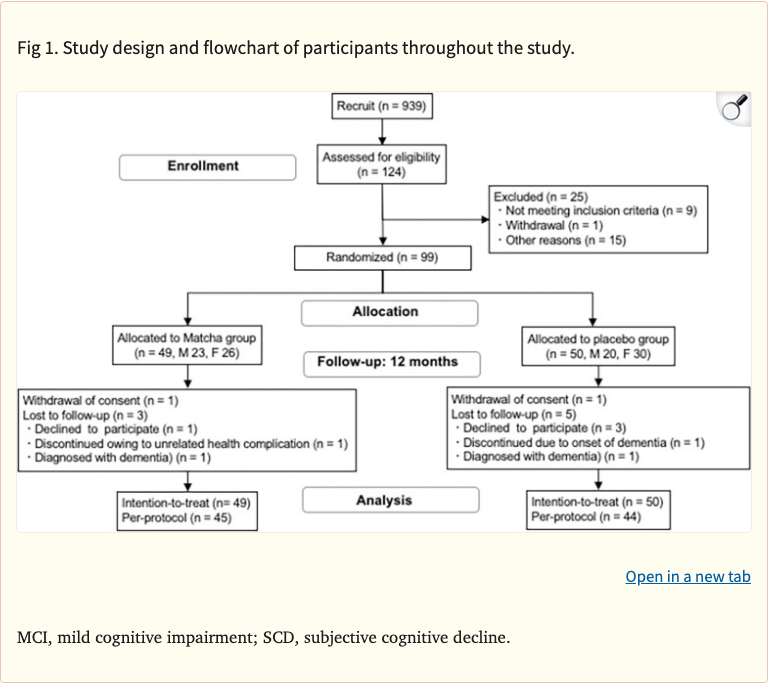 Figure 1
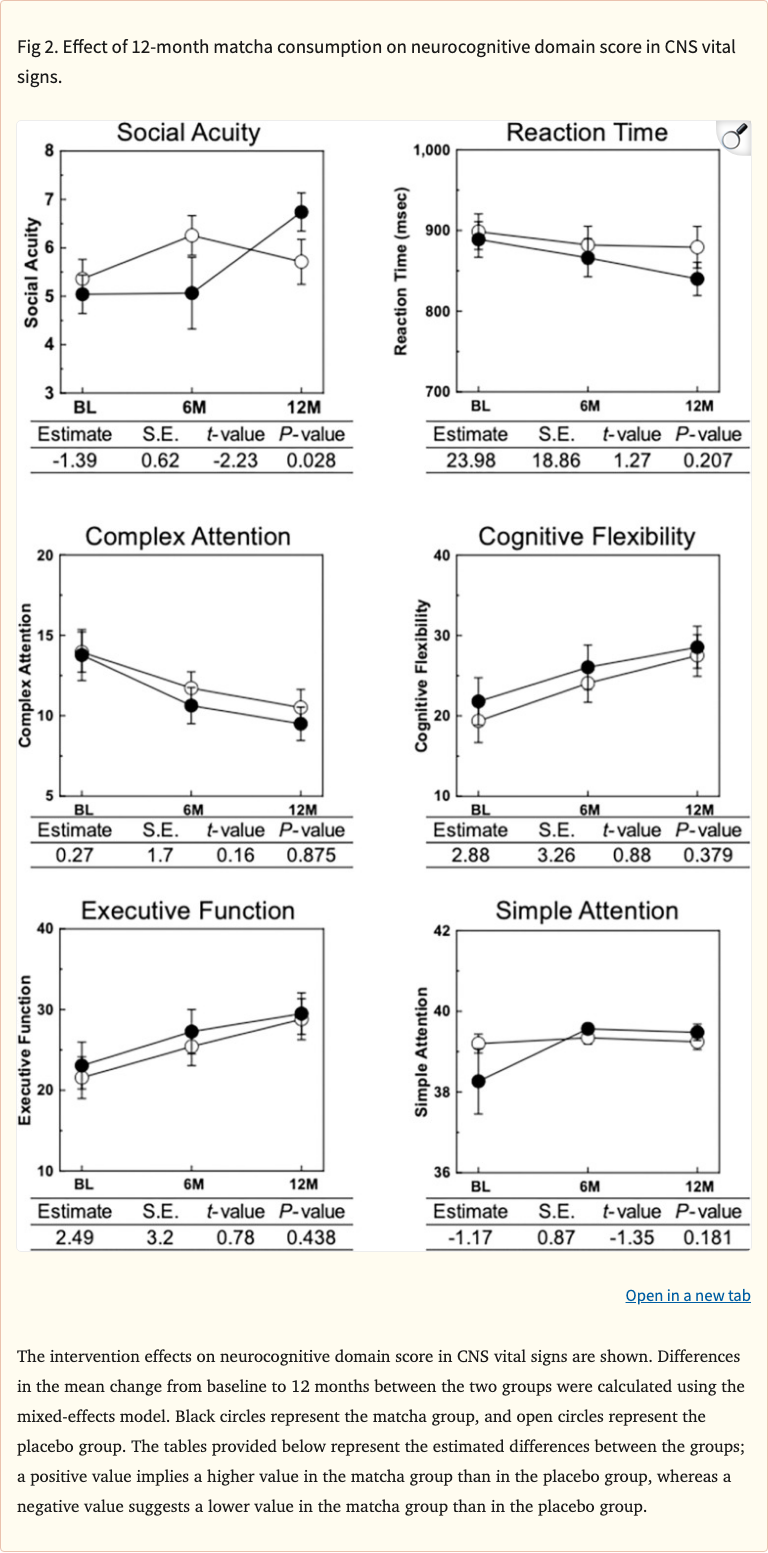 Figure 2
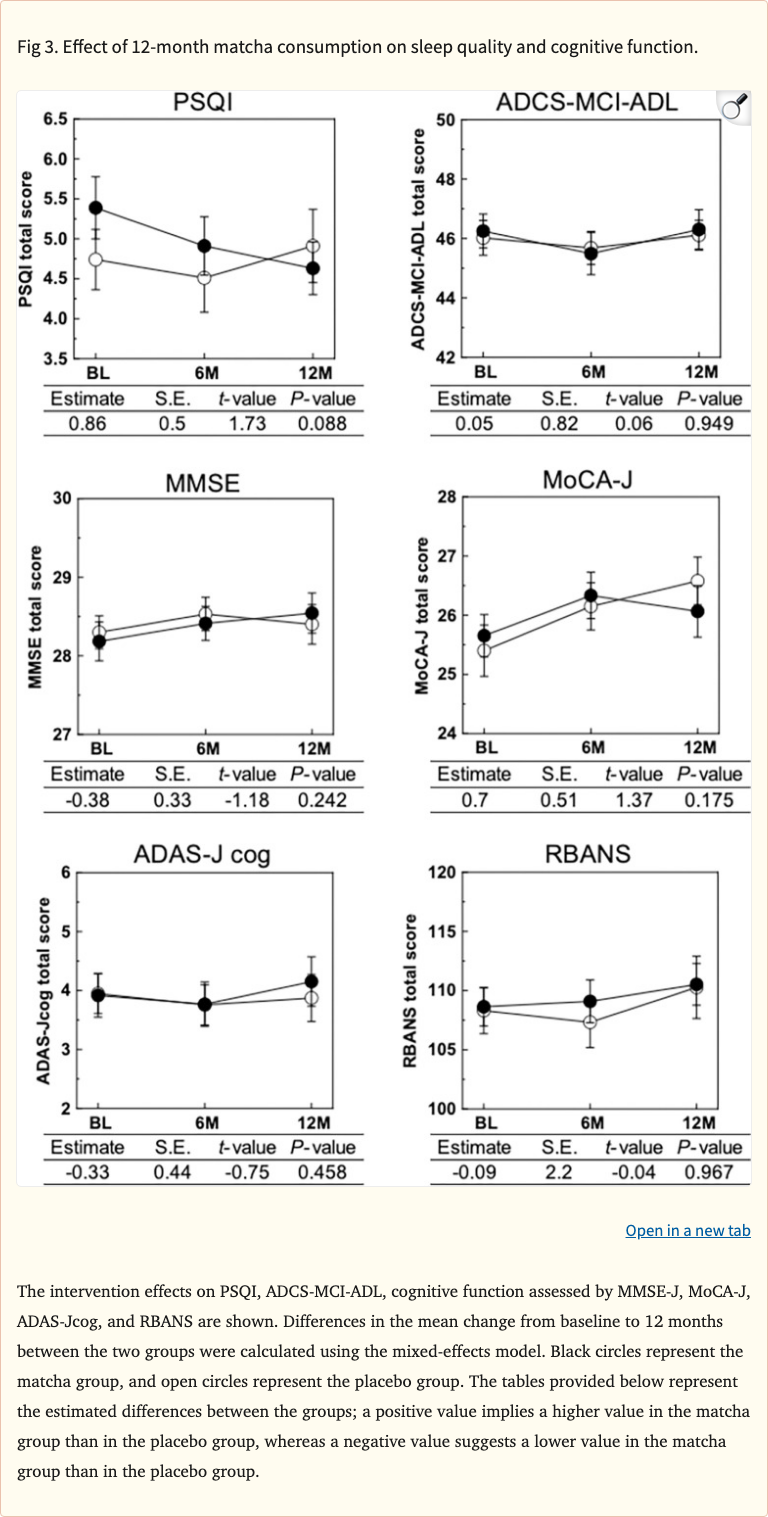 Figure 3