Key Takeaway
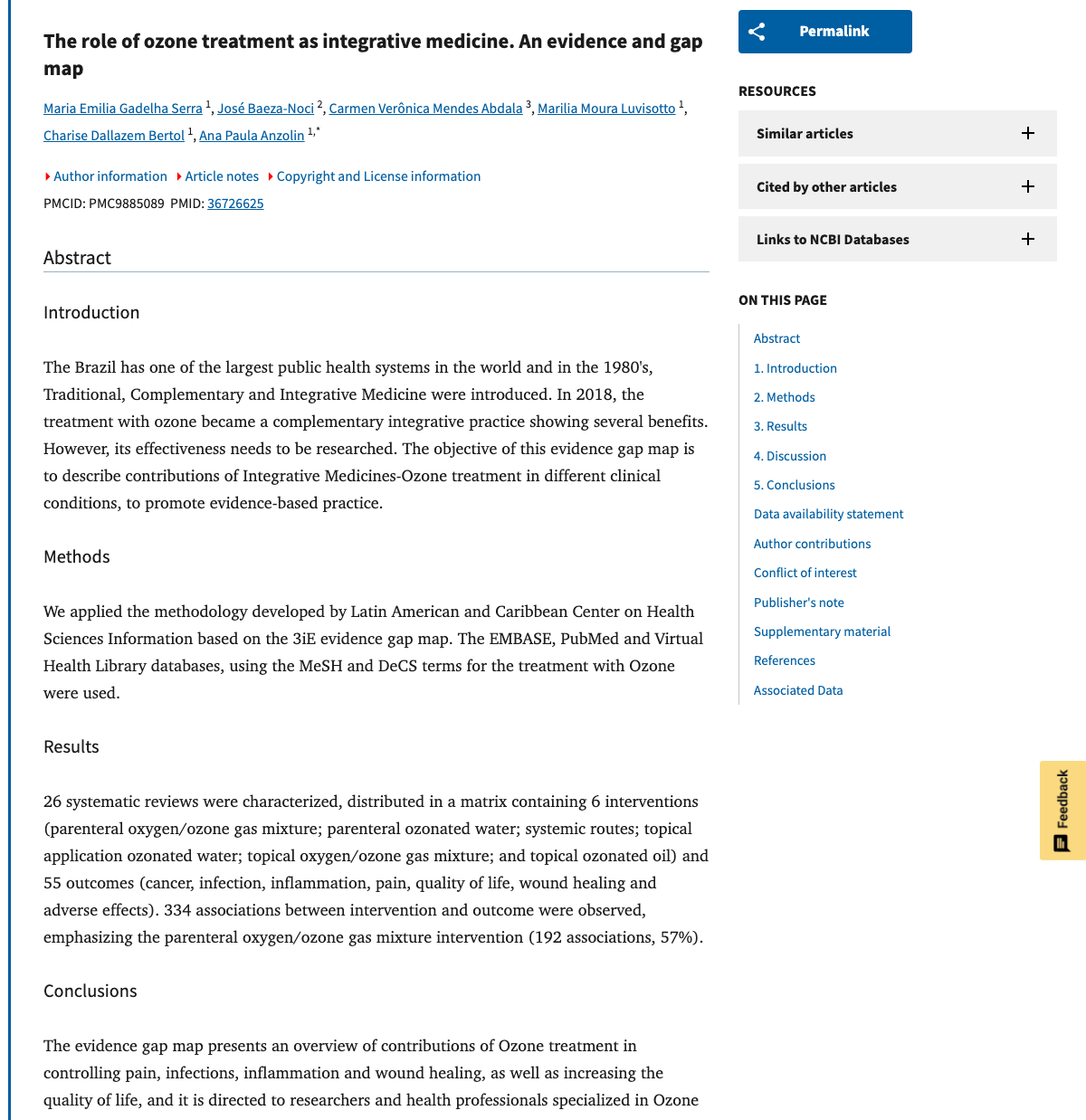
A comprehensive evidence map of ozone therapy across 94 clinical conditions identified musculoskeletal and wound-healing applications as the best-studied areas, while revealing major research gaps in neurological and metabolic conditions.
Summary
This evidence and gap map systematically catalogued the available clinical research on medical ozone therapy across a wide range of health conditions. The authors screened thousands of records and mapped the existing evidence by condition, study design, and quality level.
The map revealed that ozone therapy has been studied across at least 94 distinct clinical conditions. The strongest concentrations of evidence were found in musculoskeletal disorders (particularly low back pain and knee osteoarthritis), wound healing (including diabetic foot ulcers), and dentistry. These areas had multiple systematic reviews and randomized controlled trials supporting clinical benefit.
Significant evidence gaps were identified in neurological conditions, metabolic disorders, and several other areas where only preliminary or low-quality studies exist. The authors concluded that while ozone therapy shows promise as an integrative medicine tool with a broad evidence base, targeted high-quality research is needed to fill the identified gaps and move the field forward.
Figures
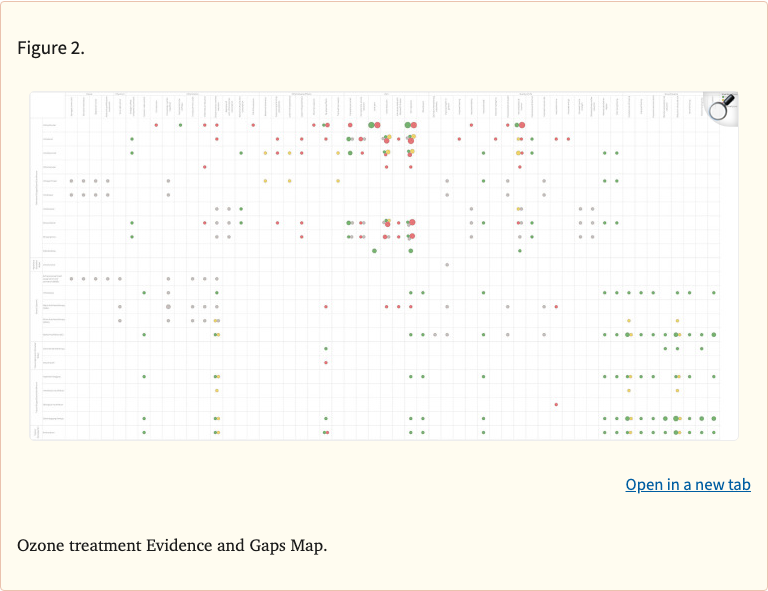 Figure 1
Related Interventions
Related Studies
Discussed In