
Key Takeaway
Daily matcha intake enhanced muscle adaptation to resistance training, reduced exercise-induced fatigue and cortisol, and shifted gut microbiota composition in healthy untrained men.
Summary
This study investigated whether daily matcha green tea beverage consumption could support muscle adaptation during a resistance training program. Two sequential randomized, placebo-controlled trials were conducted with healthy, untrained men who consumed a matcha beverage (1.5 g matcha powder) or placebo twice daily while engaging in resistance training.
In trial 1 (8 weeks), the matcha group showed a trend toward greater maximum leg strength gains and significantly lower subjective fatigue after exercise at week 1. Gut microbiome analysis revealed changes in five bacterial genera after matcha intake, with shifts in Ruminococcus, Butyricimonas, and Oscillospira positively correlating with strength gains.
In trial 2 (12 weeks), the matcha group achieved significantly greater increases in skeletal muscle mass in response to training. Salivary cortisol levels were also lower in the matcha group compared to placebo, suggesting reduced physiological stress.
The findings indicate that the bioactive compounds in matcha, including antioxidants, amino acids, and dietary fibers, may collectively support training adaptation through multiple pathways involving stress moderation, fatigue reduction, and beneficial gut microbiota changes.
Methods
Two sequential randomized, placebo-controlled trials with healthy untrained men. Participants consumed a matcha beverage containing 1.5 g matcha green tea powder or a placebo beverage twice daily. Trial 1 lasted 8 weeks and trial 2 lasted 12 weeks, both combined with structured resistance training programs. Outcomes included maximum leg strength, skeletal muscle mass, subjective fatigue, salivary cortisol, and gut microbiota composition (16S rRNA sequencing in trial 1).
Key Results
- Trial 1: Maximum leg strength tended to increase more in the matcha group; subjective fatigue after exercise at week 1 was significantly lower in the matcha group
- Trial 1: Five gut microbiota genera changed after matcha intake; changes in Ruminococcus, Butyricimonas, and Oscillospira positively correlated with maximum strength gains
- Trial 2: Skeletal muscle mass increase in response to training was significantly larger in the matcha group
- Trial 2: Salivary cortisol levels were significantly lower in the matcha group vs placebo
Figures
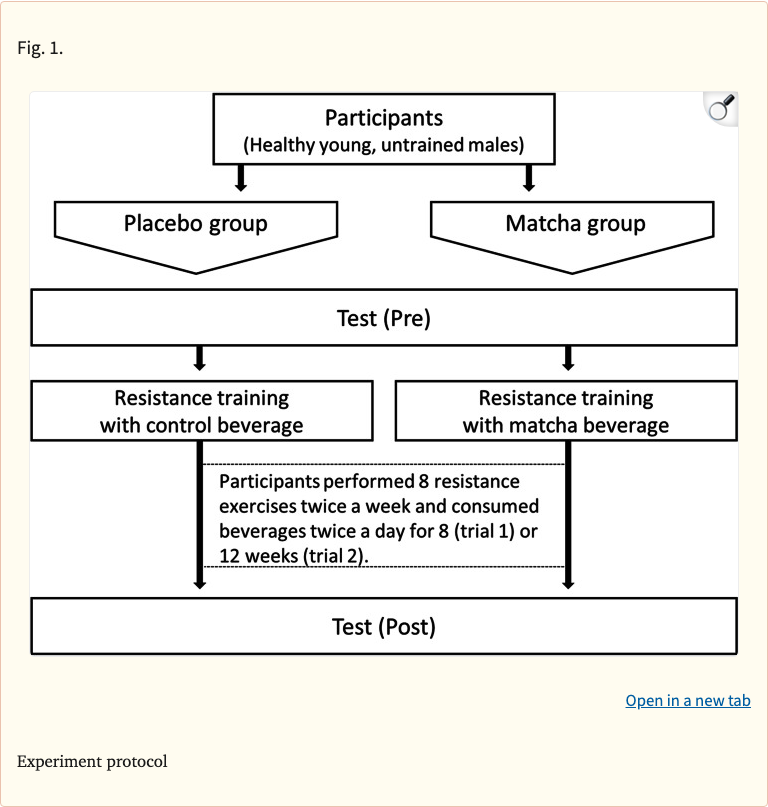 Figure 1
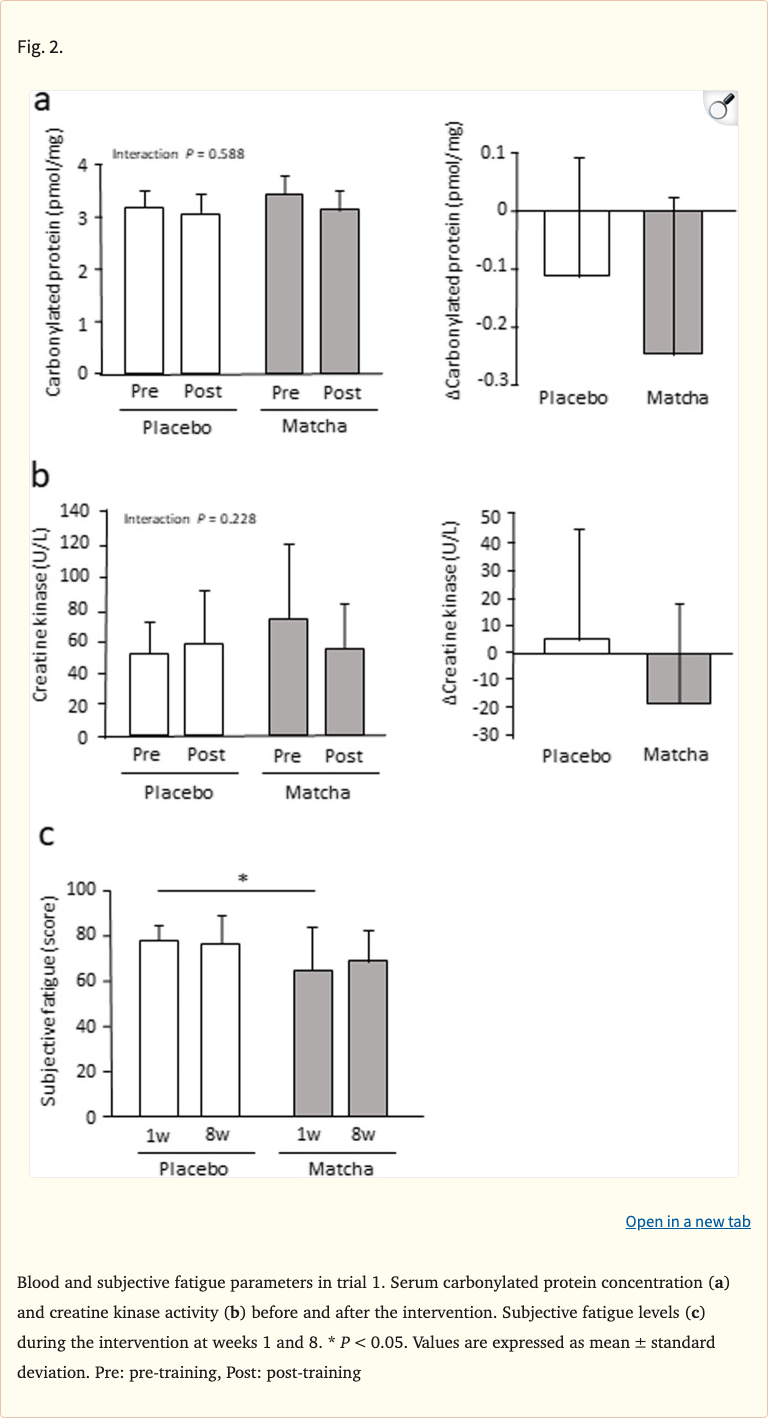 Figure 2
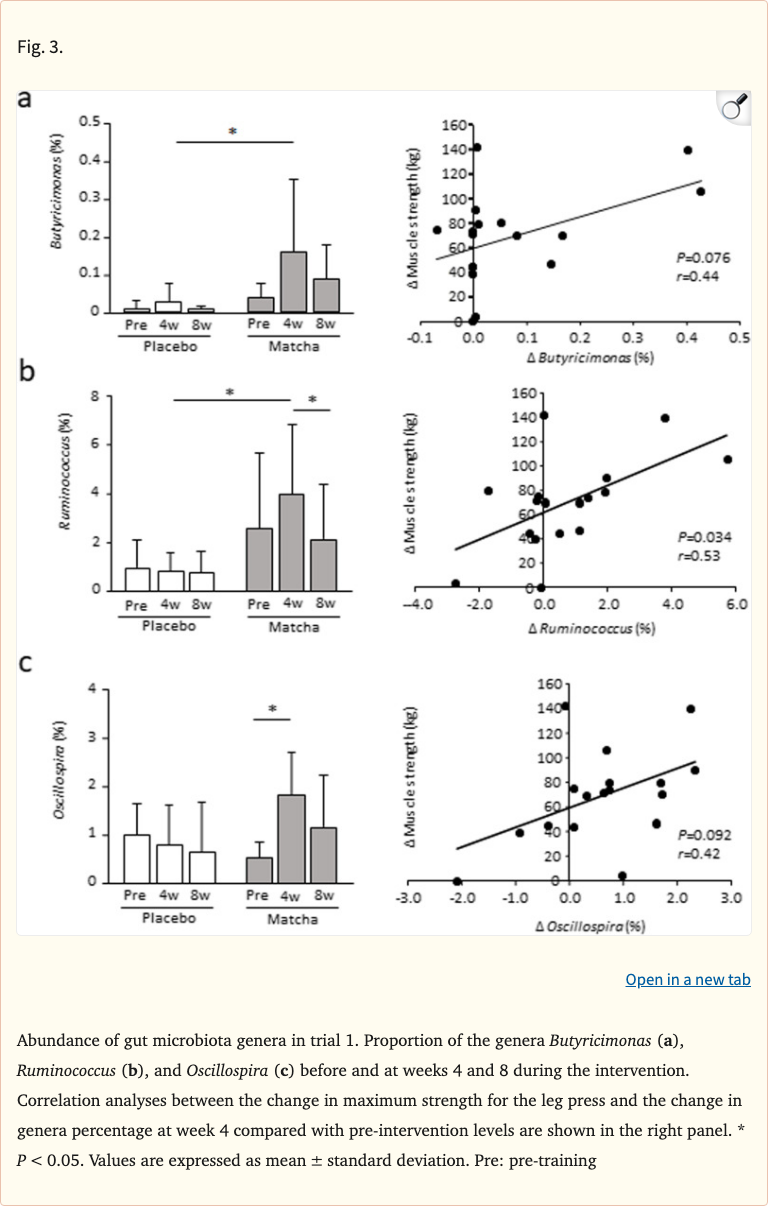 Figure 3
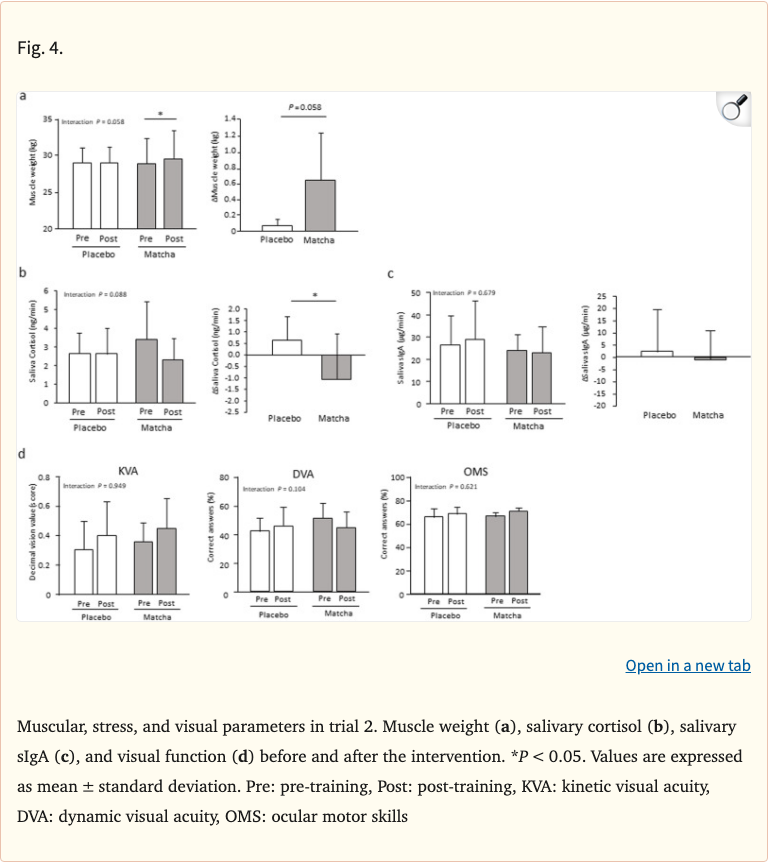 Figure 4
Limitations
- Relatively small sample sizes in both trials
- Only healthy untrained men were studied, limiting generalizability to women and trained individuals
- Trial 1 was 8 weeks and trial 2 was 12 weeks, long-term effects remain unknown
- Test samples were supplied by Nestlé Japan Ltd., a constituent of the Matcha and Health Research Group
- The specific contribution of individual matcha compounds (catechins, L-theanine, fiber) to the observed effects could not be isolated
- Gut microbiota analysis was only performed in trial 1